Why ESA needs seven spacecraft to measure one disturbance in Earth’s magnetic shield
Plasma Observatory will fly in two formations that share one spacecraft. Their geometry could help scientists tell a burst of particle acceleration from a patch of plasma sweeping past.
A spacecraft near the edge of Earth’s magnetosphere records a sudden rise in particle energy. Did the particles around it gain energy, or did a pocket of already energetic plasma sweep past the instrument? A faster sensor could time the change more precisely. It would still be measuring from just one place.
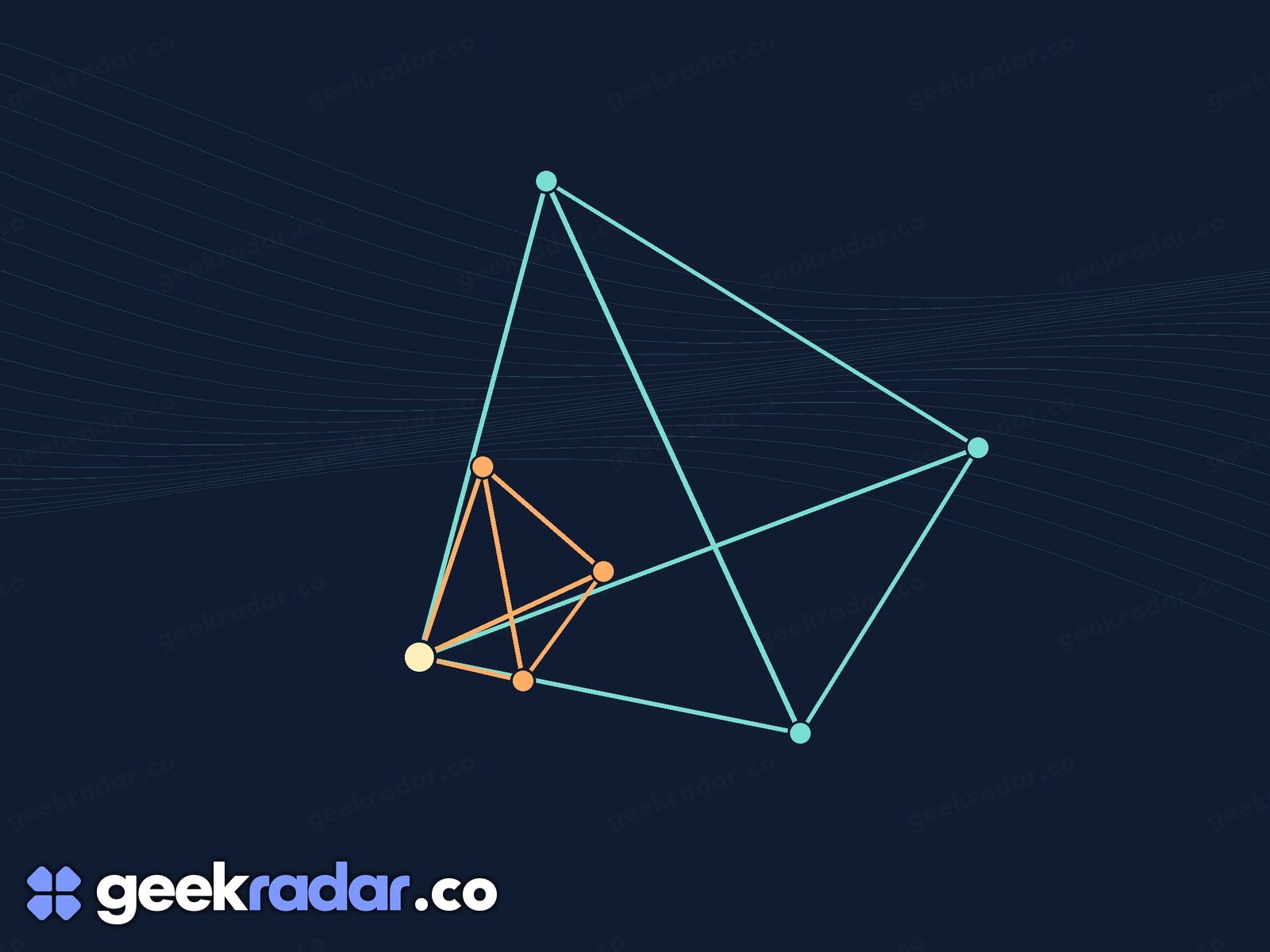
That is the problem behind ESA’s November 19 selection of Plasma Observatory. Seven spacecraft will sample particles and electric and magnetic fields around Earth. The number comes from the shape of the experiment. Four spacecraft can mark out a volume in three dimensions. Build a second volume on a different scale, let the two share a corner, and seven spacecraft can measure both at once.
Two tetrahedra, one common reading
The Sun sends a stream of charged particles past Earth. Where that solar wind meets the region shaped by our planet’s magnetic field, energy can pass from fields to particles. The scene can change within milliseconds, while the disturbances associated with it can extend over thousands of kilometres. Understanding what happened to a particle means knowing something about its surroundings at the instant it was measured.
ESA’s four-spacecraft Cluster mission helped establish how much a formation could reveal about that environment. But for any one encounter, its separation favoured one scale. In the Plasma Observatory team’s design, a tight formation samples fine structure while the more widely spaced spacecraft establish the conditions across a larger volume. The spacecraft at the shared corner gives both sets of readings a common point of reference.
Think back to that sudden rise in energy. If a narrow pocket sweeps through the formation, nearby instruments may register it in succession while a more distant one misses it. A change across the wider region would leave a different pattern. These are examples of observations researchers could compare. The timing, particle measurements and fields would still have to agree before the team could explain any particular encounter.
Why the measurements have to coincide
ESA’s Hera spacecraft recently made a stereo view of Didymos by photographing the same ridge from two positions moments apart. The ridge held its shape between exposures. A fast-moving boundary in plasma can change between readings. Returning with a wider formation on the next orbit could mean measuring a different event altogether.
ESA provisionally places launch in the late 2030s. Formal adoption, the decision that commits the mission to construction, still lies ahead. The scientific payoff would come when a short-lived disturbance passes through both formations. For once, researchers could ask what the neighbourhood looked like at that exact moment and have the measurements already in hand.