ESA is building ClearSpace-1 to catch a satellite that can’t help it dock
A €102 million-plus contract starts construction of the spacecraft that will retrieve Proba-1. Debris struck its original target before the cleanup mission could reach it.
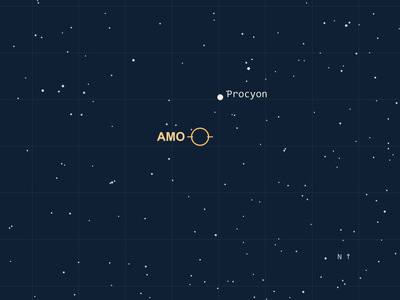
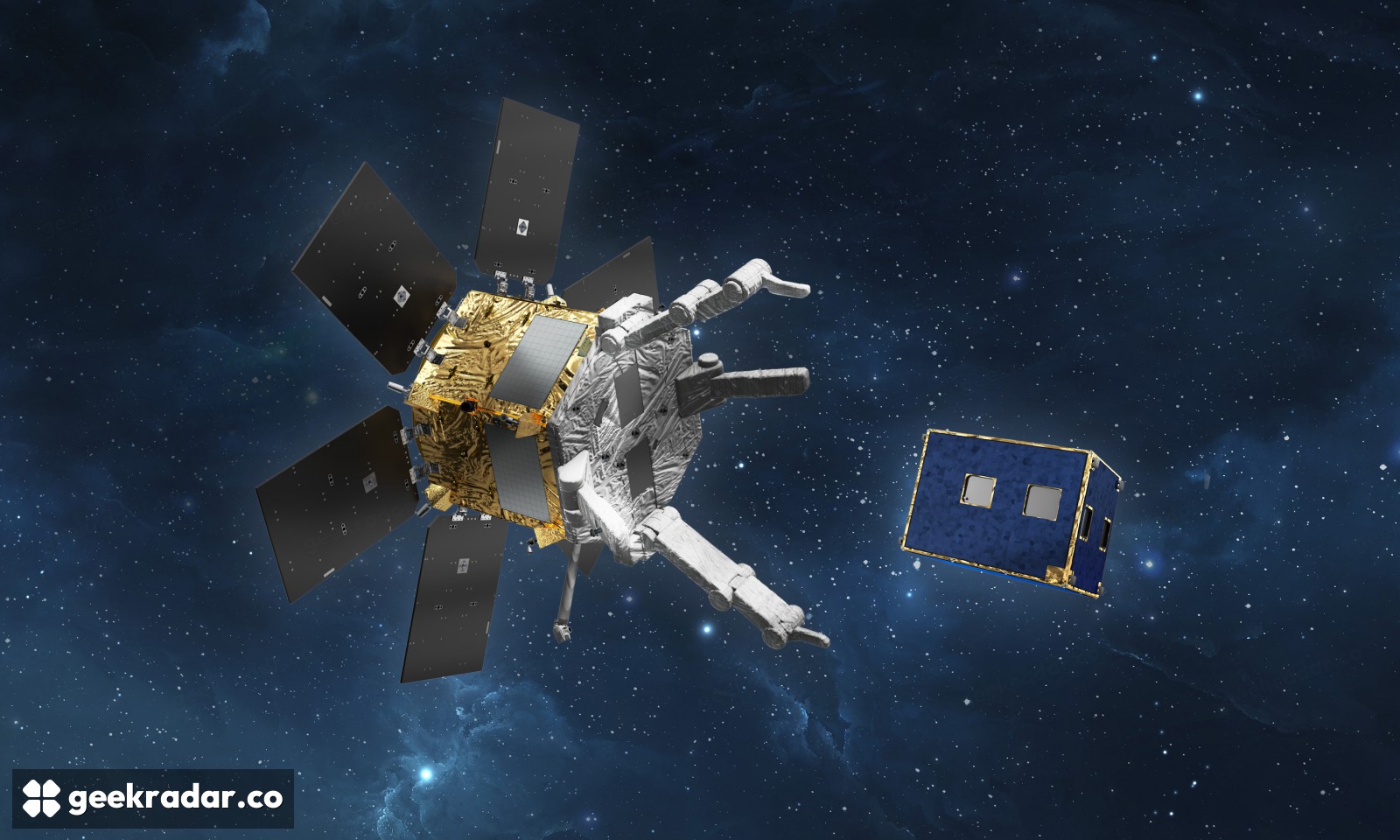
Europe is building a spacecraft to catch one of its own satellites. Proba-1 finished regular operations in 2022, some 21 years after launch. It is still in orbit, and its designers never gave it a way to help another vehicle dock. The job of ClearSpace-1 will be to approach it, take hold and guide both spacecraft back into the atmosphere.
The European Space Agency signed the construction contract with OHB System in Bremen on November 17. OHB puts the contract value at more than €102 million. Launch is planned for 2030. One reason to pay attention well before then is that a piece of debris has already changed what the spacecraft must be built to do.

The first target got hit before help arrived
ClearSpace-1 originally had a different appointment. A European Vega rocket that flew in 2013 had left behind the upper part of a payload adapter, a 113-kilogram cone two metres across. In August 2023, trackers detected new objects near it. ESA’s assessment at the time was that a small, untracked object had probably struck the adapter and knocked fragments loose. Observers could still see the main body.
The team changed targets and redesigned the mission around Proba-1. That history gives the debris problem a concrete scale. A single small object can change the condition of something large enough to track from the ground. The engineers designing a capture system then have to decide whether the target they studied is still the one their hardware will meet. European Spaceflight traced the change of target and contractors as the project moved into construction.
Getting alongside is only half the job
Proba-1 originally demonstrated what a small satellite could do for itself. Its onboard systems could plan and execute observations. It has no corresponding equipment for guiding a visitor into a capture. In the mission documents, that makes it an uncooperative target. The word describes an engineering condition that even a fully documented ESA spacecraft can present.
OHB’s design uses optical and radio-frequency sensors to determine how Proba-1 is oriented, how it is turning and how it is moving relative to the approaching vehicle. Two spacecraft can travel alongside each other while a surface on one continues to rotate away from the other. The capture mechanism needs all three pieces of information to make contact. Once it holds, the vehicle has to guide the joined pair to a controlled reentry. These are capabilities the flight is meant to demonstrate.
There is a quieter way to bring down an old spacecraft. For NASA’s Terra satellite, operators plan to use its remaining fuel to lower its orbit after the last science observation. That option depends on still having a vehicle that can respond. The promise of ClearSpace-1 is a second opportunity to act after that window closes. Its most telling test will come when the spacecraft first takes hold of something that cannot help it.