Ring’s drone and rover cameras can change viewpoint. They cannot be everywhere at once
Mobile patrols bring different hardware, subscription and privacy boundaries, with US launches still ahead.
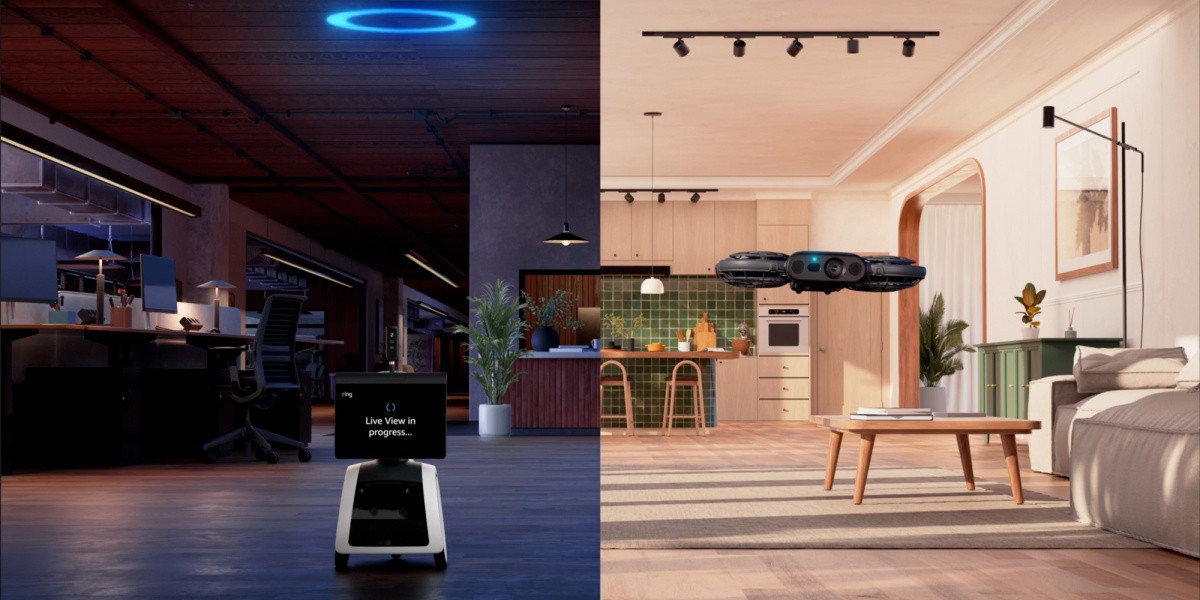
Ring is adding movement to its camera range with an indoor drone and a wheeled security robot. The Drone Cam and Rover Cam announcement describes devices that travel to selected points after an alert or on a planned patrol, rather than watching only the view from a fixed mount.
The two products have different roles and launch conditions. Rover Cam is aimed at businesses, with US shipments planned for December 16 at $999.99. Drone Cam is planned for US shipment on January 27, 2027 at $249.99, but Amazon explicitly says it still needs FCC authorization and cannot be offered for sale or lease until that authorization is obtained.
Moving the camera changes the coverage problem
A fixed camera watches its assigned area continuously, subject to its recording settings. A mobile camera can visit more viewpoints, but it cannot physically occupy all of them at once. Its value lies in investigating a selected place, not in magically turning one sensor into simultaneous coverage of every room.
Ring's AI Pilot uses cameras, on-device sensors, specialized vision models and cloud processing. Setup involves carrying the drone through the space or letting the rover explore, after which the system creates a floor plan and suggests patrol points. Users can add their own locations.
That mapping stage is part of the installation, even though no wall bracket is required in every room. A route that works in an uncluttered demonstration still needs to coexist with the furniture, shelving and changing obstacles of the real space. The announcement describes navigation capabilities; it does not independently establish reliability in every home or shop.
The distinction already shows up in The Verge's launch-event report. Its reporter saw repeated takeoffs and landings and a roughly one-minute flight through a simple room layout, but did not see unexpected obstacles or stair navigation tested. That is useful independent observation of a demonstration, with a narrower scope than proof of reliable household operation.
Drone and rover inspect from different heights
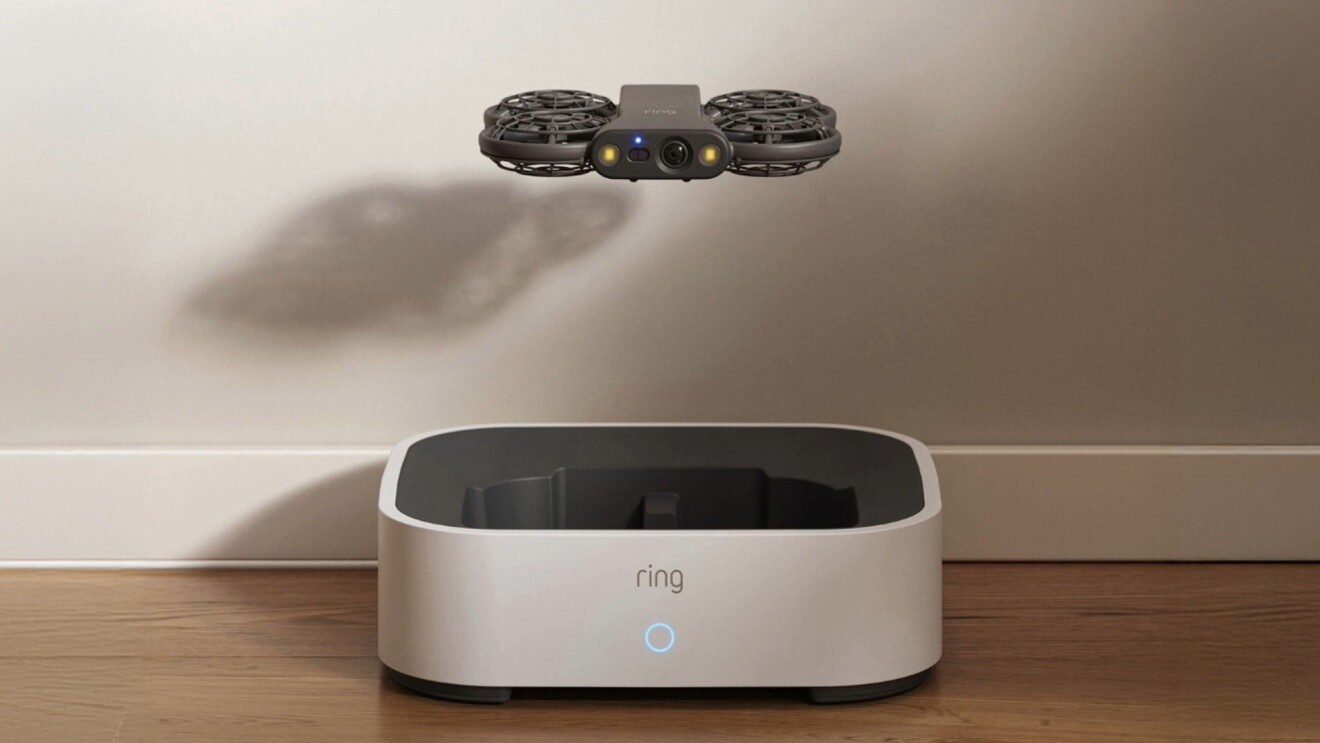
The Drone Cam supplies 2K video with a 148-degree field of view and can rotate to inspect a room. LED lights support low-light use. It can fly predetermined routes on demand or respond to a connected Ring device's trigger by visiting saved patrol points.
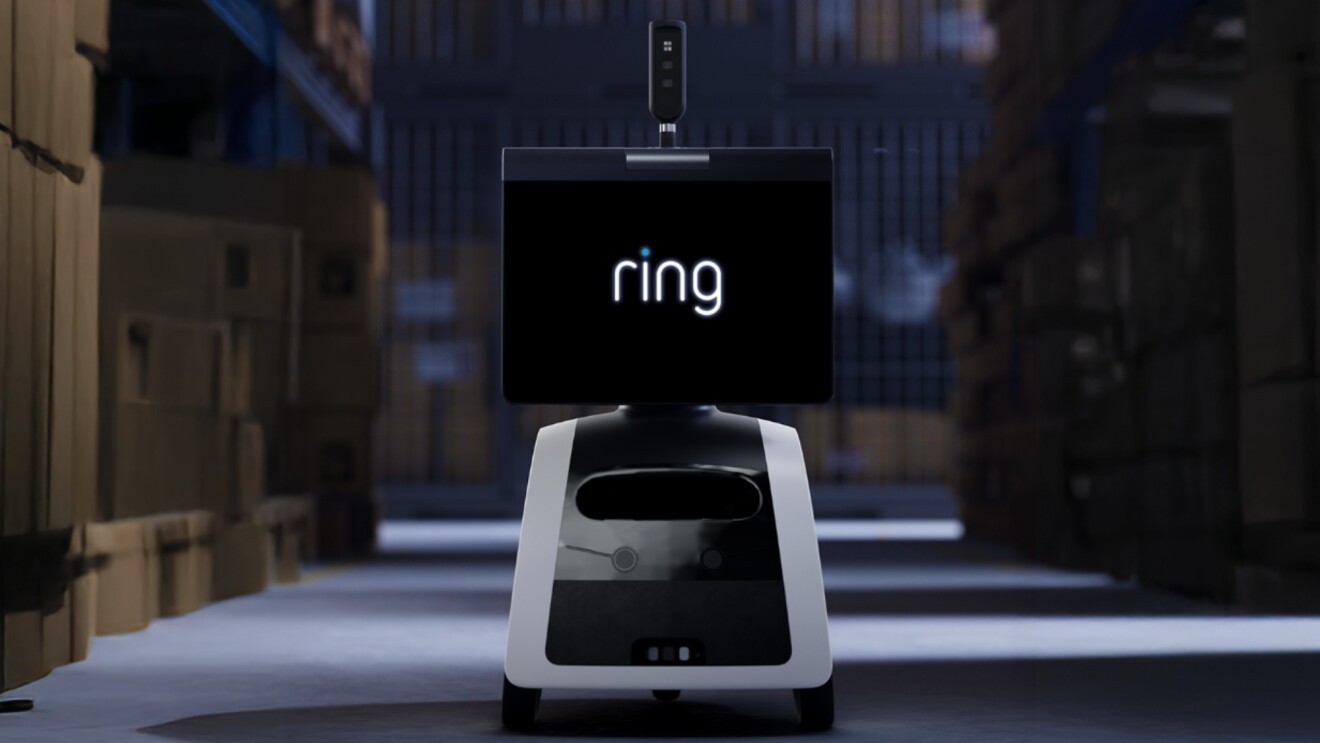
The Rover Cam rolls between locations and raises a periscope camera to see over counters and other obstructions. Ring describes video streaming and recording up to 4K while it moves, rather than only after it reaches a stop. Motion detection can remain active while it is docked.
A patrol is also a permission to record
Ring says the drone's camera is off while docked. Rover's Sleep Mode retracts the periscope and disables its microphone. Recording indicators are visible, and the company emphasizes that the devices can be seen and heard. These controls are worth distinguishing from a claim that all processing happens locally: the same announcement explicitly includes cloud processing in AI Pilot.
Scheduled patrols and access to recorded video require a compatible Ring Protect plan. The hardware price is therefore not the complete cost of every advertised workflow. A buyer who wants automated checks after closing should compare the service requirement with that intended use, not only compare the two purchase prices.
For a shared space, the relevant question is also when movement and recording are allowed. A camera that can enter a new viewpoint makes those boundaries more consequential than a device permanently aimed at one doorway.
Ring's idea is strongest when a specific alert needs another angle: a counter obscures the scene, or a fixed camera cannot show what happened beyond a corner. The products will have to earn that extra perspective through reliable navigation and understandable controls. Mobility adds a way to investigate; it does not remove the need to decide where the camera belongs.