Find Hub’s left-behind alerts try to catch the mistake before the search begins
The tracker setting has appeared on observed US and European devices. Home exceptions and rollout scope are worth checking.
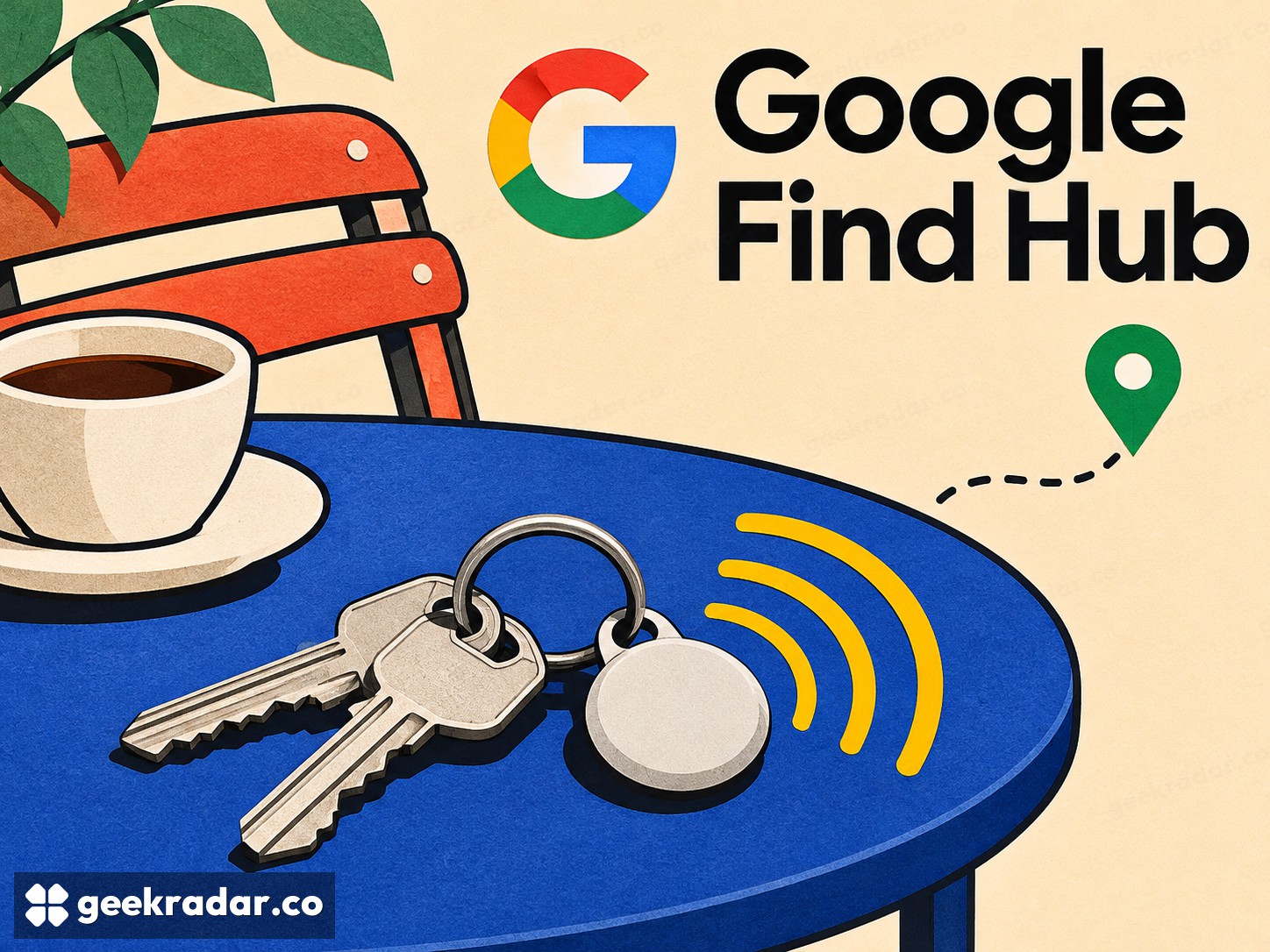
Google Find Hub is beginning to warn Android users when they leave a compatible tracker behind. That changes the useful moment of the alert: instead of opening a map after noticing missing keys, the phone can draw attention to the separation while the owner may still be nearby.
9to5Google's November 5 observation found the option for Chipolo trackers and Moto Tag in Find Hub version 3.1.787-06, in the US and Europe. It was absent for headphones. The setting sits under an individual tag's gear menu, with a home-address exception enabled by default. That is evidence of a rollout on observed devices, not confirmation that every account has it.
A reminder is different from finding a lost item
Find Hub already provides a map and nearby ringing for supported devices and accessories. Google's official app listing also describes finding network-compatible items nearby when the phone is offline, provided the item is within Bluetooth range.
A separation reminder serves an earlier purpose. It tries to bring the missing item to mind before the owner has consciously started searching. It cannot establish why the item was left, whether someone else has picked it up or whether returning is safe. A notification is a prompt to check, rather than proof of theft.
That also separates this feature from warnings about an unfamiliar tracker travelling with a person. One concerns a registered item becoming separated from its owner; the other concerns an unwanted tracking risk. The two situations require different responses, even if both involve the same general category of accessory.
Check the exception as carefully as the switch
The home exception is useful when a tracker belongs on an object that routinely stays behind. Without some way to distinguish an intentional separation, a person could receive reminders every time they leave a bag at home. Repeated irrelevant alerts would make the useful ones easier to ignore.
The same convenience deserves checking against the actual object. A set of house keys, a travel bag and a bike do not necessarily need the same reminder policy. An address saved in an account can also be outdated. The meaningful setup is the combination of the enabled alert and the places where it is allowed to stay quiet.
No exact notification delay or guaranteed separation distance is established by the announcement evidence. Bluetooth conditions, permissions and the implemented rollout should not be replaced with an invented promise that the phone will warn within a particular number of steps.
The improvement is modest but well targeted: help someone notice sooner. A tracker is more useful when it prevents a return journey, not only when it can show where that journey must end.