Refrigeration cyberattacks turn remote maintenance into a physical risk
US and European warnings point to exposed controllers and altered settings. The response needs facilities staff as well as network administrators.
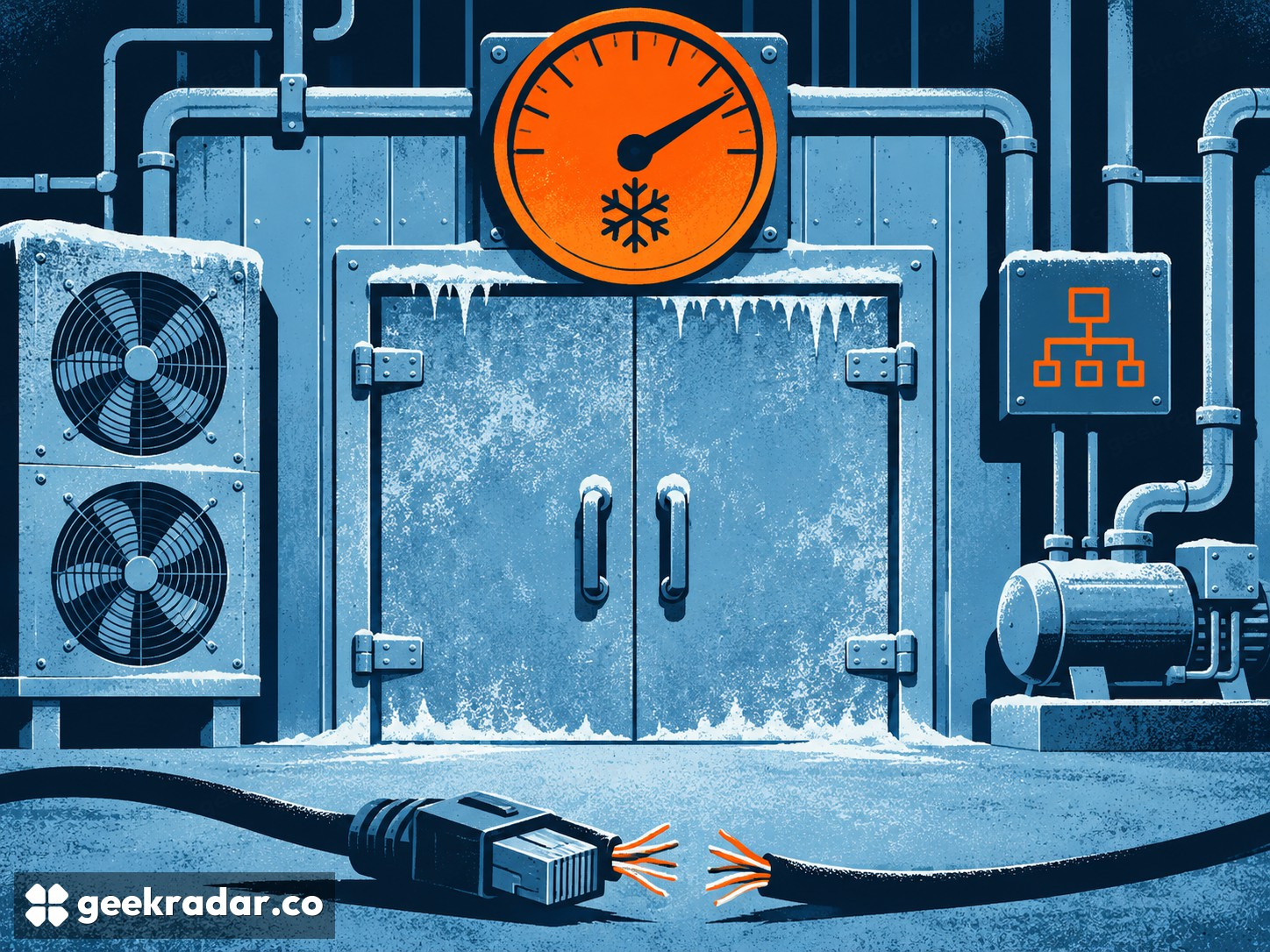
An internet-connected refrigerator controller can be a route to damaging physical stock, not merely another screen that an attacker can deface. A new joint US government warning describes malicious activity against industrial refrigeration and cold-chain monitoring systems worldwide, following a wave of incidents in Europe.
The November 5 advisory comes from CISA, the FBI and agencies responsible for health, agriculture and transport. Its immediate message is to identify exposed controllers, remove unnecessary remote access and secure the connections that operations genuinely need. This is about commercial and industrial equipment; it does not establish that every connected domestic fridge is affected.
When a control setting becomes a physical risk
These systems do more than display a temperature. They can log conditions, automate defrost cycles and help operators manage energy consumption across a facility or refrigerated transport service. A person who can change the wrong setting may therefore influence what the equipment does, as well as what a dashboard reports.
The advisory describes weaknesses including authentication bypass, code injection and insecure configurations. Possible consequences include altered temperatures, continuous heating or defrost behaviour, damaged stock and loss of visibility into current conditions. These are described attack paths and risks, not a statement that every listed consequence has occurred at every affected site.
The loss of visibility is especially important. An operator can react to a temperature alarm only if there is a trustworthy way to observe conditions. A dashboard that stops reporting reliably is an operational problem even before anyone establishes whether the stored products have warmed. Restoring a login screen alone does not demonstrate that the equipment and its monitoring are behaving normally.
Europe has already seen successive waves
ENISA's November 4 statement reports incidents in several EU member states since October 11, followed by another wave on November 1–2. National response teams and European coordination bodies are exchanging information while investigations continue.
The statement does not provide a complete victim list or justify treating every incident as the work of one identified actor. Its value is the cross-border pattern: organisations cannot assume that a remote-maintenance arrangement is safe simply because a neighbouring branch has not reported trouble.
Remote access needs an owner and a boundary
The agencies recommend separating operational equipment from business networks, replacing default credentials, applying supported firmware updates and restricting access to authorised devices and addresses. Where possible, strong multifactor authentication should protect remote access. A firewall or remote-access gateway also needs maintenance; moving an exposed controller behind an obsolete gateway does not finish the job.
For a facilities team, the practical starting point is an inventory that includes the supplier's access route. Who can change a setpoint? Which connection exists for maintenance? Who removes access when a contract ends? Those questions translate the advisory into responsibilities that can be checked without improvising changes to a running cooling process.
The warning also calls for logs, tested backups and sensible limits and alerts around setpoints. Equipment with weak logging may require network-level observation. Changes should be coordinated with the people responsible for operating the system safely, because a rushed disconnection can itself interrupt a necessary service.
Refrigeration makes the cost of insecure remote access unusually tangible. The asset at risk may be a warehouse of food or a temperature-sensitive supply, while the vulnerable entry point looks like an ordinary maintenance panel. The most useful security improvement is closing that gap between who owns the network connection and who bears the consequences when the temperature changes.