Google disrupts the XCPE TV botnet, but firmware remains the trust problem
The reported 1.3 million TV boxes and 10 million additional devices describe different populations, and a server takedown does not prove a clean device.
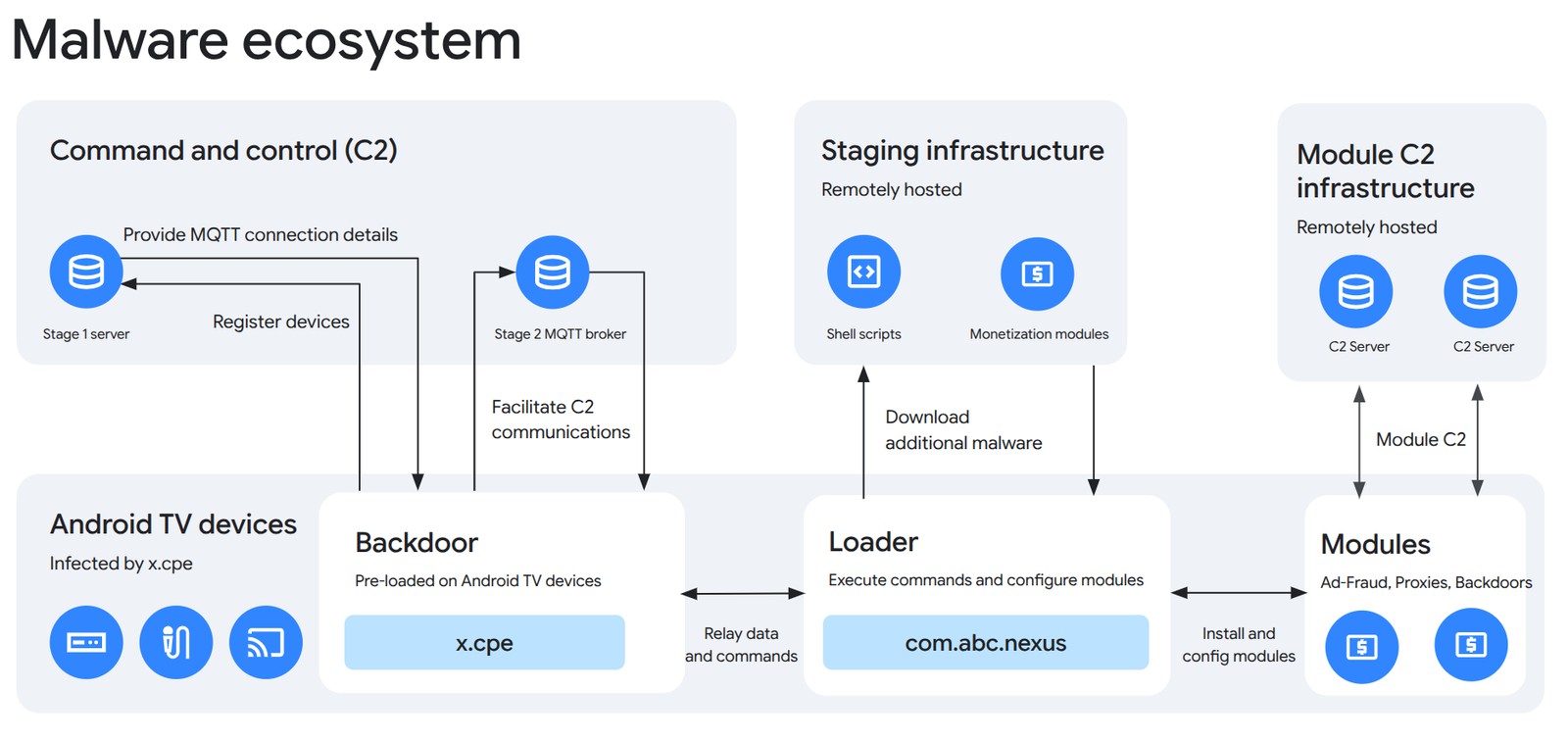
Google says it has disrupted a backdoor that enrolled more than 1.3 million set-top boxes into a botnet. The significant detail is where the software lived: inside device firmware. Taking away the operators’ servers can interrupt their access, but it does not establish that the affected hardware has become trustworthy again.
In its XCPE investigation, Google attributes the operation with high confidence to Videostrong Technology, an equipment manufacturer and designer. Google alleges that the company intentionally installed the backdoor and monetized access through criminal affiliates. That attribution is Google’s assessment; it should not be generalized to every Android TV box or treated as a finding about an unnamed device sitting under a reader’s television.
The unwanted software could return after a reboot
The report describes a privileged component supplied with the firmware. Removing its installed copy did not remove the copy in the manufacturer partition, from which it could install again when the device restarted. That persistence changes the meaning of a successful-looking uninstall.
There is a useful distinction between removing an unwanted application and restoring a trustworthy operating system. The former changes one item visible to the user. The latter requires confidence in the software from which the device starts and rebuilds its state. If that starting point contains the unwanted component, repeating an ordinary app-removal procedure does not address the cause.
Google says the operation used additional modules for advertising fraud, residential proxy traffic and further malware delivery. A residential proxy makes other people’s traffic emerge from a household internet connection. That helps explain why a box can be useful to an operator even when its owner notices no obvious change in the programmes playing on screen.
Read the two device counts separately
The 1.3 million figure describes the set-top boxes enrolled through the backdoor. Google separately estimates that disabling affiliates’ command infrastructure will cut access to at least 10 million additional compromised devices reached through other distribution channels. Those populations are not interchangeable, and the larger number is not a count of confirmed Android TV boxes in this operation.
Nor does the estimate measure how many households noticed abuse or how many devices have received repaired firmware. A disruption can be large and valuable without resolving all those questions. Counting disconnected control infrastructure and counting remediated devices answer different questions about the same incident.
Certification has to survive what happens after testing
Google says obfuscation and code loaded after a device’s first boot exploited a gap in its checks. It has cut ties with Videostrong, barred it and future subsidiaries or affiliates from producing certified Android devices, and says it is improving firmware review.
For owners, identifying the exact model and obtaining a specific remediation statement from the vendor or retailer is more useful than guessing from a familiar launcher or logo. The report does not support a universal list of visual symptoms. Where a device is confirmed affected and no trustworthy recovery is available, continued network access is a risk decision, not evidence that the takedown repaired it.
The wider lesson for connected-device security is about accountability after the sale. Certification checks a product at particular stages. A manufacturer’s ability to change what runs later must remain part of the trust relationship. A working television picture says very little about who else is using the box behind it.