
Fortnite 43.00 lets quests go public while new combat tools stay experimental
PCG expands world-building, but creators need to separate release-ready systems from prototypes and revisit a changed interaction event.
Fortnite’s 43.00 creator update expands the tools for building worlds and maintaining player objectives, but its most important dividing line is publication. Epic’s Progression API is now available for publishable islands, while the new custom health-and-damage system remains experimental.
That distinction in the 43.00 release notes matters more to a working creator than treating every item in a long changelog as equally ready. A prototype can explore a feature that a public island cannot yet depend on. Mixing those stages can turn an appealing design into a project that has no immediate path to release.
World building becomes a system of rules
Procedural Content Generation, or PCG, lets creators describe repeatable placement through graphs instead of positioning every asset individually. Trees, roads and city blocks are useful examples: the task involves relationships between objects as well as choosing the objects themselves.
That does not mean asking for a forest is the same as finishing a playable forest. Routes must remain readable, spaces need to suit the activity, and repeated patterns can be conspicuous. The tool changes how a creator constructs and revises those arrangements; it does not decide whether the resulting space is interesting.
Epic’s guide to PCG and the UEFN MCP tools is unusually explicit about the role of supervision when language models help manipulate graphs. It recommends starting from working examples, providing specific context, reviewing a plan and executing changes in small steps. Those recommendations are evidence against interpreting the integration as a reliable one-prompt island builder.
For a creator, the useful efficiency gain may be less glamorous: adjusting a proven distribution rule without reconstructing the same graph from scratch. A reusable system becomes valuable when the next change is easier to make and its effects are easier to inspect.
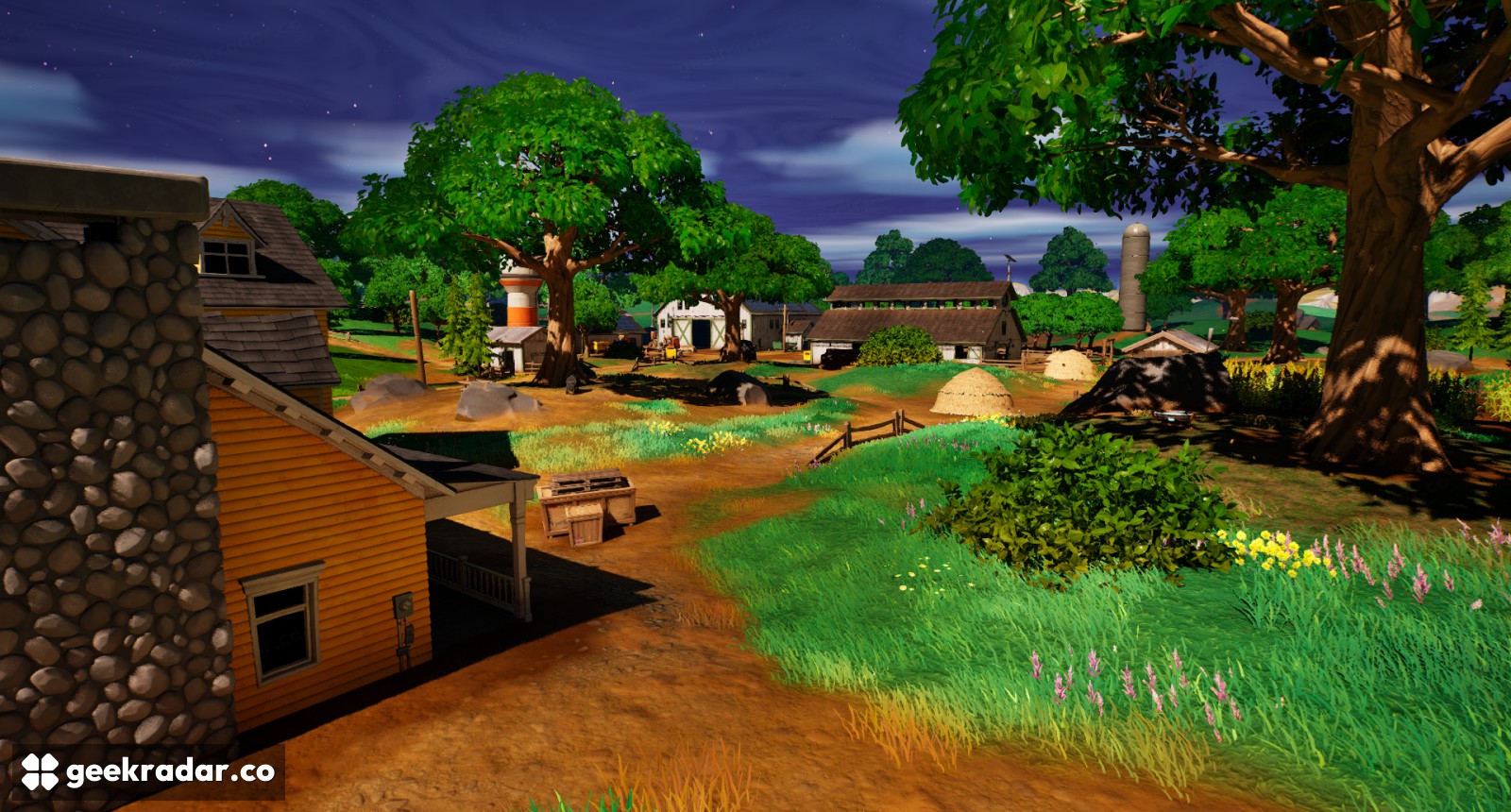
The asset library grows alongside those tools. Version 43.00 adds Frenzy Fields building pieces, props and prefabs, giving creators a recognizable set of components to arrange. A supplied barn and a procedural placement rule solve different parts of the same construction problem.
Quests can leave the experiment stage
The Progression API supports objectives and quests, with tracking for players or groups and associated reward and interface behavior. Its graduation from Experimental is therefore a practical change for islands whose structure depends on completing activities over time.
A quest system connects several decisions that otherwise risk drifting apart: what counts as progress, who receives credit and what feedback appears when the requirement is met. Having a common framework does not remove the need to design those rules, but it gives creators a publishable foundation for doing so.
The update’s Gaussian-splat support is also experimental. Importing captured visual environments is a separate proposition from building interactions, collision and a readable game around them. A convincing image is only one part of an island.
Existing projects need a different kind of attention
Creators maintaining an island should also check behavioral fixes. Epic says the start event for hold interactions now fires when the interaction begins, rather than when it finishes. Logic that previously compensated for the old behavior may need to use the success event for completion work.
This is the less photogenic side of a large update, yet it can matter more than a new asset collection. A reward appearing when someone starts holding a button is not equivalent to a reward appearing after they complete the action.
Our earlier coverage of Fortnite’s platform requirements dealt with who can enter the ecosystem. Version 43.00 changes what its creators can build inside it. The most productive first step is to separate features ready for a public island from features worth prototyping, then check that yesterday’s workarounds still mean what today’s events say.