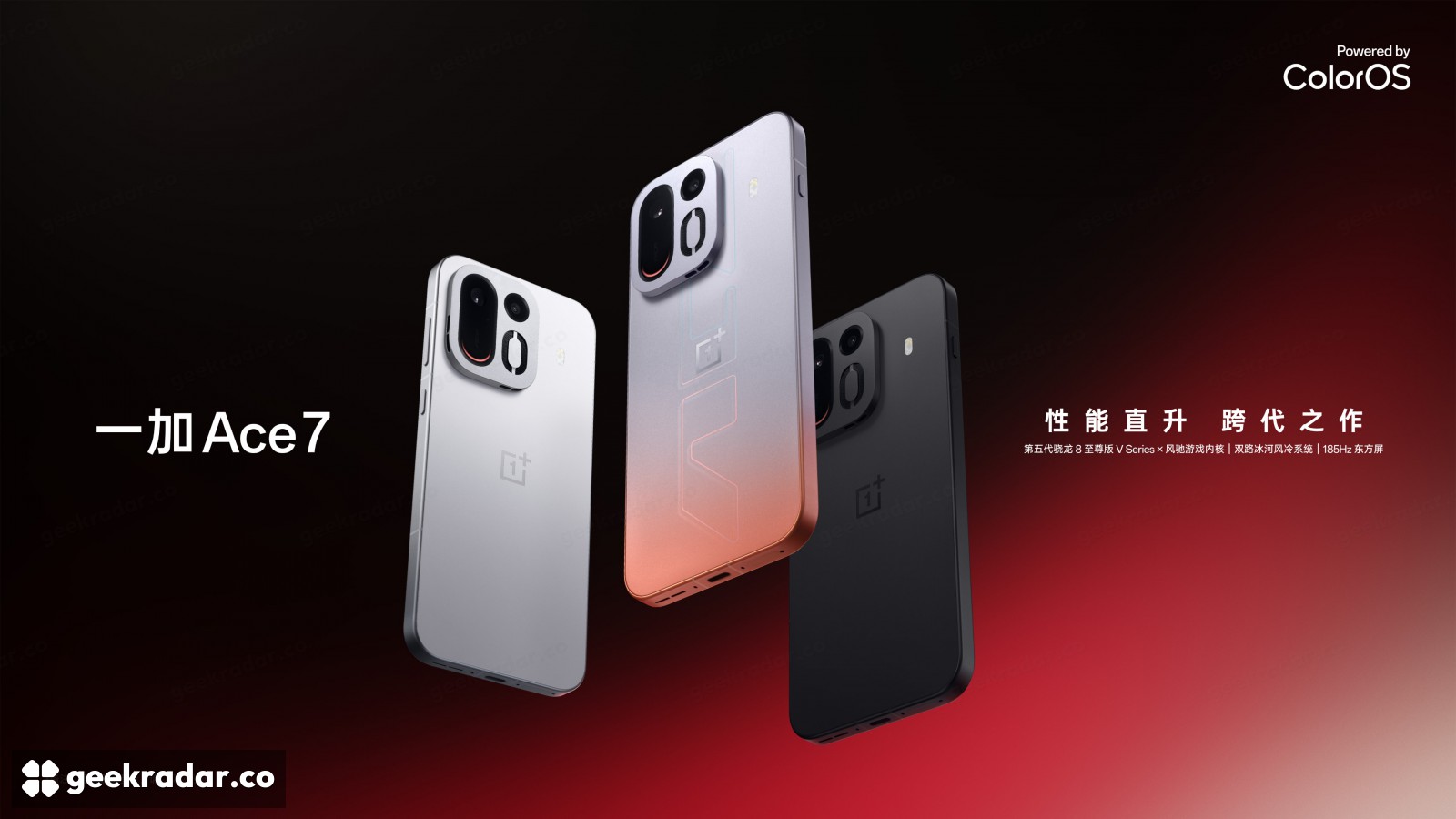
OnePlus Ace 7’s cooling pitch is really about the hand holding the phone
The China-market phone combines active airflow, a 9,000mAh battery and high-refresh gaming, with important test and compatibility limits.
OnePlus’s Ace 7 puts active cooling at the center of its gaming pitch: two airflow routes address the chip and the part of the rear panel a player holds. The Chinese model also pairs a 9,000mAh battery with a display that reaches 185Hz in supported games, while ordinary use tops out at 165Hz.
Those distinctions are more informative than treating every large number on the official product page as a simultaneous, universal operating mode. This is a China-market phone running ColorOS 17, and the manufacturer’s gaming results are laboratory claims rather than independent measurements.
The earlier hardware preview established the device’s direction; the full product notes now make the test conditions more informative than the headline numbers.
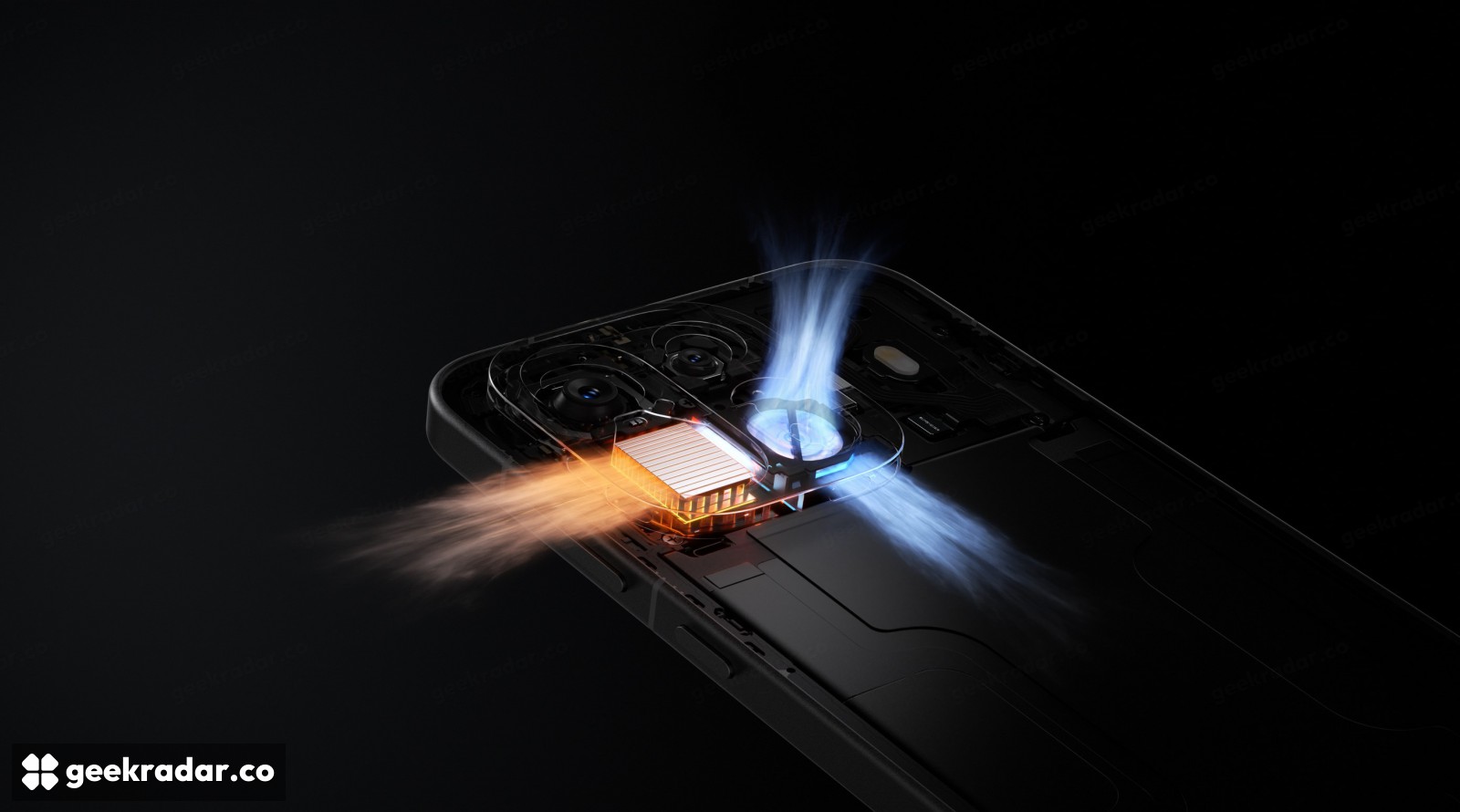
Cooling the grip is different from cooling the processor
OnePlus describes separate airflow paths for removing heat near the processor and reducing warmth at the back of the phone. That addresses two related problems: the chip must shed heat to sustain performance, while the player has to hold the device comfortably.
The company’s “up to 10°C” reduction has a specific baseline. Its footnote compares the same phone with active cooling enabled and disabled, playing Peacekeeper Elite at 185fps with smooth graphics for an hour in a 25°C environment. The measurement concerns the rear area near the chip. It is not a promise that the entire handset becomes ten degrees cooler in every game, nor a measured advantage over every competitor.
That is a useful test to disclose, but it leaves everyday tradeoffs unresolved. Fan noise, the effect of a case, different room temperatures and the chosen game can change whether the cooling system feels worthwhile. The official figures establish the intended operating scenario; they do not replace a review of it.
A 185Hz screen needs a compatible workload
The 6.78-inch OLED supports adaptive refresh from 1–165Hz in daily use, with up to 185Hz for games. OnePlus also says the supported game list can change. A game’s own frame-rate options remain relevant, so the panel’s maximum refresh rate should not be confused with the rate every title will render.
The processor is identified as Snapdragon 8 Elite Gen 5 V Series, model SM8850-1-AB. Keeping the full name matters: this page should not be used to substitute specifications from the separate Ace 7 Pro or from another Snapdragon generation.
A large battery changes the charging question
The battery’s typical capacity is 9,000mAh, with a lower rated capacity of 8,775mAh. OnePlus specifies up to 100W wired charging and claims 58% in 30 minutes under its stated conditions: 25°C surroundings, the supplied charger, the screen off and the fan enabled.
That percentage is a more useful description than assuming 100W is sustained from empty to full. The phone also offers bypass power through the game assistant, directing external power to the board while playing rather than routing it through battery charging. The benefit claimed is reduced heat during plugged-in sessions, not unlimited operation without thermal constraints.
The camera specification is comparatively straightforward: a 200MP stabilized main camera and an 8MP ultrawide. Pixel count alone cannot establish image quality, and the page’s cropped zoom examples should not be mistaken for a separate telephoto camera.
The Ace 7’s distinct proposition is a phone designed around long, high-refresh gaming sessions. Its strongest idea may be treating the hand holding the phone as part of the thermal problem. Whether that earns the extra mechanical complexity depends on sustained use, not a single peak frame-rate number.