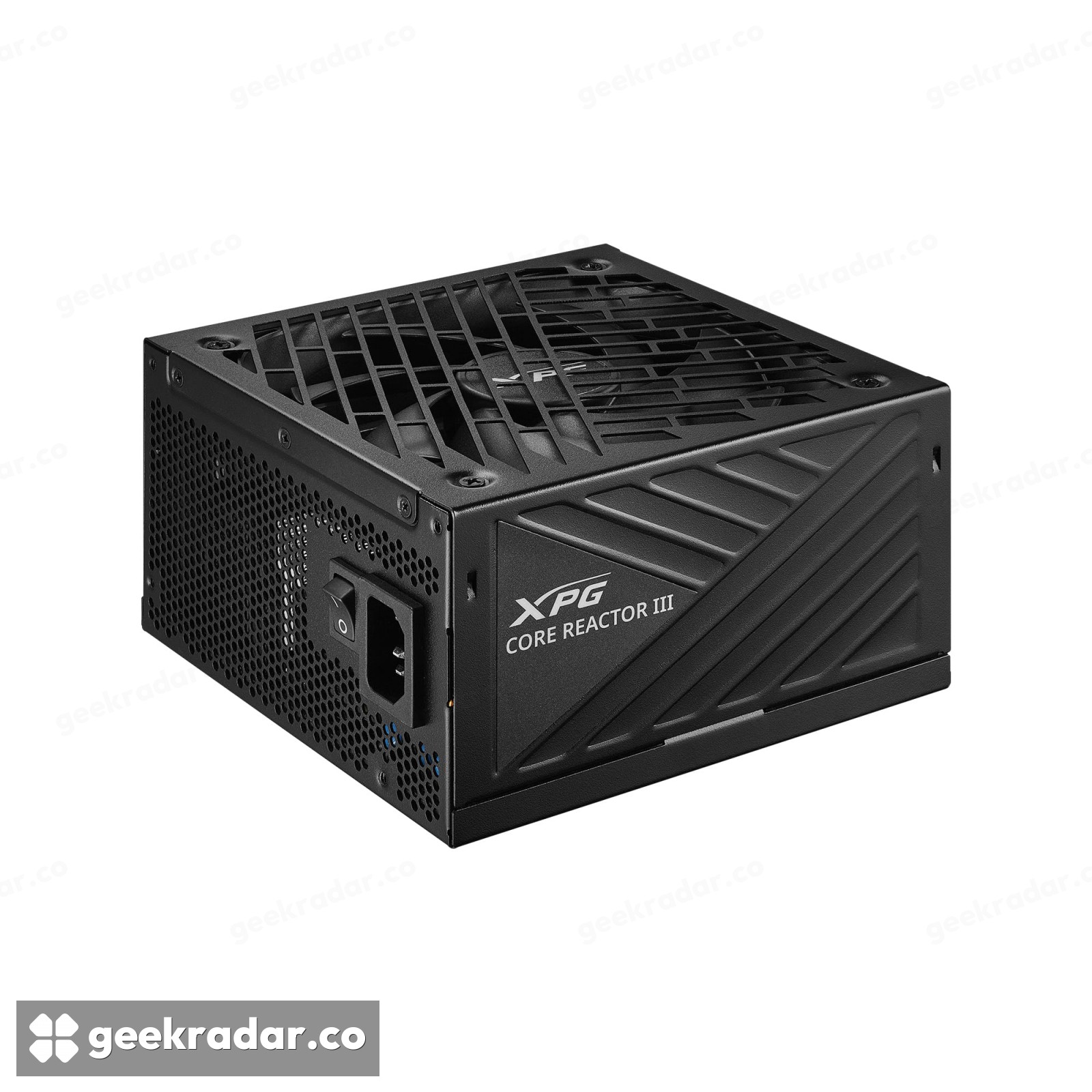
XPG Power Guard adds a warning layer around the GPU power connector
Core Reactor III Xtreme pairs imbalance alerts with automatic cutoff protection. The reported specifications do not yet establish independent protection-test results.
XPG’s Core Reactor III adds a protection system aimed at the graphics-card power connection, with an orange warning for current imbalance and a red warning plus possible power interruption for an overcurrent condition. The useful idea is detecting trouble closer to the connector. It should not be described as a guarantee that a badly installed cable can never overheat.
Hardware Busters’ account of XPG’s October 27 announcement identifies 750 W, 850 W and 1,000 W fully modular models with XTREME Power Guard. The report attributes the protection behaviour to XPG and notes that detailed thresholds, timing and the sensing arrangement were not supplied. Those missing parameters limit what can be concluded before controlled testing.
A warning and a cutoff solve different problems
An imbalance alert tells the user that the monitored current distribution has become concerning. An overcurrent cutoff is an intervention intended to interrupt power outside the system’s allowed range. They are related protections, but they should not be presented as the same event with two decorative LED colours.
The connector’s condition still matters. XPG also uses a coloured connector section to help indicate whether the cable is fully seated. Monitoring adds another layer; it does not make insertion checks unnecessary or authorize using a damaged cable. A protection circuit has defined conditions under which it reacts, while a mechanical connection can fail in several ways.
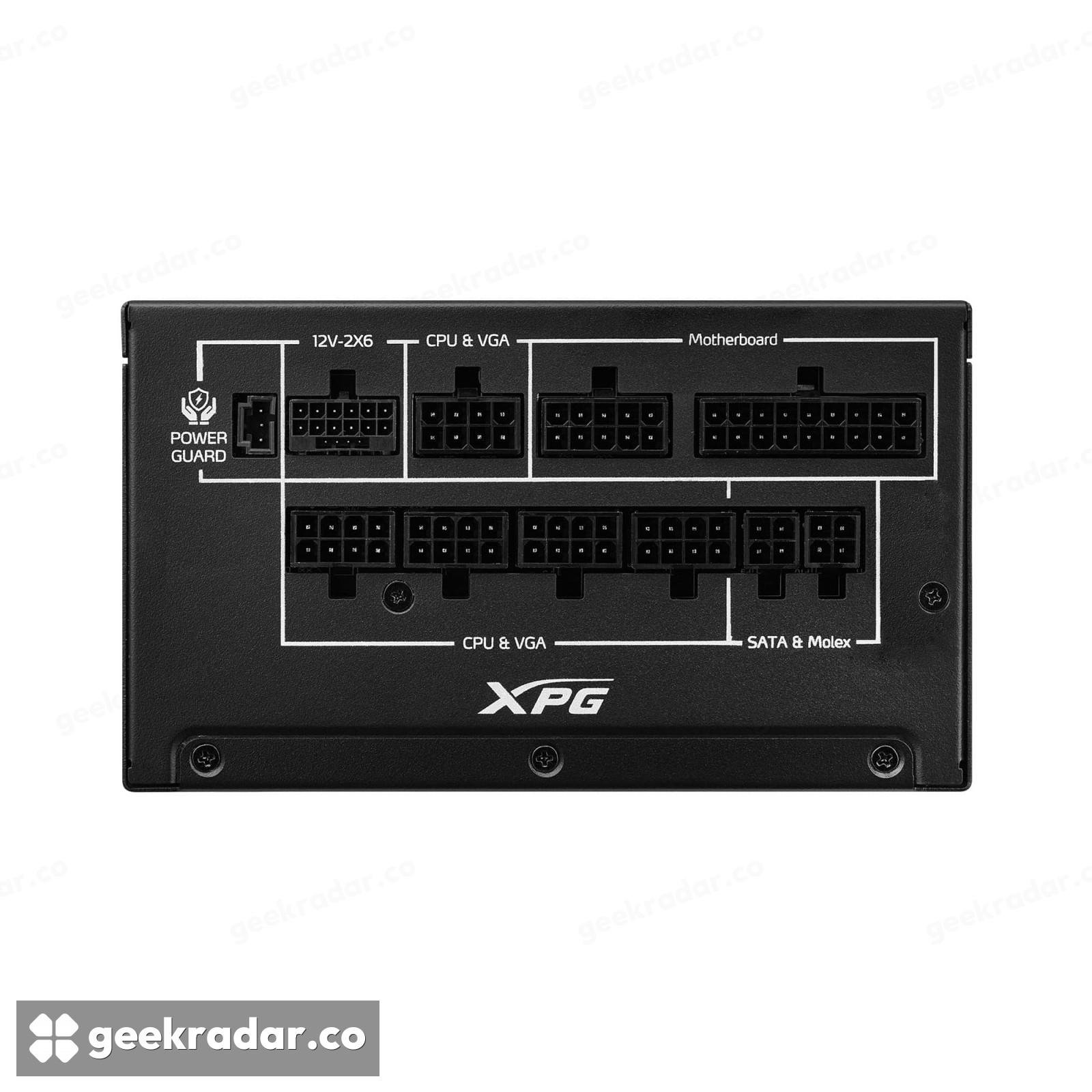
The connector panel is therefore useful to examine rather than hide behind a generic power-supply photograph. It shows the dedicated connections involved in the feature. It cannot reveal the protection algorithm, however, and a photograph is not a substitute for measuring how the system behaves during a controlled fault.
Brief excursions are not continuous capacity
The specifications include a 12V-2×6 connection rated for up to 600 W and support for ATX 3.1 and PCIe 5.1. XPG also describes tolerating a power excursion reaching 235% of rated output for 100 microseconds. The duration is essential: that is a very short transient, not a new continuous rating for the power supply.
A system builder still chooses among 750 W, 850 W and 1,000 W units according to sustained load, the rest of the system and suitable headroom. Multiplying the printed wattage by 2.35 would produce the wrong purchasing conclusion. A brief demand spike and an ongoing workload stress a supply differently.
The report also lists a 135 mm fluid-dynamic-bearing fan and a ten-year limited warranty. Neither establishes acoustic performance at a particular load, and the warranty’s length is not a benchmark for voltage regulation or efficiency. Prices and a country-by-country rollout were not included in the announcement described by the source.
Core Reactor III’s distinctive promise is therefore specific: an additional way to observe and respond to trouble at a high-power connection. That is more useful than a vague “safer PSU” label, provided the protection remains one part of the build. The cable still needs to be correctly connected before the system has anything worth protecting.