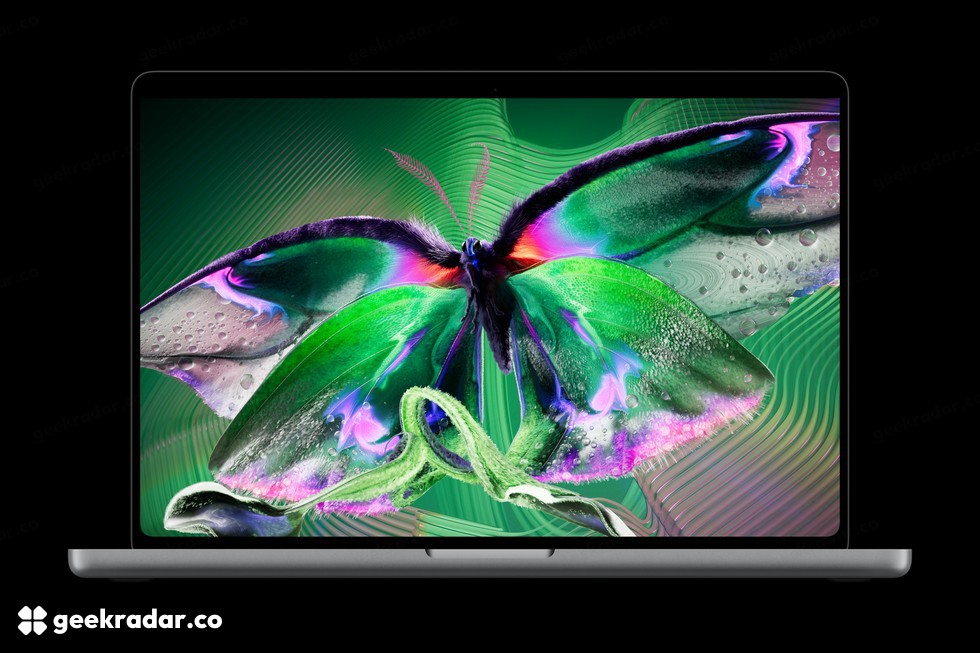
Apple’s OLED MacBook Pro adds touch, but the screen is the bigger change
Tandem OLED, a 10–120 Hz refresh range and touch arrive with M5 Pro and M5 Max. The new machine is separate from the M6 refresh.
Apple's new touchscreen MacBook Pro changes the part of the computer people look at and reach for all day. The 14- and 16-inch machines introduce tandem OLED, touch input and a Dynamic Island, while retaining M5 Pro and M5 Max processors. Preorders opened on October 28, with availability from November 6.
That makes this a different purchase from the M6 MacBook Pro announced a day earlier. The newest chip name and the newest enclosure now belong to different configurations. Choosing between them means deciding whether the display, input method and higher-end processor family solve a problem in your work, rather than following the largest generation number.
What tandem OLED changes
Apple's announcement describes two light-emitting pixel layers, marketed as PROLED XDR. Unlike a backlit display, OLED produces light at the pixels themselves. A bright object against black can therefore be rendered without illuminating a larger backlight zone around it.
Apple quotes peak HDR and SDR brightness of 2,000 nits, adaptive refresh from 10 to 120Hz, and coverage of both P3 and Adobe RGB. These are manufacturer specifications, not independent measurements. Peak brightness also needs its qualifier: it does not establish how a full white screen behaves indefinitely under every thermal condition.
The wider colour support has a more specific audience than a spectacular wallpaper suggests. Photography and print workflows can depend on colours outside the gamut used by ordinary web content. A wider-capability panel helps only when the application, document profile and output target are handled correctly; it cannot repair a mismanaged colour workflow by itself.
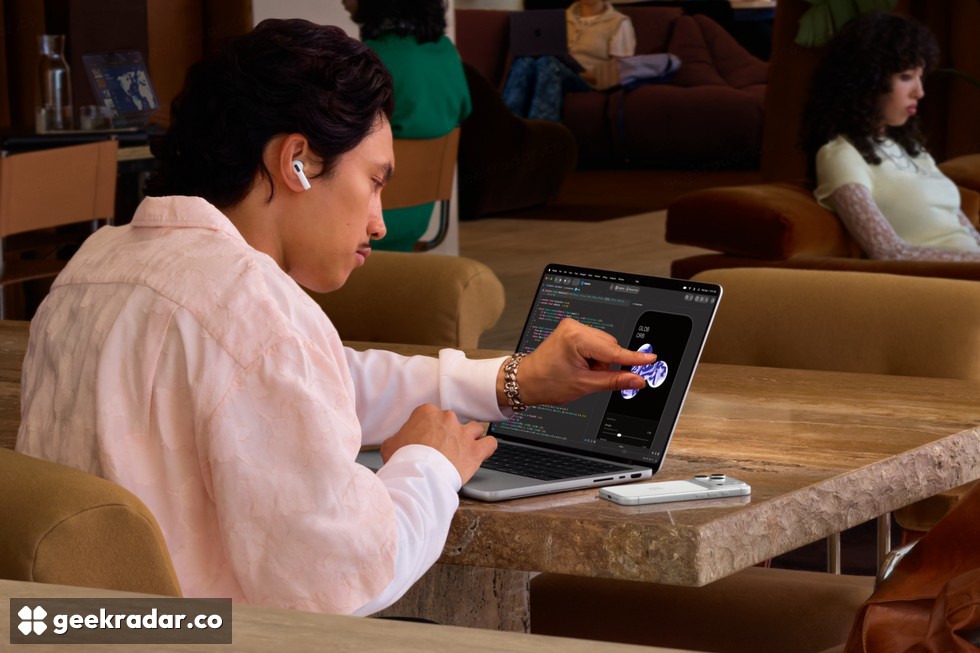
Touch supplements the keyboard
This remains a conventional laptop rather than a screen that folds back into a tablet. Apple says existing applications can receive touches translated into clicks, while developers can use updated gesture APIs for more deliberate interaction. Some named third-party updates are due later this year, so the announcement should not be read as a complete launch-day compatibility list.
Direct manipulation makes sense for a quick zoom, moving a slide or adjusting a large control. Reaching across the keyboard for a long sequence of tiny targets is a different ergonomic proposition. The useful change is having another way to perform a particular action, not an obligation to abandon the trackpad.
Apple has revised the hinge for stability during touch use. Its Dynamic Island also brings status information into the camera area, but some functions depend on Siri AI being enabled and available. Hardware presence and software eligibility remain separate checks.
The premium is attached to the complete machine
US starting prices are $2,899 for the 14-inch M5 Pro model and $3,399 for the 16-inch; M5 Max configurations start higher. Regional prices and configurations differ. Maximum memory and storage figures describe upper configurations, not what every base model includes.
Ars Technica's launch report also highlights the lighter enclosure. That can matter on a journey even when a processor upgrade would barely change the day's work. Apple's battery claim of up to 24 hours is nevertheless tied to its own testing, not a promise for continuous HDR editing at maximum brightness.
For an owner whose current Mac already finishes the work quickly, this is an unusually visible upgrade with an unusually tangible price. The strongest case will come from hours spent judging colour or manipulating content on the built-in screen. Someone who closes the lid and works through an external monitor may be paying most for the feature they see least.