iQOO Neo12 combines a cooling fan and 9,000 mAh, but 185 Hz needs context
The gaming phone separates native rendering, frame interpolation and display refresh. Its large battery also comes with measurable size and weight.
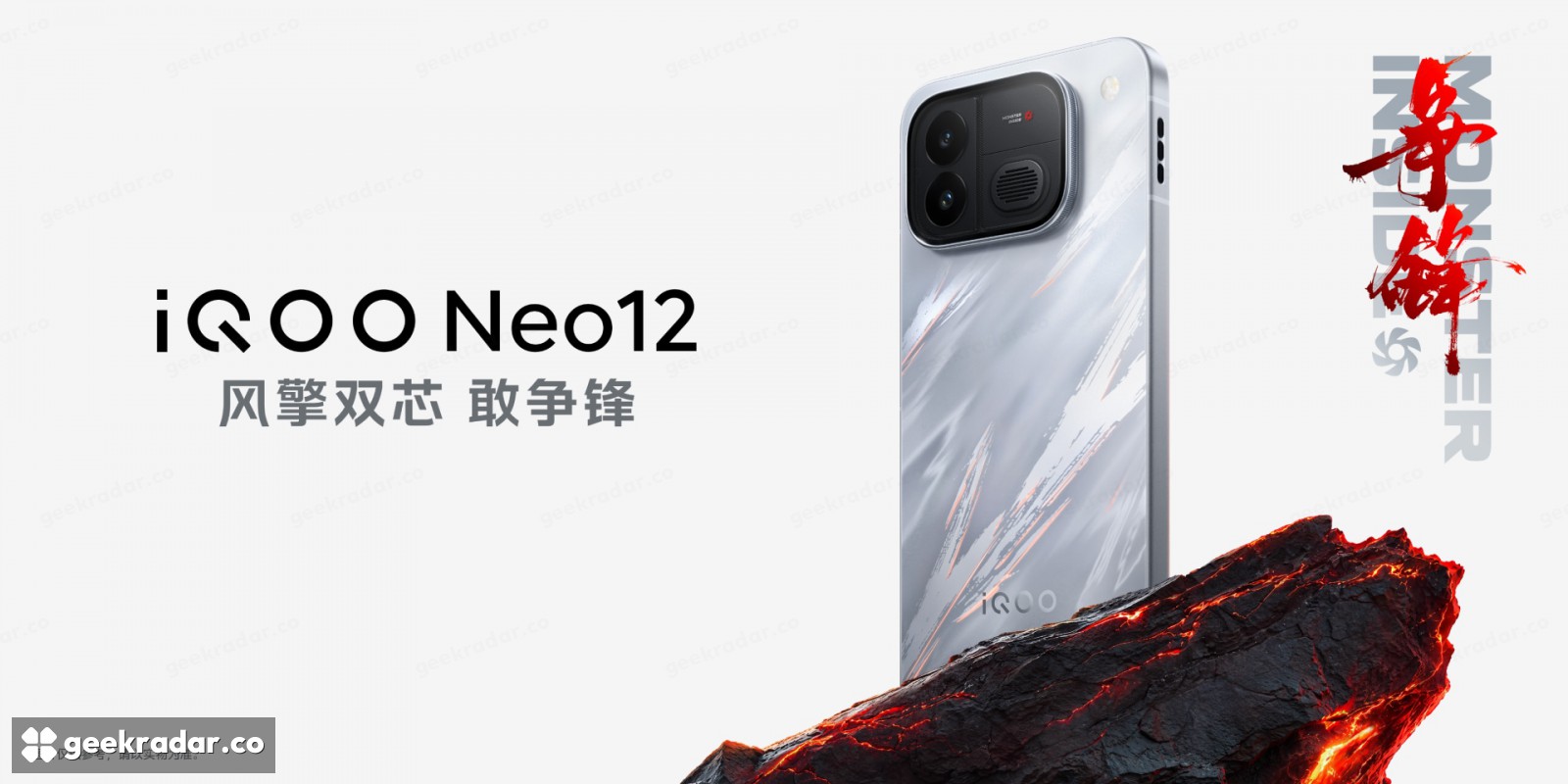
The iQOO Neo12’s most revealing specification is not its 185 Hz screen on its own. It is the combination of that display, active cooling and a 9,000 mAh battery. The China launch describes a phone built to sustain long gaming sessions, with the weight and software dependencies that follow from that ambition.
The official specification and feature page confirms Snapdragon 8 Elite Gen 5, iQOO’s Q3 companion chip and a 6.83-inch display. This develops the earlier screen teaser into a much more complete product. The extra information also makes clear why a refresh-rate headline cannot stand in for a gaming benchmark.
The game determines which frames you get
The display can refresh 185 times per second, but an application needs explicit support to deliver matching native frames. iQOO directs buyers to its supported-game list. Separately, Q3 offers upscaling and frame interpolation for selected titles. A reconstructed image or inserted frame is not equivalent to an additional frame produced by the game’s simulation.
That distinction matters most for input response. Interpolation can improve visible smoothness without advancing the underlying game state at the same rate. The page describes native high-frame-rate modes and combined super-resolution/interpolation modes separately; comparisons should preserve that separation.
The cooling system combines a vapor chamber with a 17 × 17 mm fan. Three operating modes offer different approaches to noise and cooling. A fan can help remove sustained heat, but its presence does not establish a noise level, surface temperature or performance result. Those require measurements under the same workload and ambient conditions.
The rest of the phone is more conventional
The camera system pairs a 50 MP Sony IMX921 main sensor with optical stabilization, an 8 MP ultrawide and a 16 MP front camera. That is a different spending priority from a phone built around multiple large camera modules and a dedicated long telephoto. It does not make the cameras unusable; it clarifies what the hardware budget emphasizes.
A 100 W charger is included according to the Chinese package list, but the manufacturer describes that as the charger’s maximum output, with actual charging power varying. The site also lists direct-power functionality that must be enabled manually. For extended play while connected, understanding that setting may be more useful than comparing peak wattage alone.
GSMArena’s launch coverage places the device in the Chinese market. Regional software, game support and after-sales terms must not be assumed to carry across borders. Neo12’s appeal is a coherent set of gaming priorities; whether it delivers them depends on the games actually played, not the highest number the panel can display.