Sonos lets portable speakers return to surround duty. The role changes their features
The new setup can reuse a matching pair with supported soundbars. Bluetooth and other inputs do not remain available in every role.
Sonos is making the rear speakers in a home-theater system less permanent. With its Sonos27 software, compatible portable Play speakers can serve as surrounds, leave the room for independent listening and return to their home-theater role. The appeal is practical: the speakers behind the sofa no longer have to spend the rest of the day waiting for the television.
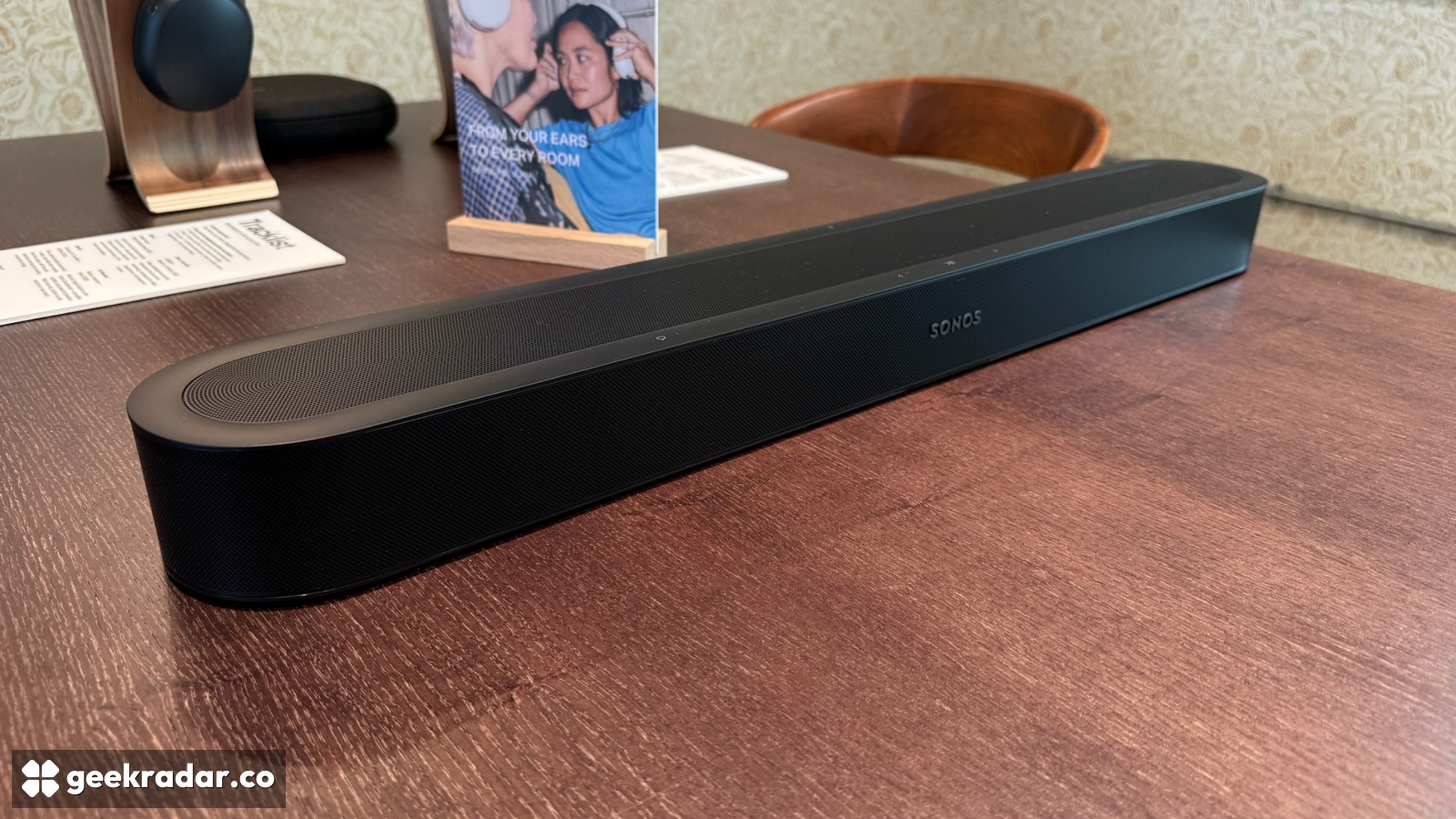
The feature has received a detailed independent hands-on account from TechRadar. That report describes a Beam Ultra with two Plays, and identifies Arc, Arc Ultra and Beam Gen 2 among the other compatible soundbars. It is evidence of a tested setup, not a reason to assume every older Sonos speaker gains the same portable behavior.
A role change is more useful than another audio mode
Dedicated surrounds solve a positioning problem: rear effects need speakers behind the listener. They also create a utilization problem. If those speakers remain assigned to the television system, buying a separate portable unit for the kitchen or garden can feel wasteful.
The new arrangement tries to make one pair serve both needs. Its value is greatest in a home where listening moves between rooms and outdoor spaces. Someone who almost never moves a speaker may obtain less benefit than someone who regularly carries music away from the television. That difference matters when comparing a portable pair with less expensive fixed surrounds.
The independent report found the switch between roles useful, but its listening impressions belong to its reviewer and room. A soundbar's dimensions, speaker placement, seating position and optional subwoofer all affect the result. Portability does not establish that a smaller system sounds more substantial than a larger one.
Check the pairing rules before buying
Sonos's surround guidelines generally require two speakers of the same model, with specified exceptions for related products. Owning two different Sonos speakers is therefore not enough to assume they form a rear pair. The guide also recommends matching orientation and placing the units behind and to either side of the listening position.
That distinction prevents a common misunderstanding: a speaker with Bluetooth on its specification sheet does not necessarily accept a separate Bluetooth stream while assigned to a home-theater channel. The system must coordinate what each speaker plays rather than treating every input as simultaneously independent.
Buy for the room you actually use
The sensible comparison is the cost of the complete arrangement: soundbar, compatible rear pair and any subwoofer the room needs. A portable pair may replace another purchase, but only if it is genuinely moved and used elsewhere. Otherwise, the flexibility remains an expensive unused feature.
Sonos's idea is strongest because it addresses something less glamorous than a codec or a louder demonstration. It changes how often existing hardware earns its place in the home. For the right household, the best rear speaker may be the one that does not spend every afternoon behind the sofa.