
Steam’s Personal Calendar is live, but its dates need a closer look
Valve’s recommendations now sit in the store. Weekend placement, demos and regional details still require the game’s own page.
Steam’s Personal Calendar has graduated from an experiment to a full store feature. Its useful promise is not another list of the biggest launches: it puts games that may suit your habits into a release calendar, including smaller titles that a general chart can bury. Valve’s release announcement confirms that the feature is now part of the store homepage as well as a dedicated page.
There is an important consequence for readers comparing calendars with friends. You are not looking at a common editorial selection. Different accounts can see different games on the same date, and an empty-looking day is not evidence that nothing worthwhile is being released.
Your playing habits help decide what appears
Valve says the system uses substantial playtime to find people with similar habits, then considers what those players wishlist or play. Trying something for a few minutes should have less influence than spending many hours with a new favourite. The recommendations are refreshed daily, although Valve cautions that the visible results may not change dramatically every morning.
That makes the calendar a useful answer to a specific problem: “What is coming soon that someone with my interests might have missed?” It is a weaker answer to “What are the most important releases for everybody?” A player who spends most of their time in strategy games has supplied a different set of clues from someone exploring fighting games.
The distinction is especially useful during a crowded demo festival. Sampling a demo and choosing a game to buy later are separate activities. A discovery tool based on longer-term behaviour can complement a weekend of experimentation, but should not be mistaken for a complete record of it.
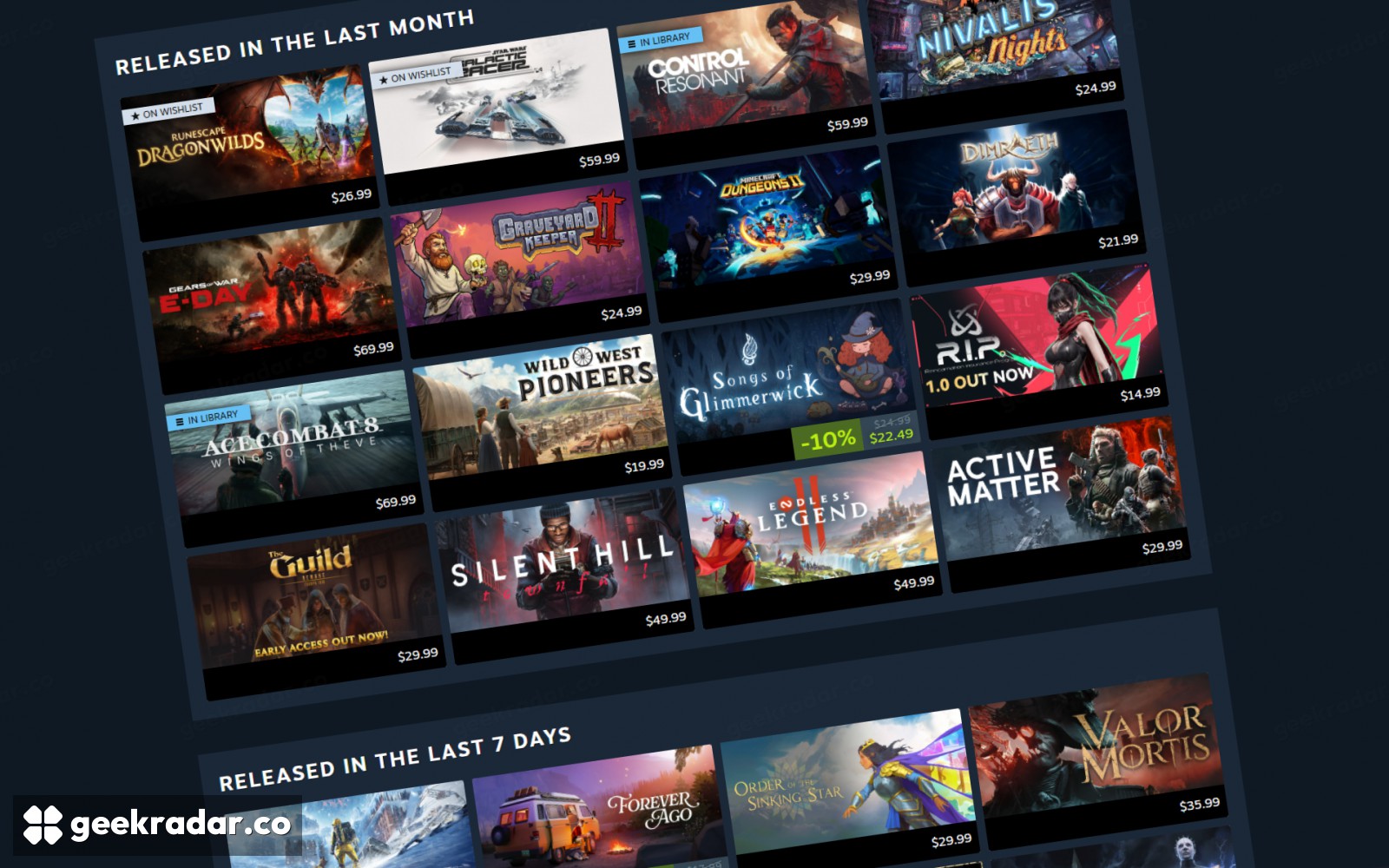
A calendar entry is a recommendation, not a release guarantee
The Steamworks documentation explains several boundaries that are easy to miss from the attractive grid. A game needs a public Coming Soon page with a specific date to be eligible. Early Access games moving to version 1.0 can appear too. Demos are excluded, while downloadable content can be recommended to owners of its base game.
That matters for planning a weekend session. The calendar is organising discovery, not replacing the product listing. The same caution applies to delays: Valve documents circumstances in which a postponed game disappears from recommendations until release. Absence from the grid therefore does not, by itself, mean a cancellation.
Use the filters to make room for surprises
The dedicated view covers eight weeks and offers controls for wishlisted titles, Early Access and DLC. A sensible way to use it is to inspect the recommendations first, then open the individual pages for language support, release status and system requirements. Italian readers still need that second step: being recommended a game does not establish that it has Italian text.
Valve says developers do not pay for placement. That removes one possible explanation for a recommendation, but it does not turn an algorithm into a review or prove that a game will suit you. A calendar can make a launch easier to notice; it cannot tell you whether its controls, writing or performance will hold your attention.
The best use of this addition is modest and practical: let it surface a game you would otherwise have missed, then leave the grid and inspect the game. Discovery has done its job when the next click produces a better-informed choice.