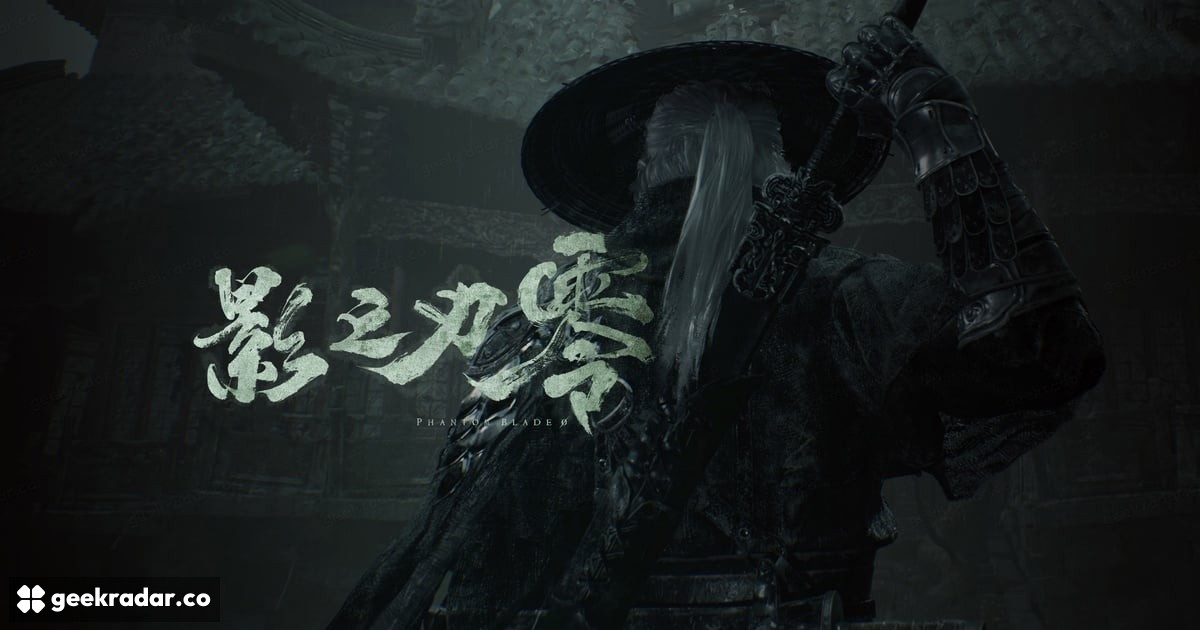
Phantom Blade Zero’s PC targets all come with an upscaling condition
The specification sheet separates ordinary rendering, ray tracing and path tracing. Its targets are developer guidance, not independent benchmarks.
Phantom Blade Zero's PC requirements attach an important condition to their frame-rate targets: upscaling is enabled. Ahead of the October 29 release, that makes the published 1080p, 1440p and 2160p figures a guide to intended output settings, not evidence that the listed cards render every frame natively at those resolutions.
S-Game's official specification page separates ordinary rendering, ray tracing and path tracing. Reading those as distinct tiers is more useful than choosing the most expensive card in the table and treating it as the minimum price of admission.
The baseline is below the path-tracing tier
The minimum tier lists a GTX 1660 6GB or Radeon RX 5500 XT 8GB, 16GB of memory and an SSD, targeting 1080p at 30fps with upscaling. The recommended tier moves to an RTX 3060 Ti 8GB or RX 6700 XT 12GB for 1440p at 60fps, again with upscaling.
Those targets describe the developer's intended configurations. They are not independent measurements of frame-time consistency, busy combat scenes or every possible combination of processor and graphics card. A minimum specification is especially easy to misread: it establishes a supported entry point under stated conditions, rather than promising that all visual options can remain high.
Ray tracing is not one fixed cost
S-Game lists an RTX 5060 8GB for its ray-tracing recommendation at 1080p/60, and an RTX 5080 16GB for path tracing at 2160p/60, with upscaling in both cases. The gap reflects different rendering workloads and output targets. It should not be collapsed into a claim that one feature toggle has the same cost on every system.
The creative director's June letter also emphasized improving the visual presentation without making ray tracing a prerequisite. That is a design priority, not a benchmark result, but it helps explain why the specification sheet includes a conventional rendering route alongside the more demanding options.
For a player with a suitable existing PC, the useful decision is which tier to try first. Stable control response and readable motion matter in an action game; choosing a lighting mode that strains the system can trade away the qualities that make the combat feel manageable. The published requirements provide a starting point for settings, not a reason to purchase a new graphics card before seeing how the game behaves on the machine already available.
The official release page lists October 29 and links the PS5, Steam and Epic editions. PC specifications do not describe PS5 performance. Keep platform, rendering tier and upscaling condition together, and the table becomes much less intimidating: it describes several ways into the game, rather than one mandatory maximum-spec experience.