
Persona 4 Revival explains how the Velvet Room turns discoveries into better builds
Skill-card registration and fusion forecasts give the remake’s preparation systems a clearer shape. The retail demos have a specific geographic scope.
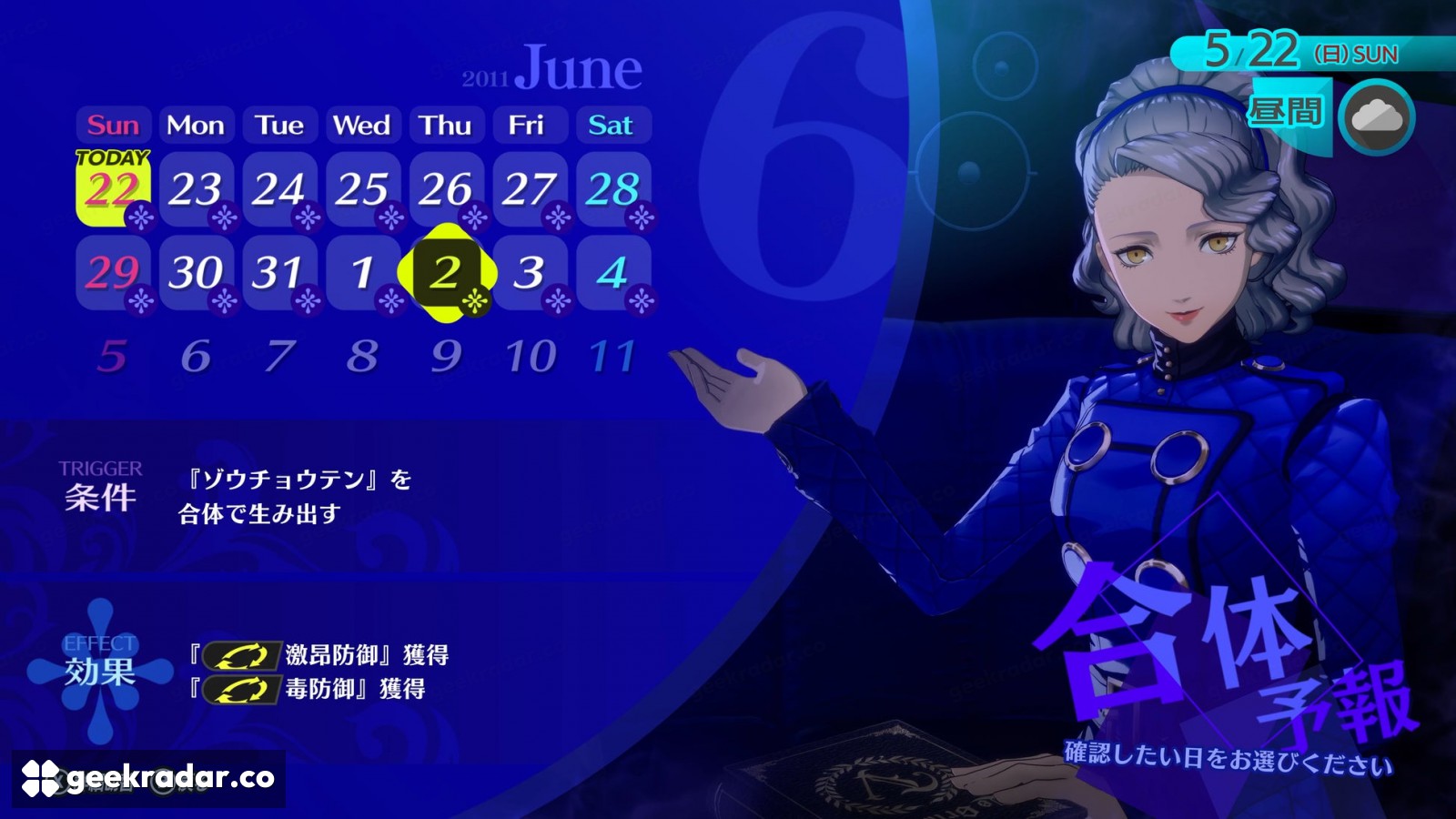
Persona 4 Revival's latest update puts the Velvet Room back at the centre of building a useful Persona collection. Atlus has detailed fusion, purchasable skill cards and the calendar's fusion forecast, giving the remake a more specific shape than another round of character portraits alone would provide.
The October 23 release from Sega introduces these systems alongside Igor, Margaret and Marie. None of their story outcomes is needed to understand the practical point: this is where collected Personas become a set of choices about which abilities to keep, which to combine and when to make the change.
Fusion turns a collection into a plan
Combining Personas produces a new one, with skill inheritance allowing the result to carry selected capabilities forward. That makes a growing collection more than a list of stronger replacements. The ingredients matter because some of the value can survive the combination.
A useful way to read this is as preparation rather than just acquisition. If one Persona supplies a desirable skill while another offers a different role, fusion creates a reason to examine both before discarding either. This is an explanation of the disclosed system, not a claim that a particular build is optimal in the remake.
Atlus also confirms that fusion accidents remain possible. A forecast and a chosen recipe do not remove every uncertainty from the process. The announcement does not provide the probabilities or complete rule set required to calculate an optimal route, so a detailed build guide would be premature.
Cards make a discovery repeatable
Marie sells skill cards, which teach particular abilities. According to Atlus, possessing a card registers it in the purchase lineup, allowing it to be bought again. That changes the role of a find: a useful card can become a repeatable resource rather than a single item whose use closes off every other option.
There is still a distinction between registering an option and receiving unlimited free uses. The announcement describes purchases. It does not say that registration removes the cost or makes every skill available from the beginning.
The fusion forecast adds another planning layer. It displays conditions and effects that vary with the day, including opportunities for stronger skills or stat improvements. A calendar therefore affects preparation as well as the surrounding life-simulation structure. Timing a combination can have a different purpose from simply postponing it until a stronger ingredient appears.
The playable events are in stores, not a public download
Sega also announced six Japanese retail demo venues across five cities, running on selected dates from November 14 to December 13. These are in-person events, with entry arrangements set out by the publisher. They should not be mistaken for the announcement of a downloadable demo for every player.
The release schedule also needs its platform qualifier. The new product information lists February 18, 2027 for the initial release and May 20, 2027 for Nintendo Switch 2. Sega's earlier release announcement provides the initial launch context; the October update supplies the newer platform details.
The interesting part of this reveal is the connection between discovery and reuse. A card enters a catalogue; a skill survives a fusion; a date changes the opportunity. The Velvet Room makes a collection valuable through the decisions it supports, rather than through its size alone.