Light No Fire’s lasting buildings matter more than another giant-map claim
Hello Games’ shared-world pitch gives player-made places a history. Release timing, server limits and detailed ownership rules remain separate questions.
Light No Fire's most interesting promise is not simply an enormous landscape. Hello Games says players will be able to construct persistent buildings and communities in its shared fantasy world. Persistence changes the meaning of travel: the destination can contain something another player made, rather than only something the terrain generator placed there.
That is the pitch on the official site and the Steam listing. The release date remains unannounced on Steam, and the hardware requirements are not a usable shopping specification yet. This is a look at the confirmed design proposition, not a claim that a launch has just been scheduled.
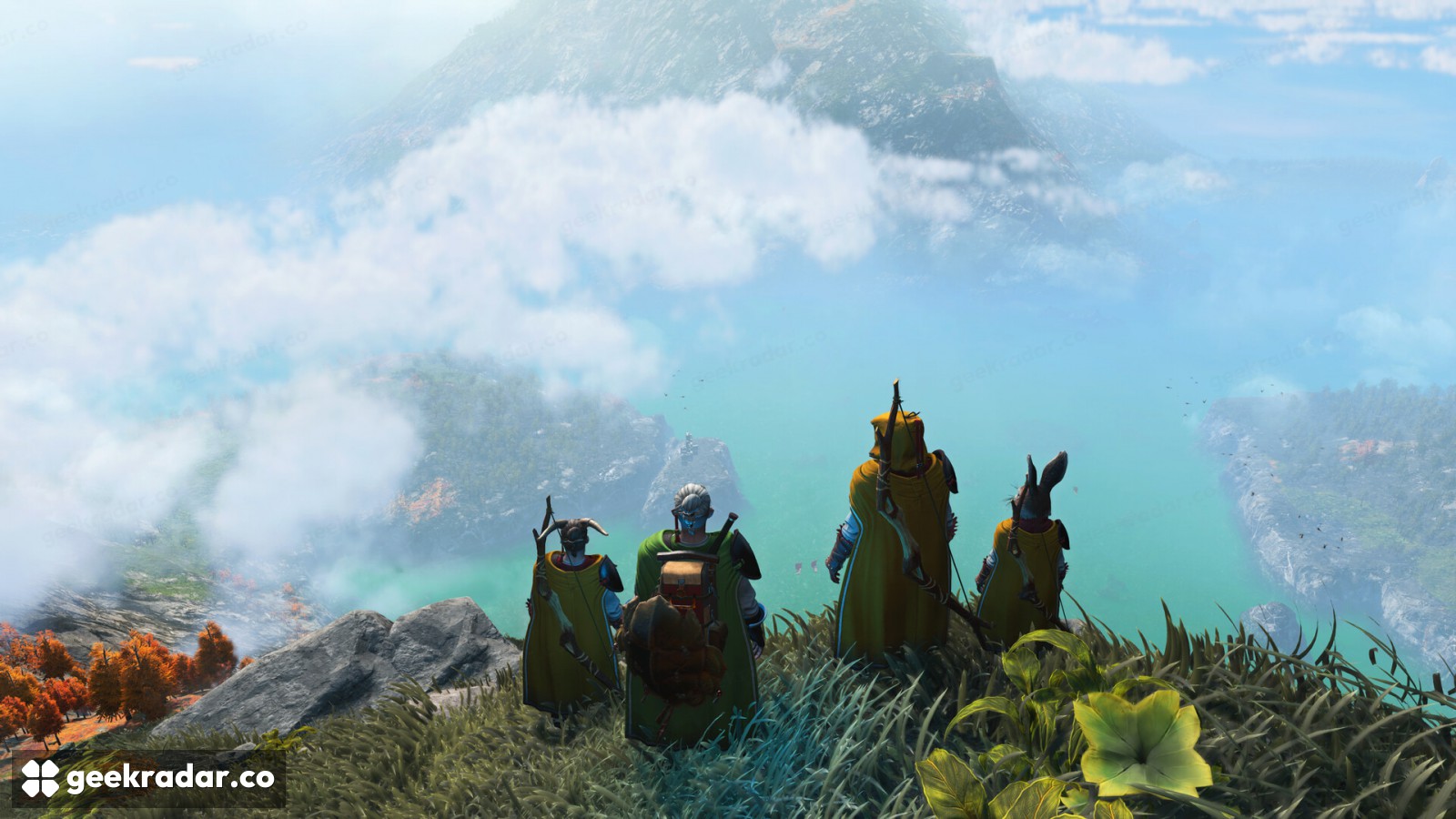
Size and significance are different problems
Hello Games describes a procedurally generated planet on the scale of Earth. That is the developer's scope claim, not an independently measured playable map. Even if a world provides a vast amount of terrain, size alone cannot establish how interesting a particular journey will be.
Persistent construction potentially supplies a different kind of density. A structure can carry evidence of a decision: someone chose this location, transported or gathered what was needed and arranged a space for a purpose. A traveler does not need to understand every system behind it to recognize that the place reflects another person's activity.
The appeal is therefore partly social, even for someone who prefers to explore quietly. Encountering the consequences of other players' work can make a world feel inhabited without requiring every encounter to become a coordinated party session. Whether the finished game makes those encounters frequent, rare or optional depends on implementation details that the current overview does not settle.
A shared world is not a confirmed single-server population
The Steam page lists single-player and online co-op, and the official pitch allows adventuring alone or together. Those statements should not be expanded into an invented concurrent-player limit or a guarantee that every player on Earth occupies one seamless server.
The same caution applies to building rules. Persistence raises useful questions about ownership, abandoned structures and the space available to later arrivals, but those questions are not evidence that Hello Games has chosen a particular solution. It is possible to understand why a feature matters without filling every gap with a system borrowed from another survival game.
The co-op attraction is the relationship between a personal project and a larger world. A house can be a home base for its builder and a landmark for someone else. Light No Fire will have to make those scales coexist. The memorable part of a planet-sized adventure may ultimately be much smaller than the planet: a place that would not exist if another player had never stopped there.