Abyssal Lapidary’s demo makes gem cutting a business decision
Update 0.2.15 adds better estimates, editable jewellery and clearer tools around the gothic workshop’s central craft.
The tempting part of Abyssal Lapidary is easy to understand from a short clip: a rough stone becomes a jewel under your tools. The more interesting part is what happens around that transformation. The demo combines cutting with commissions, shop management and a gothic setting, and its 0.2.15 update makes several of those decisions easier to read.
Light Worm's October 23 patch notes add clearer tool-efficiency information, more detailed faceting estimates and better ways to organise materials. These are meaningful changes for a game in which a pretty result still has to satisfy an order and make economic sense.
The cut is a business decision
The Steam description introduces a declining workshop in the underground city of Fathomholm. The basic work involves examining minerals, removing unwanted material, shaping gems and making jewellery for customers. The atmospheric premise supplies a reason to explore, but the tools supply the daily decisions.
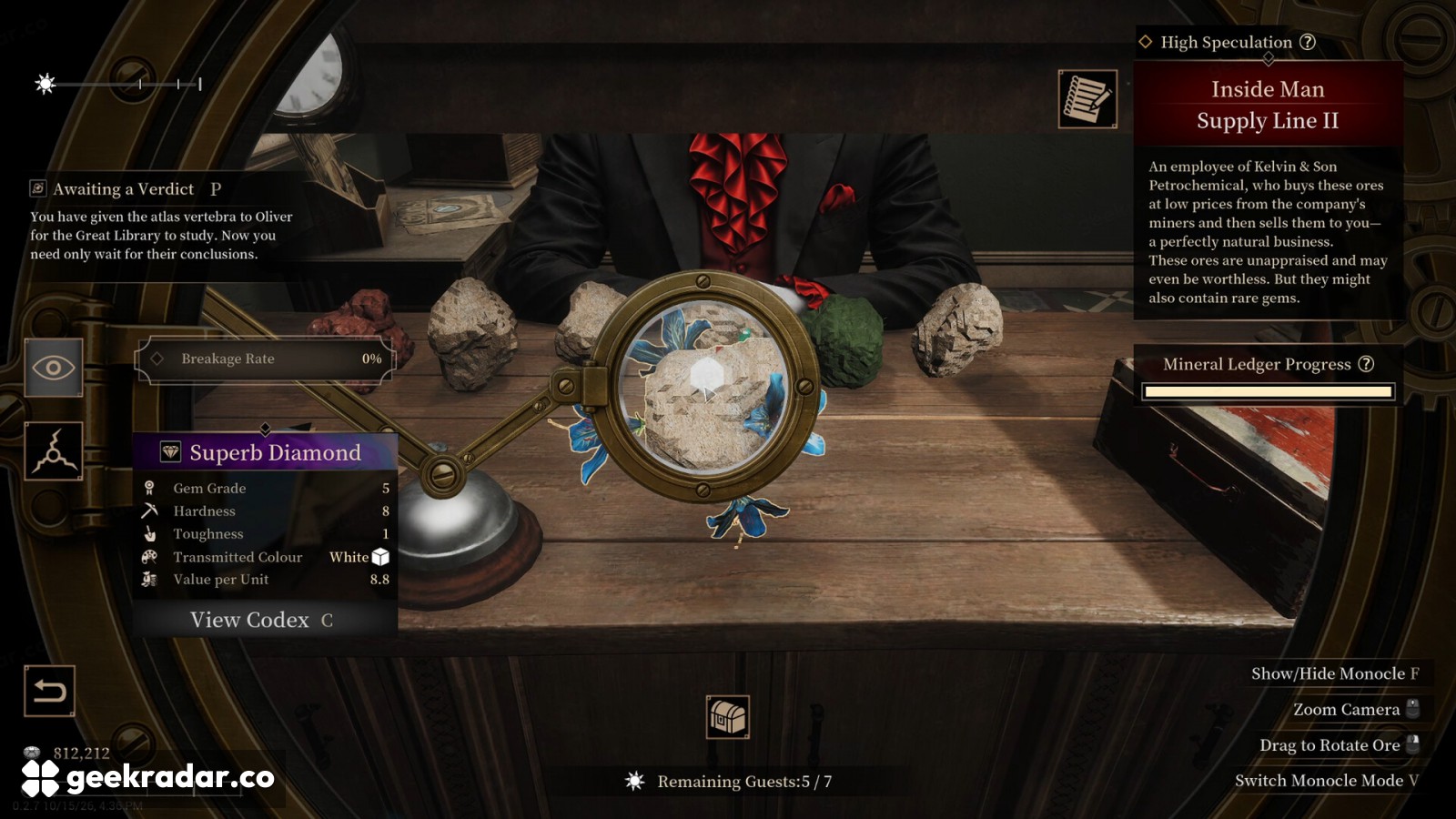
Cutting is an especially effective foundation for that loop because improving one characteristic can consume another. Material removed from a stone is no longer available to shape. A design that looks desirable still needs to be considered against its yield, value and the customer's requirements. The patch's expanded estimates make those competing considerations more visible rather than simply offering another decorative object to craft.
The faceting table can now compare the main-stone requirements of jewellery commissions. That reduces the distance between reading an order and acting on it. A good interface here should help a player understand the consequence of a choice before committing the work, while leaving the choice itself intact.
Less friction around experimentation
The update also allows editing of crafted and equipped jewellery, with designs saved and loaded within the same type. Edits using the same material do not require more material; changing it requires the full amount of the replacement. That is a useful distinction between revising a composition and being given its ingredients for free.
Storage sorting now includes several material properties and gives priority to ores needed for commissions. Separate recent autosaves and a manual slot offer more clearly defined recovery points. Neither feature makes a mistake impossible, but both reduce the amount of administrative work surrounding a creative task.
Accessibility additions include optional visual reference aids, while expanded tutorials explain tools, cabinets and selling gems. These changes are particularly relevant to a demo whose appeal can bring in players attracted by a satisfying clip rather than by prior familiarity with management games.
A demo, with the full release still ahead
The full Steam game remains listed as coming soon. Its downloadable demo is available now; it should not be confused with buying a finished release. PC Gamer's October 23 hands-on account independently describes the tension between precise cutting, customer trade and a deliberately measured pace. That is the publication's experience, rather than a test conducted by GeekRadar.
The broader Steam Next Fest context explains why a small game can suddenly attract attention during a concentrated week of demos. Here, the useful reason to look beyond the clip is the connection between making an object and running the place that sells it. A convincing gemstone is the invitation. Deciding which stone to cut, for whom and at what cost is what can give the work staying power.