Thank You Bus Driver turns two simple jobs into one deliberate mess
Double Fine’s first Action Labs release makes the road and the rear-view mirror compete for attention.
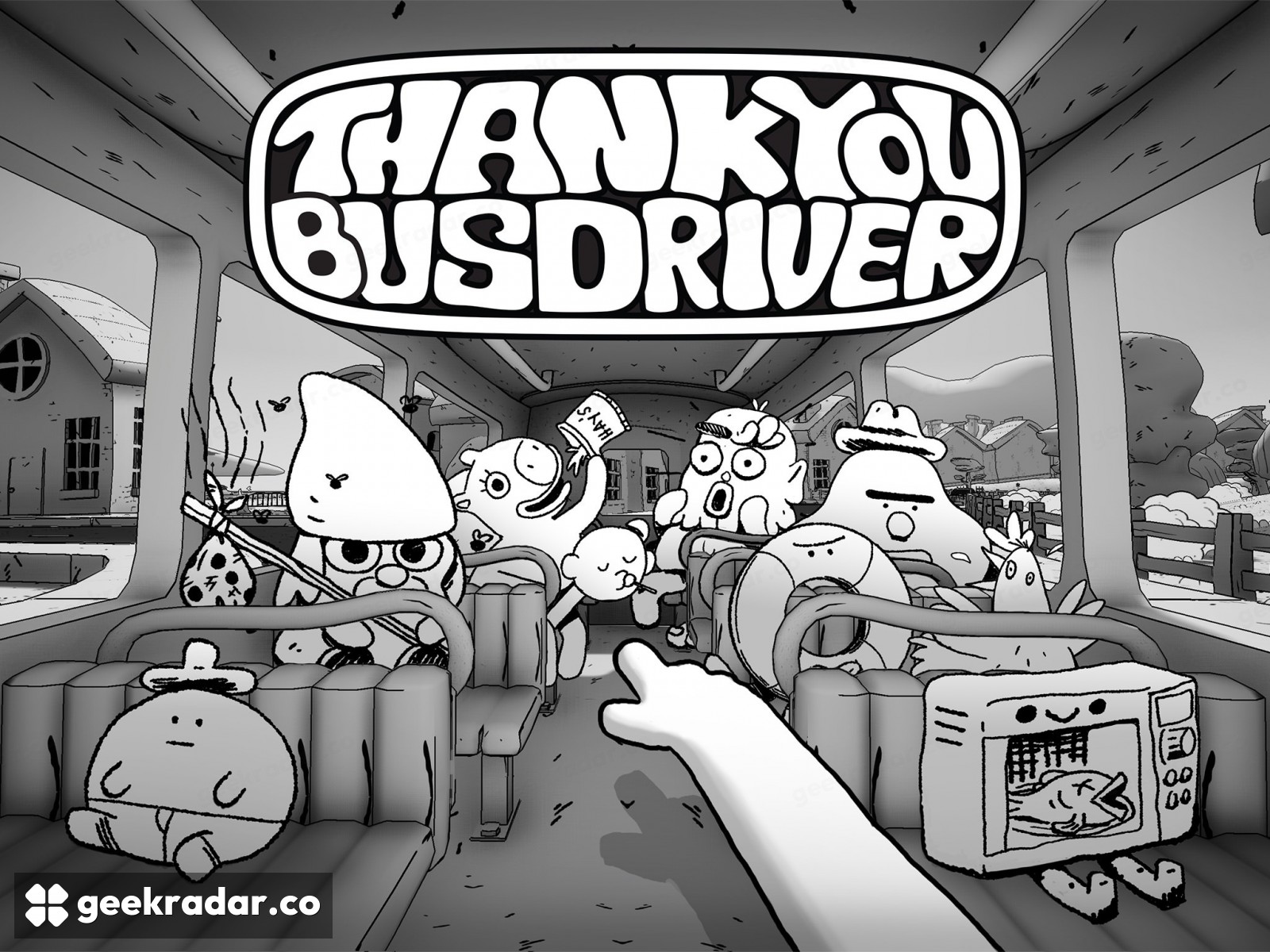
Thank You Bus Driver gives its driver two jobs that compete for the same attention: keep the bus moving and keep its passengers under control. Double Fine's small PC game, released on October 14, is an unusually direct example of how a familiar activity can become a game through one carefully chosen conflict.
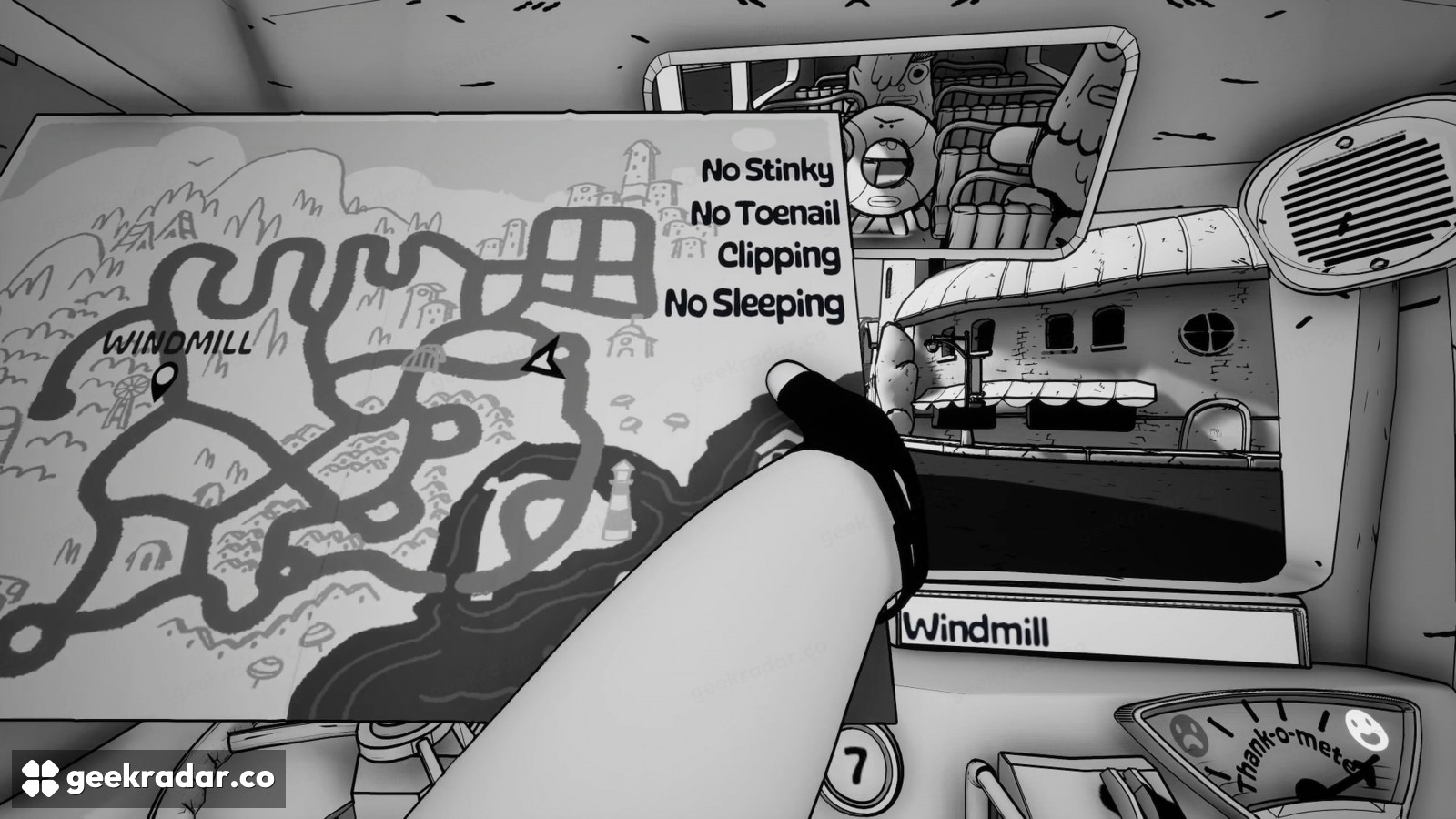
In the studio's launch-day interview with project lead Will Koehler, he explains that the mirror and passengers needed to matter. The solution was to make enforcing rules part of the driving job, then let those rules change. The bus is therefore more than a vehicle moving through a city; its interior competes with the road for the player's gaze.
The useful problem is divided attention
A conventional driving objective points the player's attention forward. A passenger problem pulls it backwards. Combining the two creates a conflict without needing a complicated explanation: looking away from one responsibility is how the other can demand attention.
The game's exaggerated physical comedy expresses that conflict through unruly passengers and abrupt interventions. It is a cartoon premise, not an attempt to represent real transport work. The interesting design choice is that the passengers are operationally important. They are not simply background decoration that makes the bus look occupied.
Koehler describes the changing rules as a way to keep that second job active. If the player could memorise one permanent instruction and ignore everything else, the interior would eventually become another solved part of the route. A changing rule asks the player to keep interpreting what is happening while still driving.
The result can be explained through that collision of responsibilities without claiming a hands-on verdict about its difficulty, longevity or humour. The screenshots show the arrangement; the developer interview explains the intention. Whether the balance stays entertaining over a full playthrough is a separate review question.
Why Double Fine made room for something small
The game is the first release under Double Fine Action Labs, a label the studio introduced for smaller, unusual experiments. Its announcement says a small team built this project in a matter of weeks and connects the approach with the studio's Amnesia Fortnight experimentation.
That scale is relevant to the design rather than merely a production curiosity. A compact game can concentrate on proving one interaction instead of making it support dozens of unrelated systems. Here, the road and the rear-view mirror already supply an immediately understandable source of pressure.
Koehler also describes contributors developing components separately before bringing driving, passengers, rules and items together. The useful observation is not that separate development always works. It is that the central idea could be assessed when those pieces started interfering with one another in the intended way.
A released experiment, not a new announcement
The launch post gives a US price of $4.99. That is a regional price, not a universal conversion or a verified quote for every storefront. The game is already out on PC; this is a closer look at the design of a recent release, rather than a claim that it launched today.
A small premise that can be communicated in a single image has value for an indie game. That alone does not guarantee a good game, but it gives the experiment a clear test of its own. If the road would be easy without the passengers, and the passengers easy without the road, the bus has already created a reason to play both jobs together.