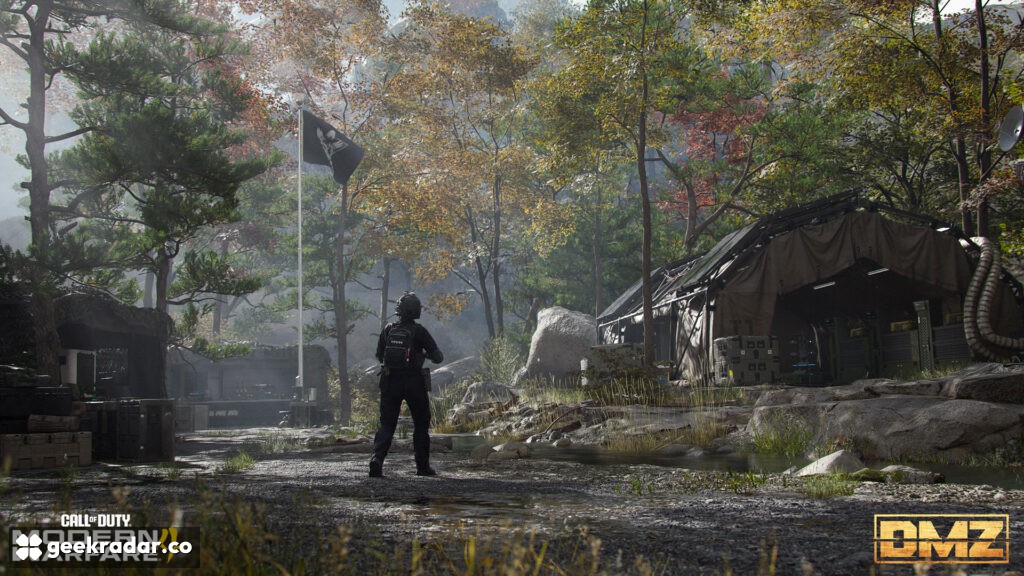
Modern Warfare 4’s DMZ makes your most experienced Operator an expensive decision
Recovery preserves traits but costs in-game cash and does not return lost equipment. The new extraction mode makes a roster more useful than a single favorite build.
The Operator you have spent longest developing in Modern Warfare 4’s DMZ is also the one who becomes more expensive to recover. As the game reaches its October 23 launch, that rule is a useful starting point for its extraction mode: experience is something to deploy deliberately, rather than an automatic reason to choose the same character every time.
According to the official Operator guide, a character eliminated during a deployment becomes Missing in Action. Recovering that Operator uses DMZ Cash from the in-game bank. More invested Trait Points mean a higher recovery cost. The recovered character retains selected traits, but the lost equipment does not come back with them.
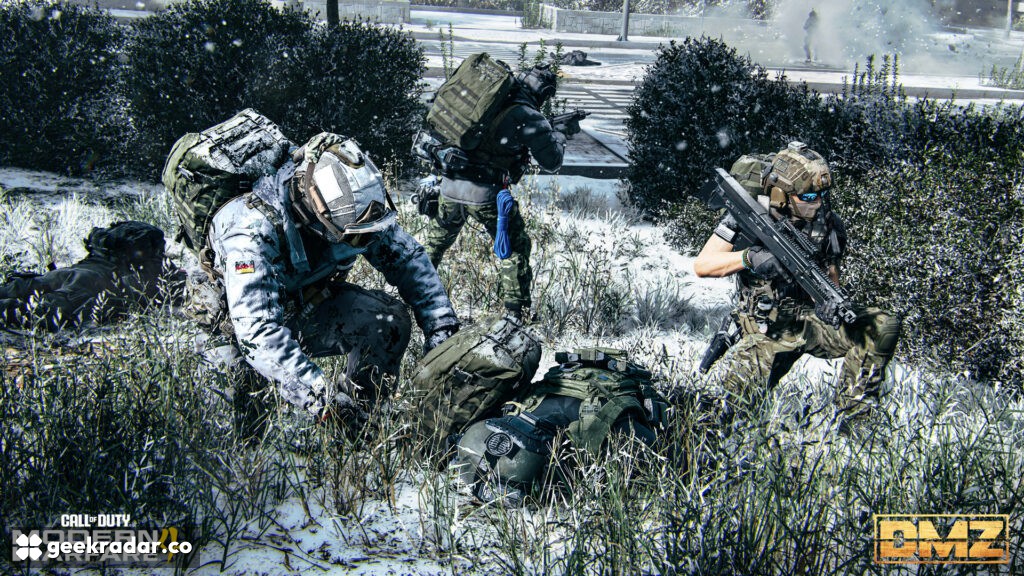
Two inventories are at risk
The distinction creates two kinds of preparation. A loadout contains the equipment taken into the field. An Operator also carries a history of progression. Losing a deployment can interrupt both, but the route back is different: replace the gear and decide whether recovering the developed character is worth the cost.
That makes a roster useful in a way a row of cosmetic alternatives would not be. A routine supply trip and a more demanding objective need not justify the same investment. The guide describes multiple Active Duty slots and encourages specialized roles; the Forward Operating Base explanation sets out the systems around recruitment, preparation and progression.
There is a practical safety net: the guide says a free loadout can be obtained for each deployment. Running short of equipment therefore does not mean every route back into the mode requires rebuilding an expensive kit first. It does not make a free setup equivalent to the equipment a player chose to risk.
Specialization has an opportunity cost
DMZ offers Warfighter, Scout and Survivalist trait trees. The useful point is less the number of named bonuses than the fact that choices constrain a build. The guide describes branches whose alternatives become unavailable once a selection is made, and a limit of 18 traits for an individual Operator from a wider pool of 66.
A build consequently represents a set of priorities. Investing in gathering and movement can suit a different trip from investing in direct combat. Those labels do not establish an optimal strategy, and the launch documentation is not evidence that every branch is equally balanced. They establish that a single character is not intended to collect every advantage.
The recovery bill reinforces that design. Progression makes an Operator more capable and raises the cost of losing access to that capability. The player has to consider both the objective and the resources available after an unsuccessful attempt.
Ownership and access remain separate from the mode's economy
DMZ is part of Modern Warfare 4, not a standalone free-to-play entitlement. Our campaign-access article explains the distinction between the game's earlier campaign access and the full launch. Platform subscriptions and ownership conditions still apply; in-game recovery cash should not be confused with a real-money purchase requirement.
NVIDIA has also announced launch support through GeForce NOW, while noting that individual store releases and cloud onboarding can differ. A cloud membership supplies streaming access to supported games, not ownership of every game advertised beside it.
The new mode's clearest strategic question arrives before the shooting starts: is this the trip on which your best-developed Operator earns the risk? Having another viable character makes “not this time” a plan rather than a retreat.