Stranger Than Heaven turns listening into a production tool
The latest preview connects street sounds, arrangements and stage budgets. Its music system gives exploration a purpose beyond collecting objects.
In Stranger Than Heaven, the street can supply more than a route to the next encounter. Sounds collected while exploring become material for music, which then feeds a system for producing shows. PlayStation’s October 21 preview describes a chain linking observation, composition and stage management inside Ryu Ga Gotoku Studio’s forthcoming game.
The interesting design choice is the connection between those activities. A sound found outside has a potential use somewhere else. That can give the player a reason to pay attention to the environment beyond checking a map for the next collectible. This is an analysis of the disclosed system, not a hands-on assessment of its final balance.
Exploration acquires a different kind of value
The official game description identifies everyday noises among the materials the protagonist can gather. The premise makes listening an active part of navigating the world. An environment can carry information through sound without every useful thing having to become a conspicuous object on the ground.
Once collected, that material enters a composition process. The preview describes working with a composer and choosing arrangements and instruments. The player is therefore doing more than unlocking a finished track: decisions about how the music is assembled sit between discovery and performance.
That sequence creates several possible points of interest. Someone drawn to exploration may care about finding new material; someone interested in management may care about using a limited set effectively. The design succeeds only if the connection remains meaningful, but the disclosed structure gives those preferences somewhere to meet.
A song also has a budget
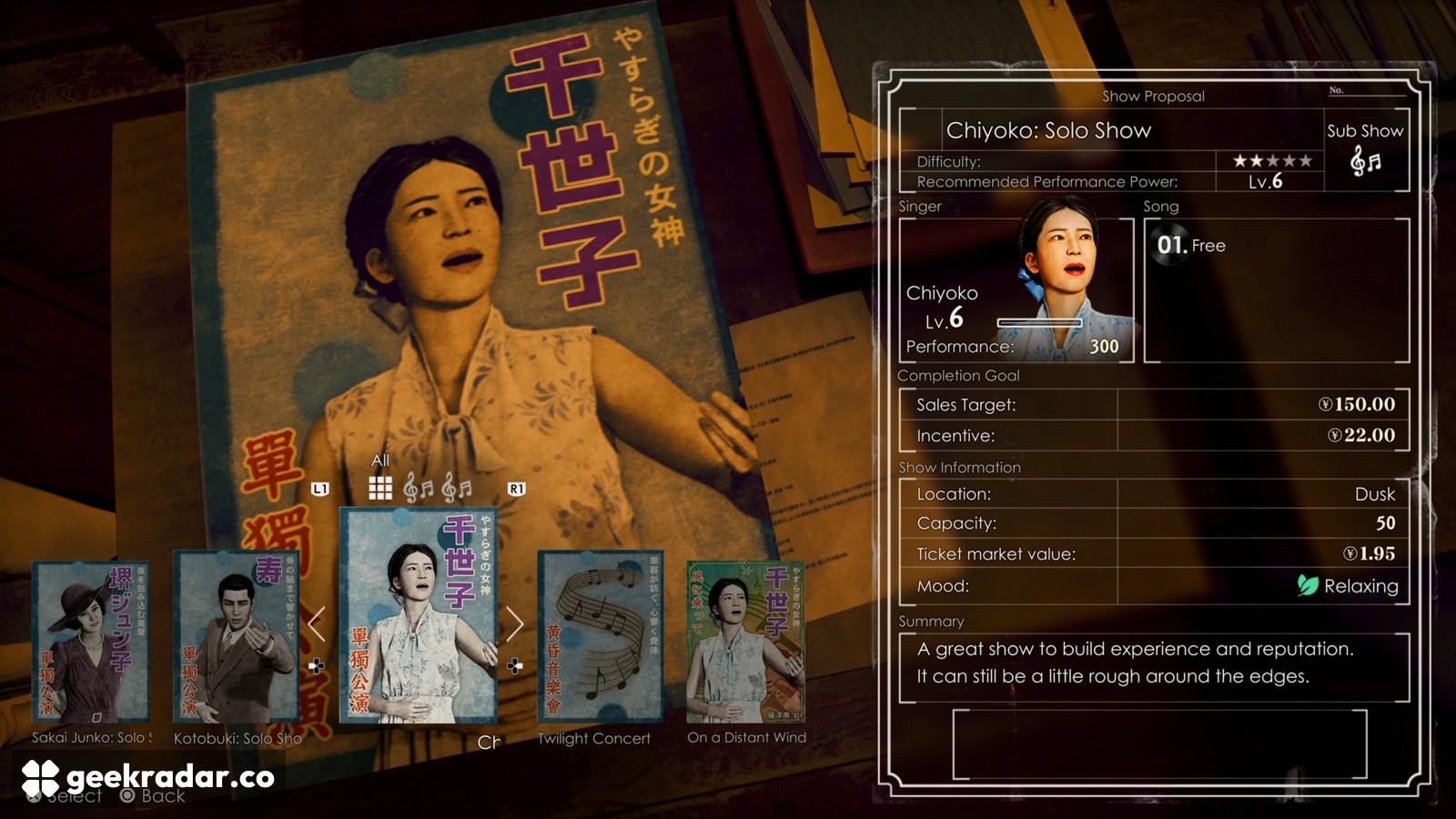
The show-planning screenshot makes the commercial layer visible. Capacity, expected performance and a sales target appear alongside the artistic choices. The preview also describes decisions about singers, musicians and stage effects, followed by lighting inputs during the performance.
A budget changes the meaning of customization. Choosing every expensive option is a different exercise from building a coherent event with limited resources. If the systems support several viable combinations, a smaller show can become an intentional production choice rather than merely an incomplete version of the largest one.
The presence of performance controls also means planning does not end when the show begins. That division between preparation and execution is familiar from management games, but here it is attached to a piece of music assembled from exploration. The result has a clear design identity without requiring any plot revelations to explain it.
A preview leaves room for the finished game
The PS5 product page lists January 15, 2027. That is the release date, not the date of this preview or proof that the complete game is already available. Pricing and edition extras on the US page should also be checked against the relevant regional store before purchase.
The useful question beneath the mixture of action and side activities is whether the world can feed a creative system that feels worth using. Stranger Than Heaven’s music loop gives the street a second role. It is somewhere to listen, not only somewhere to pass through.
Screenshots: SEGA / PlayStation.