PRS Tekton brings four guitar designs to the digital-rig conversation
The new family changes pickups, necks and bridge options without turning the instrument into a modeling processor.
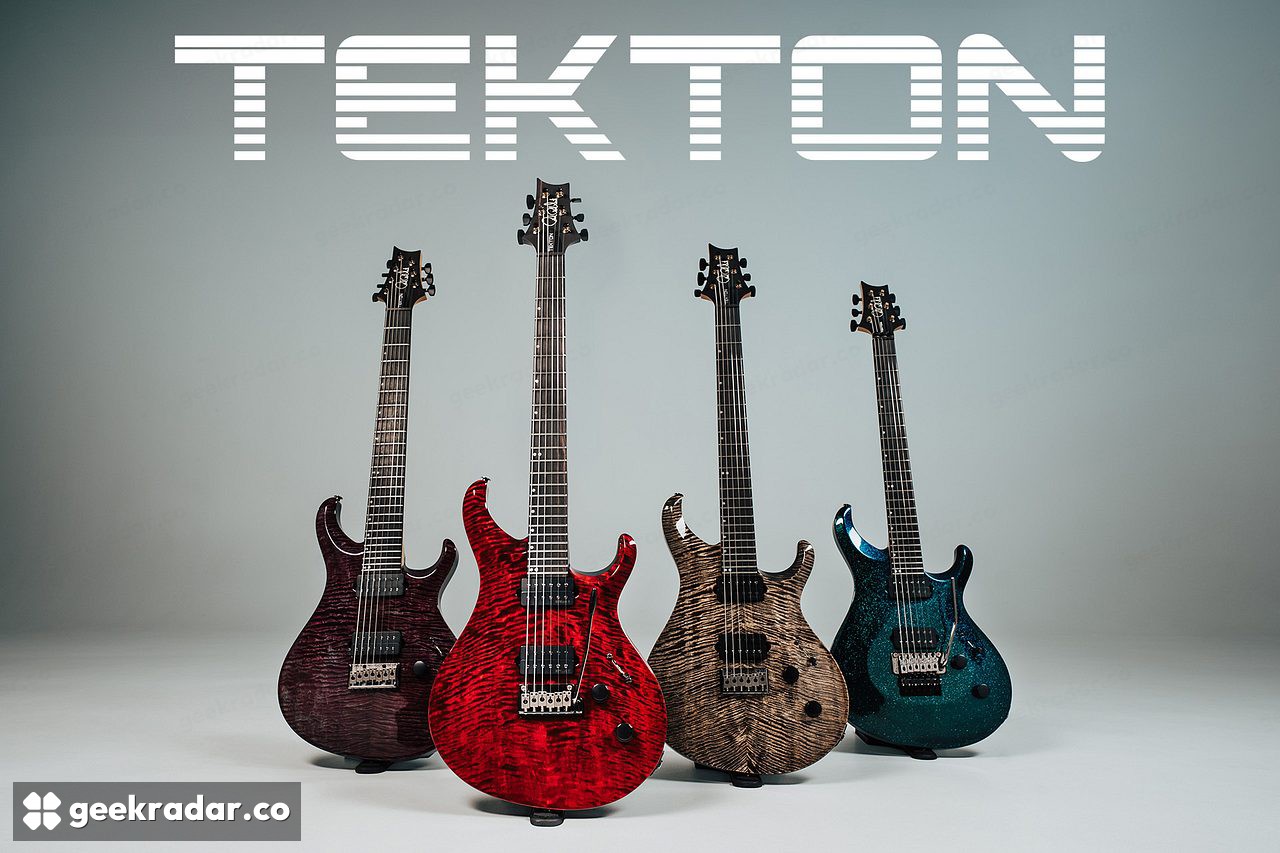
PRS has introduced Tekton, a four-model guitar family aimed at contemporary playing setups, including digital modelers. The interesting part is how it approaches that brief: through the instrument’s pickups, dimensions and hardware, rather than by building a processor into the guitar.
The October 20 announcement describes a bolt-on family with thinner bodies and necks than the company’s standard production instruments. Tekton uses a fixed bridge; Tekton T has a PRS two-point tremolo; Tekton “Floyd” uses a Floyd Rose system; and Tekton SVN adds a seventh string. These are different physical playing choices within one family, rather than four software tiers.
A guitar can suit digital equipment without becoming a digital device
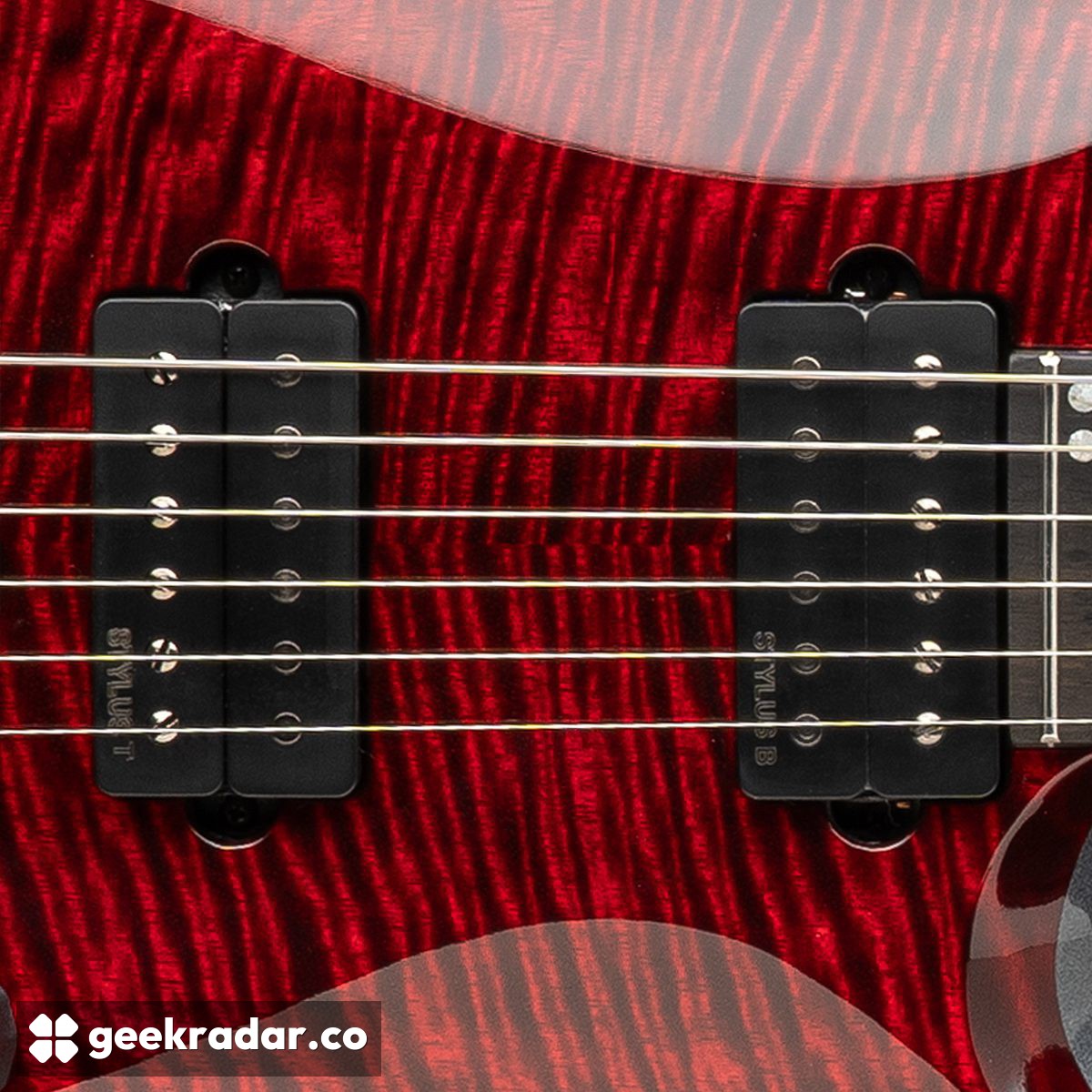
PRS describes the new Alnico 5 Stylus pickups as having a flatter output than many humbuckers, with both tube amplifiers and digital modeling equipment in mind. That is the manufacturer’s description of their voicing. It is not an independent measurement, and “flatter output” should not be silently upgraded into a claim of perfectly flat frequency response.
The distinction matters because the instrument remains the input to everything downstream. Changing that input can affect how a player sets up the rest of a rig, even when the amplifier or effects are represented by software. It does not make a preset universally transferable or eliminate the influence of playing technique, pickup selection and level settings.
There is also no basis here for treating Tekton as an audio interface. PRS’s standard-model specifications list conventional guitar controls and pickups, not USB recording, onboard modeling or an integrated application. Someone assembling a computer-based recording setup still needs to account for the equipment that gets the instrument’s signal into that system.
Start with the bridge and the number of strings
The standard Tekton has a 25.5-inch scale, 24 stainless-steel frets, a 16-inch fretboard radius and a bolt-on maple neck with an ebony fingerboard. Its controls include a three-way pickup selector and a push-pull tone control for coil splitting. Those specifications describe the instrument’s construction and switching options; they do not establish how its neck will feel to a particular player.
The family makes more sense when approached through a player’s habits. A fixed bridge is the direct choice for someone who does not need a vibrato system. The two tremolo variants address players who do, while the seven-string version changes the instrument’s range and fingering possibilities. Choosing solely by finish would skip the differences most likely to affect everyday use.
| Model | Main hardware distinction |
|---|---|
| Tekton | Fixed bridge, six strings |
| Tekton T | PRS two-point tremolo |
| Tekton “Floyd” | Floyd Rose tremolo |
| Tekton SVN | Seven-string configuration |
These distinctions come from PRS’s family announcement. They are a better starting point than assuming every specification on the standard Tekton page applies identically to its siblings.
For readers following music technology and audio hardware, this is a useful example of digital workflows influencing an otherwise physical product. A convincing result will still depend on the guitar under the player’s hands. The strongest reason to try a Tekton is not that a manufacturer mentioned modelers; it is that one of its actual configurations may fit the way you play.