Sony WH-1000XM6 vs Bose Ultra 2: the USB-C difference matters
Bose accepts digital audio over USB. Sony’s listening-while-charging feature is a different proposition; codecs, comfort and battery modes complete the choice.
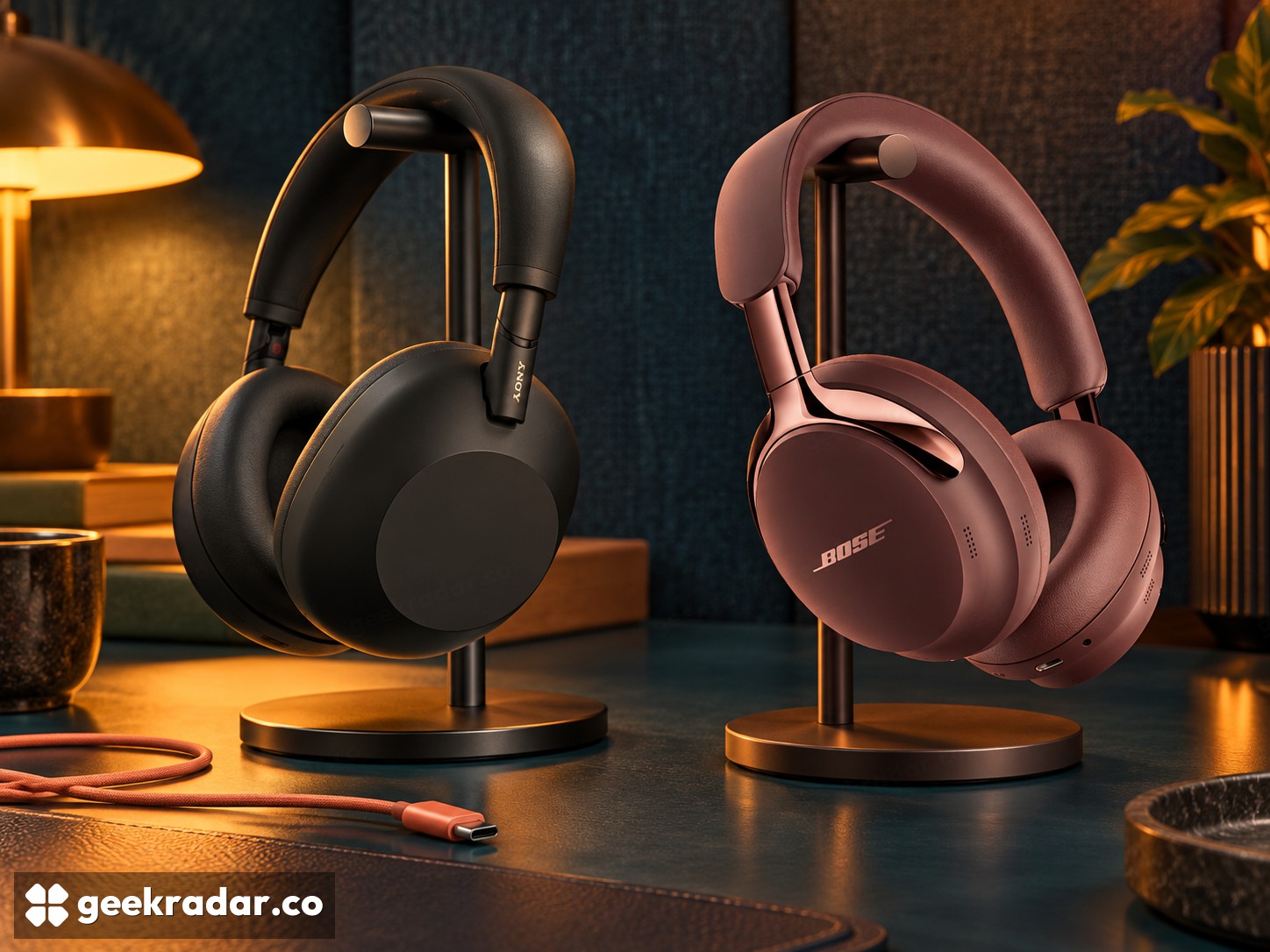
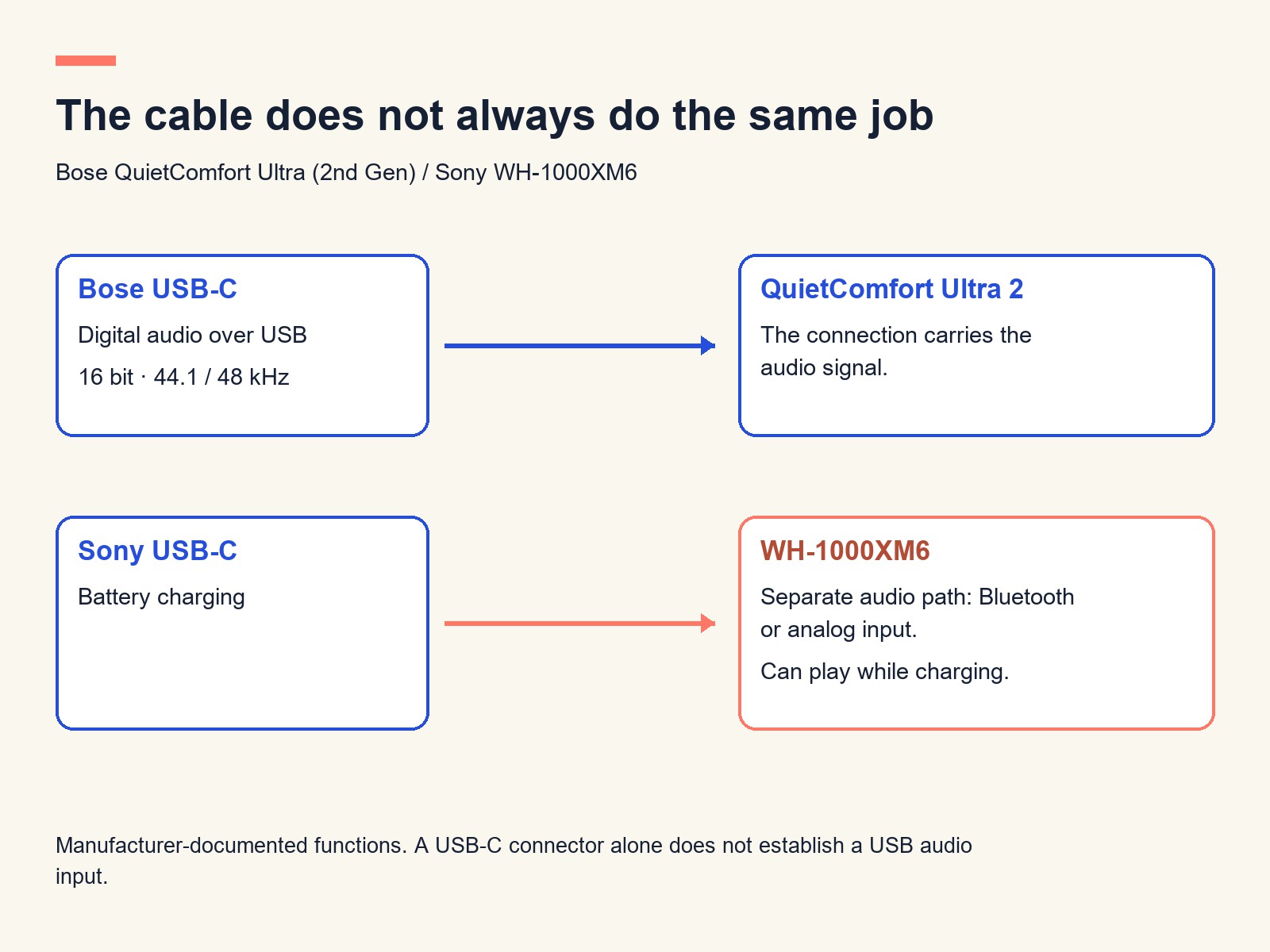
Sony's WH-1000XM6 and Bose's QuietComfort Ultra Headphones (2nd Gen) both promise relief from a noisy journey. The clearest reason to choose between them may appear after the journey, when you plug them into a laptop. Bose explicitly supports digital USB-C audio; Sony emphasizes Bluetooth, its audio cable and listening while charging. A USB-C socket alone does not tell you what travels through it.
This comparison concerns the second-generation Bose Ultra over-ear model, not the original Ultra or the less expensive QuietComfort. Similar names conceal differences that matter more than a small discount.
The connection is part of the purchase
Bose's product FAQ specifies USB audio at 16-bit, 44.1kHz or 48kHz from compatible sources. That gives a laptop or USB-C phone a straightforward digital listening path. It does not mean every music source suddenly becomes lossless, or that the headphones can recover information absent from a compressed file.
Sony's Italian product description documents LDAC wireless audio and the ability to continue listening over Bluetooth or the audio cable while charging. These are useful features, but listening during USB charging is a different claim from receiving music through USB. Buyers who specifically want a USB headset should insist on the latter being documented.
LDAC also needs a compatible source. Its presence in the Sony specification is not a universal quality upgrade for every phone and application. Establish the connection you will actually use first; only then does comparing its capabilities become meaningful.
Thirty hours needs a footnote
Bose advertises up to 30 hours, falling to 23 with Immersive Audio. Sony's operating-time table is more useful than a single headline figure because it separates codecs and listening modes. With noise cancellation enabled, it lists up to 30 hours for AAC and up to 26 for LDAC. These are manufacturer estimates under stated conditions, not matched results from the same test.
That distinction can change the packing list. Someone who listens throughout a flight, works on arrival and forgets to charge should budget for the settings they will use. A spatial-audio mode or a different codec can make the maximum printed on the box a poor planning assumption.
Comfort can overturn the feature list
Noise cancellation is not independent of fit. Sony's help guide warns that incorrect adjustment can weaken cancellation and affect wearing detection. Glasses, hair and the way a cushion seals around the ear therefore deserve attention. A superior specification cannot rescue a fit that becomes painful halfway through a working day.
Try the controls as well as the sound. Sony uses a touch sensor panel; Bose combines buttons with a capacitive volume strip. The practical question is whether you can pause, adjust volume and change modes without repeatedly interrupting what you are doing. A return policy becomes particularly valuable when a shop demonstration lasts only a few minutes.
There is no defensible noise-cancellation champion in this specification comparison. Establishing one would require matched measurements and listening conditions. The same applies to microphone quality in a windy street: a microphone count is not a recording.
The return of Sony’s premium Walkman puts the source device back in the discussion. Here, too, the player and the connection must be considered together.
What an Italian buyer should put in the basket
Sony's Italian store listed the black WH-1000XM6 at €379 when checked on October 20, against a displayed €449 reference. That is a dated store offer, not a permanent market price. Bose's US listing of $449 is not an Italian quote and should not be converted into one. Obtain a local price for the exact second-generation model before deciding which costs less.
For a laptop-centered listener who values USB audio, Bose has a specific advantage worth pricing. For a compatible wireless setup, Sony's LDAC support may be more relevant. Then put them on: the pair you can comfortably wear through the entire album has an advantage no codec logo can supply.