RTX 5070 Ti vs RX 9070 XT: what the shared 16GB cannot decide
NVIDIA and AMD offer the same memory capacity, but software support, rendered performance and the price of a specific partner card determine the useful comparison.
GeForce RTX 5070 Ti and Radeon RX 9070 XT both offer 16GB of graphics memory, but that apparent tie does not make them interchangeable. The useful comparison is the performance and software support available in your games and applications at the price of an actual board. Memory capacity, generated frames and a manufacturer's recommended power supply each answer a different question.
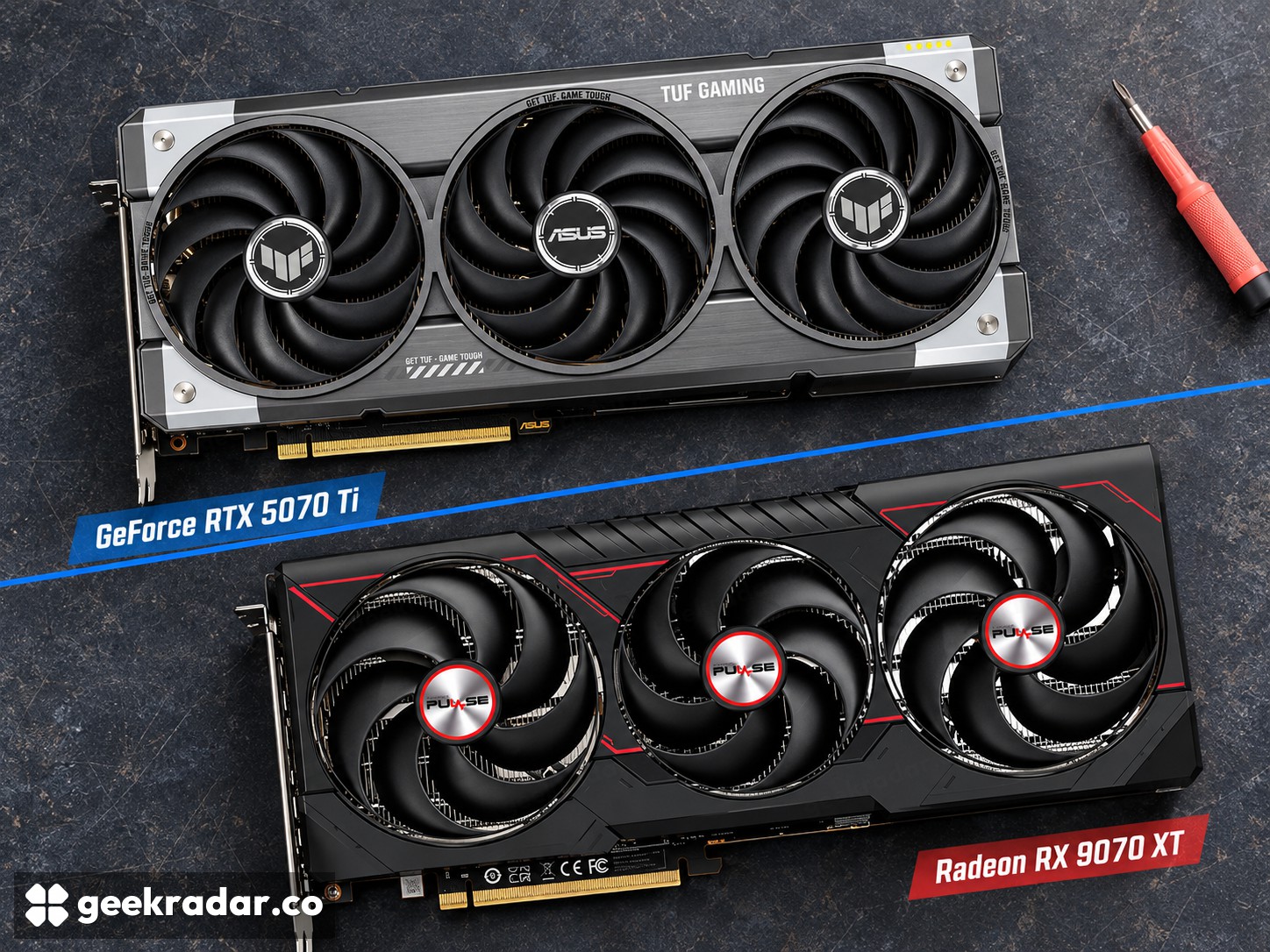
This is a buying framework for the two GPU families, not a benchmark review of particular partner cards. Cooler design, dimensions and factory settings vary, so a favorable result for one board cannot be copied onto every product carrying the same GPU name.
What the shared 16GB does tell you
NVIDIA specifies 16GB of GDDR7 for the 5070 Ti; AMD specifies 16GB of GDDR6 for the 9070 XT. Capacity describes how much data can reside in graphics memory. Memory type and the wider architecture affect how that data is moved and processed. Sixteen gigabytes is not a frame-rate rating.
A texture-heavy game or a creative project can make capacity important when its working set grows. That does not mean an application that fits comfortably in memory will become faster merely because unused capacity remains. The question is whether the intended workload hits a limit, not whether the number looks reassuring in isolation.
The same applies to GPU core counts and advertised AI throughput. Units defined by different architectures are not interchangeable scores. A comparison based on dividing one vendor's number by the other's creates precision without establishing useful performance.
Count rendered work separately from generated frames
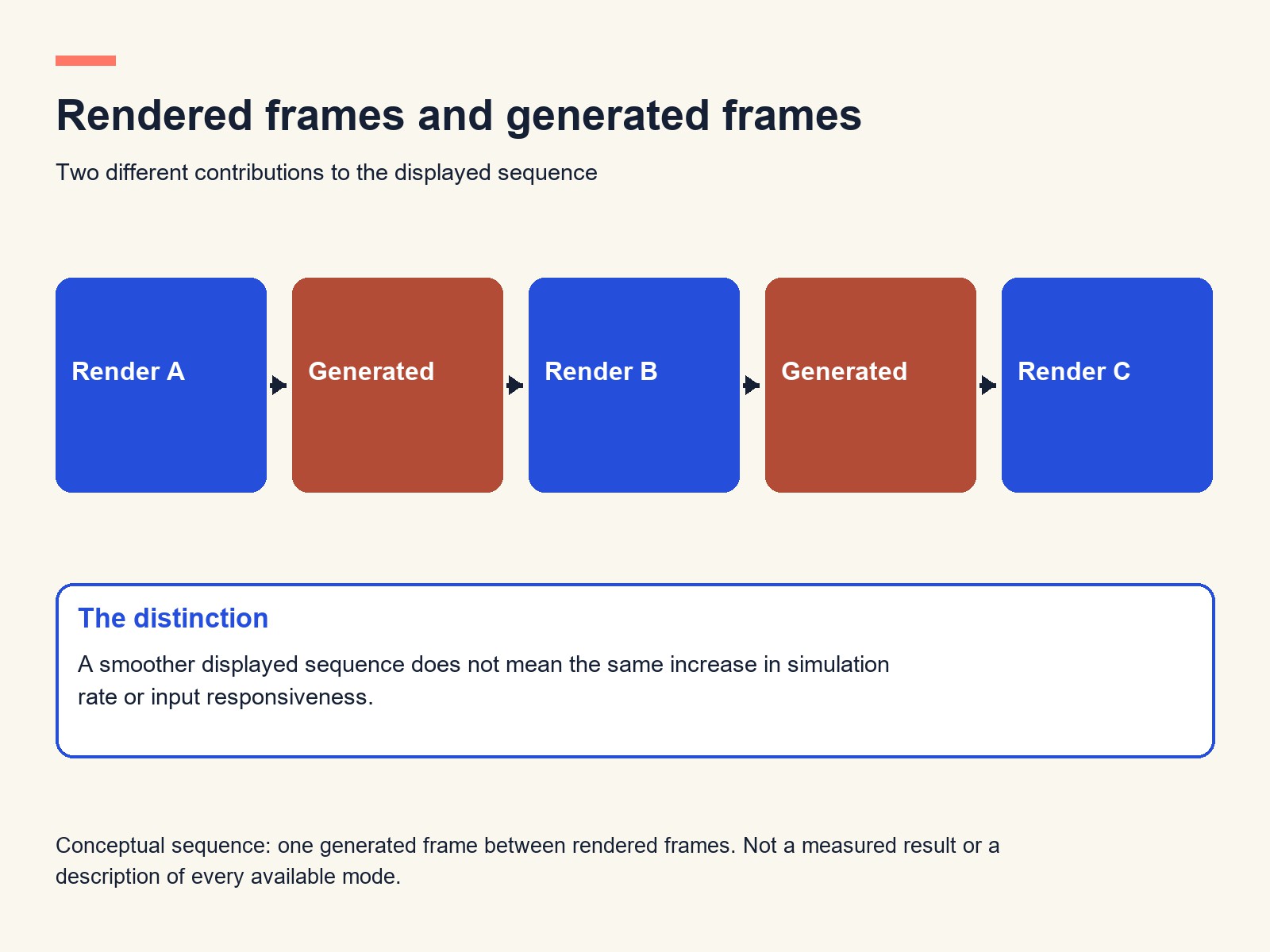
NVIDIA's DLSS documentation describes several technologies under one name. Upscaling and frame generation do different jobs: one reconstructs the output image from a lower-resolution render; the other adds synthesized frames to the presentation. A large displayed frame-rate figure must therefore be read with the settings that produced it.
AMD's 9070 XT page lists FSR Redstone among its supported technologies. Support at the GPU-family level still does not guarantee that a particular game exposes every feature. Check the title, version and settings you plan to use rather than choosing a card for an ecosystem logo alone.
For a competitive player, responsiveness and the underlying rendered cadence may matter more than the highest generated-frame count. For a single-player visual showcase, reconstruction quality and smooth presentation may carry more weight. Those are different priorities, and a useful benchmark separates them instead of blending them into one victory percentage.
The card still has to fit the computer
The four-watt difference between those published power figures is too small, and the definitions too different, to establish an electricity-bill winner. Partner boards can also use different settings. Compare measured consumption for the exact models if energy use or heat is a priority.
Before buying, check case clearance, thickness, power connectors and the power-supply manufacturer's guidance. A long cooler may conflict with a front radiator; a card that technically fits can still leave inadequate space for its power cable. These are compatibility problems that no driver update will solve.
For creative work, check the application's supported acceleration path and the features you need. “GPU acceleration” on a box does not demonstrate support for every effect, encoder or local AI workflow. If a required application explicitly depends on a vendor-specific interface, that requirement can settle the choice before gaming results enter the discussion.
The distinction also underlies our explanation of DLSS model speed versus whole-game performance: accelerating one stage does not multiply every stage of the pipeline.
Let the local price gap earn its place
Italian buyers should compare VAT-inclusive offers for complete partner-card models, with warranty and delivery terms. A US launch price is not a current euro offer, and a premium cooler should not be compared with the cheapest competing board without acknowledging the difference.
Choose the RTX when a verified application requirement or a measured advantage in your preferred settings justifies its actual premium. Choose the Radeon when its verified results and supported features meet the same needs for less. If neither condition is established, the brand name has not finished the comparison: the remaining work is to match the evidence to the games you will actually launch.