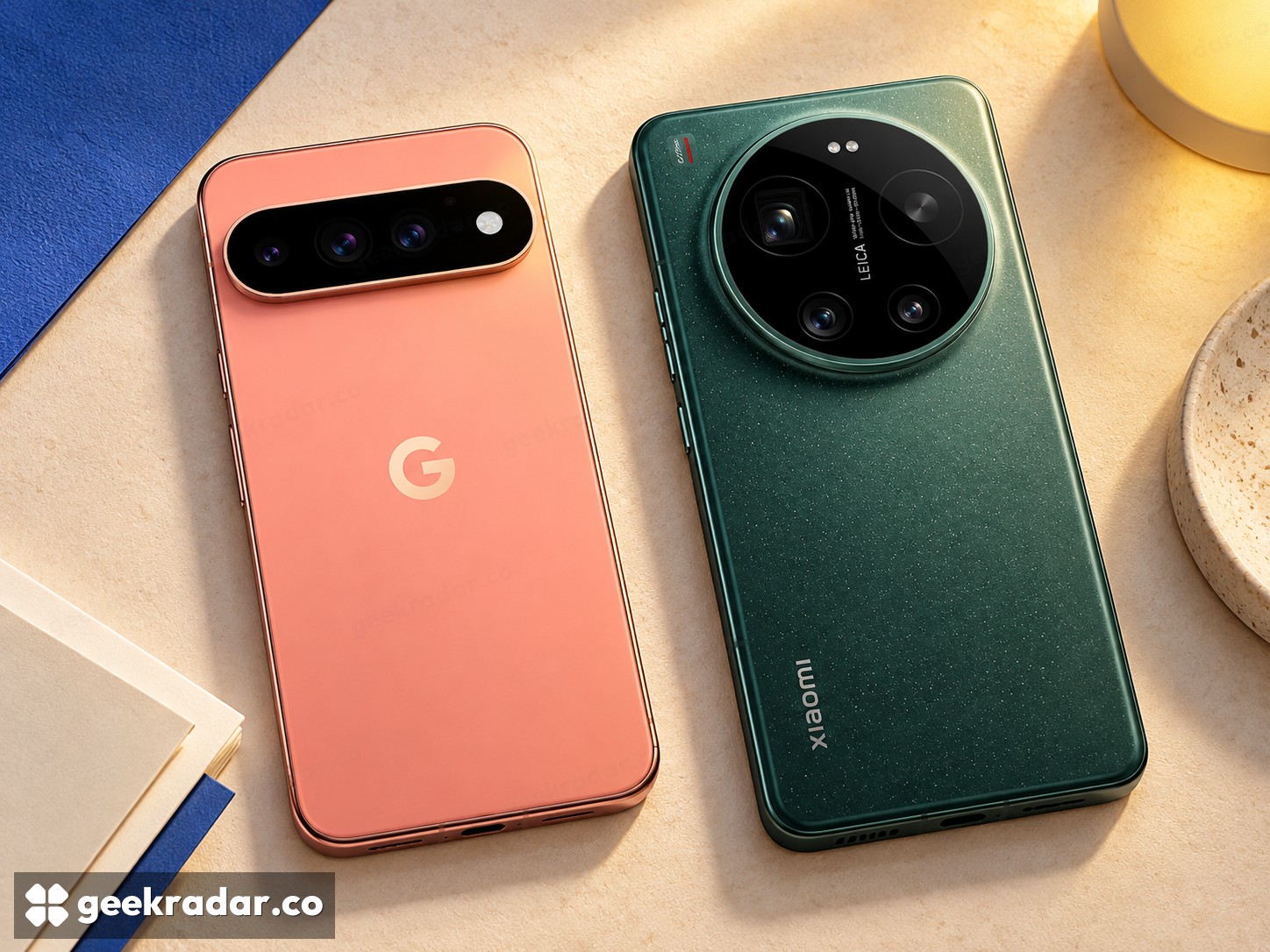
Pixel 11 Pro XL vs Xiaomi 17 Ultra: choosing how a camera helps you
Google’s capture and editing tools meet Xiaomi’s 75–100mm optical telephoto. Sensor size, zoom labels and video processing need separate comparisons.
Google's Pixel 11 Pro XL and Xiaomi's 17 Ultra approach the camera-phone question from different directions. Pixel combines a fixed 5x telephoto with Google's capture and editing tools. Xiaomi puts a large main sensor and a moving 75–100mm-equivalent telephoto at the center of its proposition. The choice is about how you take pictures, not which specification sheet contains the largest number.
The Xiaomi here is the international 17 Ultra, rather than a Chinese-market model or a newer Pro Max with different hardware. That distinction is important for European buyers: a brand's latest announcement is not automatically the same product sold through its Italian store.
The lens changes what you can frame
Xiaomi's international specifications describe a 50-megapixel main camera with a one-inch-type sensor and a 200-megapixel telephoto spanning 75–100mm equivalent. “One-inch type” is an established sensor-format name, not a promise that its diagonal measures one inch. The useful point is the camera's optical design, rather than a literal reading of the label.
Google lists a 50-megapixel main camera and 48-megapixel 5x telephoto for the Pro XL. A fixed telephoto can be excellent at its native field of view. Xiaomi's variable focal length offers a different way to adjust framing within its stated optical range. Neither arrangement guarantees that every intermediate zoom setting or low-light shot will be superior.
Imagine photographing a person across a small courtyard. A longer focal length narrows the view from your position; changing where you stand changes perspective as well. That is why a useful sample comparison holds the scene, distance and final framing constant. Comparing one phone's close portrait with another's wider shot confuses composition with image quality.
A camera includes what happens after exposure
Pixel's documented tools include Add Me, Best Take, Photo Unblur and editing through Ask Photos. Those features serve different purposes: rescuing a technically imperfect image is not the same activity as changing who appears in it. Someone assembling a family album may welcome both, while someone recording an object for a dispute should preserve the original file.
The same distinction applies to Xiaomi's Leica photographic styles and editing options. A preferred color treatment is a valid reason to like a camera, but it is not proof of greater fidelity. Choose a rendering you enjoy, while retaining an unedited original when the photograph needs to function as evidence.
The Xiaomi 18 Pro Max’s rear-screen approach is a different design, covered separately. Its features should not be transferred to the international 17 Ultra.
Video, charging and the rest of the phone
Google's 8K listing explicitly depends on Video Boost. Xiaomi documents 8K recording and Log video options on its own specification page. A creator should check the complete path from capture to an editable file, including any processing, account or network requirement. A headline resolution does not describe turnaround time or the convenience of working away from reliable connectivity.
Xiaomi specifies a 6,000mAh typical battery and 90W wired HyperCharge for the international model. Those are capacity and charging-system figures, not a comparative endurance result. Charger compatibility also matters; Xiaomi tells buyers to check local adapter inclusion. If both phones survive your normal day, a preferred camera workflow may deserve more weight than a charging number you rarely exploit.
Both have Italian product pages: Google's local Pixel offering and Xiaomi's 17 Ultra. Compare identical storage capacities and the final VAT-inclusive basket, including a compatible charger if needed. Do not transfer a US promotion or a Chinese bundle into that calculation.
For someone who enjoys choosing a focal length and shaping a photograph at capture, Xiaomi's optical arrangement is the more distinctive reason to shortlist it. For someone who wants Google's specific capture and editing tools, Pixel offers the more direct route. The deciding question is which part of making a picture you want the phone to help with: framing the moment, repairing it afterward, or both.