League Classic will end in January. Its final pass has two different deadlines
Riot is narrowing queues and making the next pass free as it rethinks Classic as a possible event. Regional access and refund terms need separate attention.
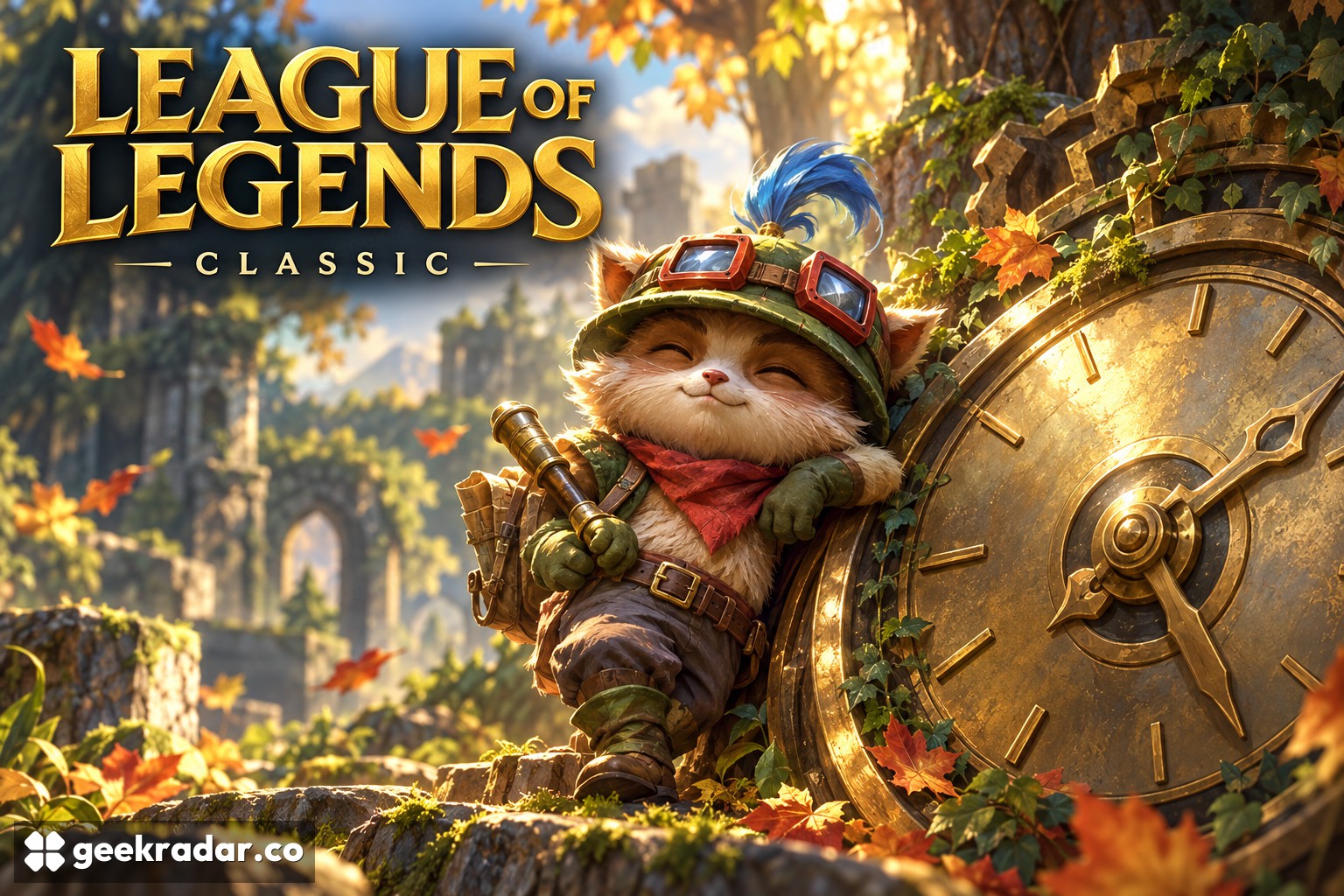
League of Legends Classic will end its current run in January 2027. Riot says most players who tried the mode have returned to other parts of League, and it plans to reconsider Classic as a possible event mode rather than continue the present version indefinitely.
The immediate changes arrive before that endpoint. Riot's October 14 developer update describes restricted queue hours in some lower-population regions, custom matches only for Japan and MENA from patch 26.21, and an entirely free track for the next Classic pass. Classic custom games remain available at all times in all regions during this run.
The announcement concerns a particular way to play League. It does not close the main game or change the status of Worlds 2026, whose tournament format and viewing arrangements are separate from Classic's future.
The final pass has more than one deadline
Riot's support page gives January 6 as the availability endpoint, while distinguishing the end of pass progression from deactivation. That distinction is useful for anybody with unspent pass currency: earning more and using what is already earned are not the same deadline.
For readers in Italy, those final January deadlines fall on the following morning, because Pacific Time is nine hours behind Central European Time then. The progression deadline is therefore January 5 at 8:59am CET, and deactivation is January 6 at 8:59am CET. Keeping the original time zone beside the conversion avoids mistaking the date displayed in one region for a universal midnight.
The support notice also sets out refunds for affected Classic-only cosmetics. The route depends on how an item was acquired; some involve RP credits, while specified cash purchases have a support-contact option within a limited period. It is worth checking the item-specific terms directly rather than assuming that every purchase receives the same automatic cash refund.
An old ruleset still needs a current audience
Classic tried to recover an earlier version of League's appeal. The difficulty is that nostalgia can bring people back for a visit without supplying the population needed for routine matchmaking. A multiplayer mode needs enough suitable players in the same region at the same time, not merely a large lifetime count of people who once tried it.
Windowed queues are a response to that coordination problem. Concentrating available players into fewer hours can improve the chance of finding a viable match. The cost is flexibility: the player whose free evening falls outside those hours loses a convenient route into the mode.
PC Gamer's report places the decision only months after Classic's launch. That short interval demonstrates how quickly Riot has reassessed the format, but the company has not published the population figures needed to quantify the decline independently. “Most have returned elsewhere” remains Riot's description.
An event could concentrate the reunion
A limited return might fit that behavior better: players would know when others were likely to join, and Riot could adjust the rules between appearances. That is a plausible benefit of an event format, not a confirmed schedule or a guarantee of renewed interest.
For the remaining run, the concrete priorities are simpler: check regional queue access, use pass currency before the relevant cutoff and read the refund terms for affected cosmetics. Classic's future can remain open without leaving its current players uncertain about what happens to the time and money they already put into it.