Bose's USB-C earbuds trade a charging case for an occupied port
The $99 wired earbuds draw power from the connected device and offer noise cancellation. Their appeal depends on which part of portable listening you want to simplify.
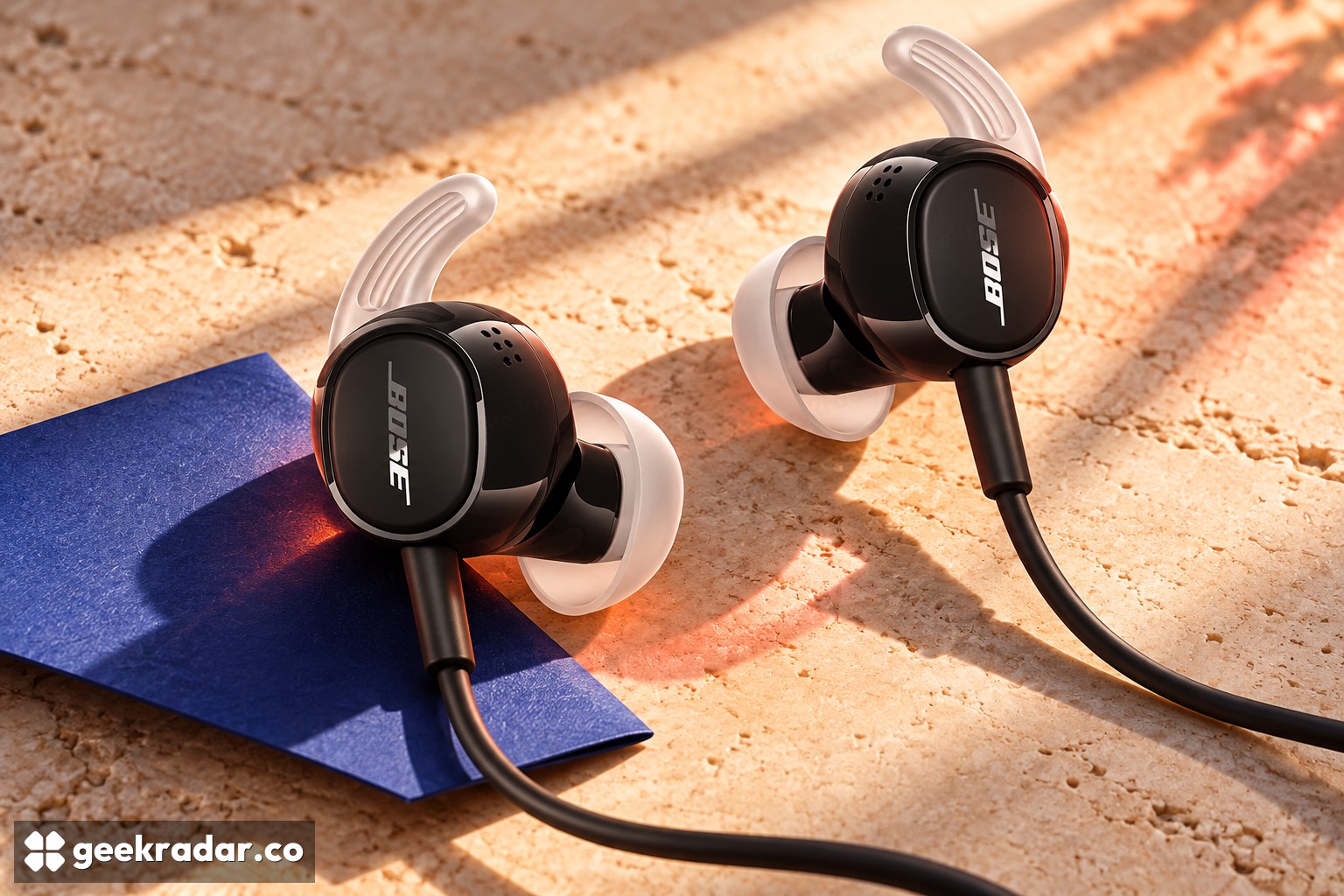
Bose's new Noise Cancelling Wired Earbuds move the power problem from a charging case to the device already playing the music. They connect over USB-C, draw power from that connection and offer active noise cancellation without a separate earbud-charging routine. The attraction is straightforward: a pair left in a bag can be ready when the phone is, rather than becoming another device to remember overnight.
Bose announced them on September 28 with an October 15 release date and a £99 UK price. Its US product listing lists $99. Those are regional prices; a confirmed Italian price is not established by either listing. The US page currently offers a stock-notification option, so a launch date should not be read as a guarantee of immediate delivery.
The cable carries more than sound
These are digital USB earbuds. They are not passive headphones with a different-shaped analogue plug. The connection supplies the electronics that reproduce audio and run noise cancellation, which explains both the convenience and the limitation: the host device must provide a suitable USB audio connection and power.
Bose's launch details specify USB Audio Class 2 and 24-bit, 48kHz output. That fixed output specification matters more than a vague promise of high-resolution listening. A source file with a higher sample rate does not mean these earbuds reproduce it at that rate, and the transport specification alone says little about tuning or the quality of the seal in a listener's ears.
The absence of Bluetooth pairing also removes an everyday source of friction. Moving between a compatible laptop and phone involves moving a plug rather than changing a wireless connection. That is particularly appealing for an occasional-use pair: there is no stale pairing relationship to troubleshoot before listening.
One fewer battery, one occupied port
Removing a battery from the earbuds does not make listening energy-free. The phone or laptop supplies it. Nor does the design solve simultaneous wired charging and listening on a device with one USB-C port. That is an additional requirement to assess in a travel setup, rather than a reason to assume any splitter or adapter will work.
There are other familiar cable compromises. The device and listener remain physically tethered, and a snag can pull on the earphones or connector. In exchange, the connection does not depend on maintaining a radio link. Whether that exchange feels liberating or inconvenient depends on the activity: sitting at a laptop and moving around a room are different uses.
The fit accessories also deserve more attention than the retro appeal. Bose supplies multiple tip and stability-wing sizes. Noise cancellation operates alongside the physical seal, so choosing a comfortable fit is part of getting the intended result. The IPX4 rating supports splash resistance; Bose explicitly warns against immersion. It should not be treated as an all-weather durability promise.
A simpler connection is not a complete review
The Verge's published review found the noise reduction useful against low-frequency sound, while identifying wind as a weakness for calls. Those are the reviewer's findings, not measurements produced here. They are also a reminder that a stable wired connection cannot eliminate acoustic problems at the microphone.
This approach sits at a different end of portable listening from the dedicated-player ambitions discussed in Sony's latest Walkman coverage. Bose is reducing the number of devices that need their own charging routine, while keeping the phone or computer central to playback.
The strongest reason to consider this design is therefore specific: useful noise control in a pair that does not need its own charged battery before departure. If the USB-C port is already committed to charging, accessories or a dock, the cable has simply moved the inconvenience. The product makes most sense when that port is available and the forgotten charging case is the recurring problem.