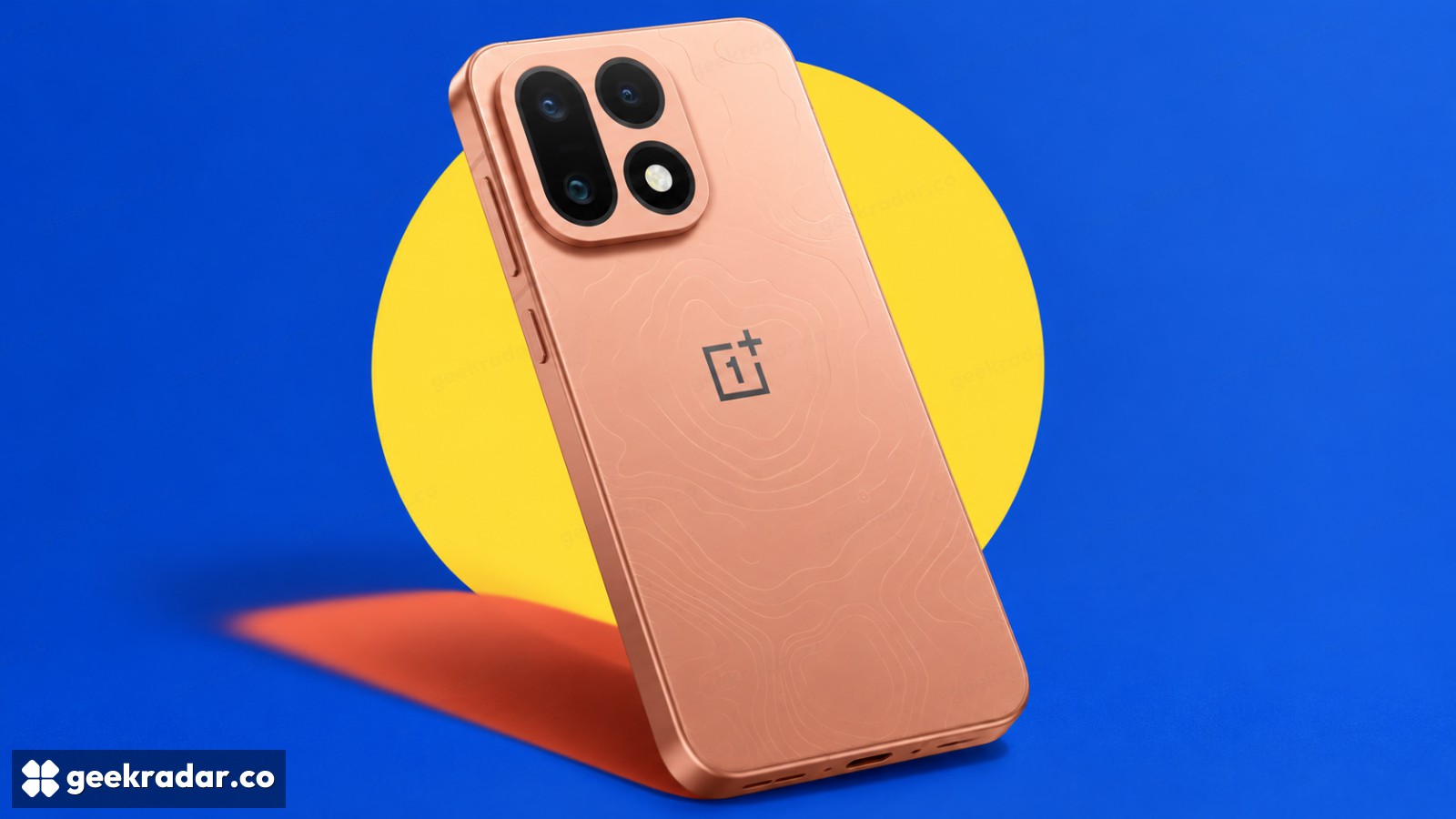
OnePlus 16 pairs a 9,000mAh battery with a 185Hz gaming ceiling
The Chinese specification sheet reveals the limits behind the headline numbers, from supported game refresh rates to charging protocols.
The OnePlus 16's Chinese specification sheet makes two unusually large numbers central to its pitch: 9,000mAh of equivalent battery capacity and a display that reaches 185Hz in supported gaming scenarios. Together they describe a phone aimed at sustained, responsive play. They do not establish that every game runs at 185 frames per second, or that international buyers will receive this exact configuration.
The model is now on OnePlus's Chinese product site, with a detailed Chinese specification sheet. This article concerns that version. It does not infer a European release, OxygenOS build or euro price from a China-market launch.
A refresh-rate ceiling is not a frame-rate promise
OnePlus lists a 6.78-inch, 2772×1272 flat display. Outside games, the stated refresh range is 1–165Hz; gaming scenarios can reach 185Hz. The distinction is already present in the manufacturer's specification and should survive into any headline about the phone.
A 185Hz refresh cycle is about 5.4 milliseconds, calculated as one second divided by 185. At 120Hz, a cycle lasts about 8.3 milliseconds. That difference can matter when a game produces fresh frames quickly enough to use it. If a game is capped at 60 frames per second, a faster panel does not by itself create 185 new simulation updates.
There are several separate clocks inside the experience: how often touch input is sampled, how often the game updates, how quickly a frame is rendered and how often the panel refreshes. Improving one can help, but cannot guarantee the behavior of the others. This is why supported game modes are more informative than the highest number printed beside a screen.
The distinction also gives developers a choice. A rendering budget can buy more frames, more visual detail or a lower power draw. Different games will spend it differently. A demanding open-world title and a competitive arena game need not target the same balance.
Read the battery in watt-hours, too
The sheet gives the typical battery energy as 33.93Wh, describing two 4,500mAh cells and an equivalent 9,000mAh capacity. Watt-hours are useful because they describe energy, whereas a milliamp-hour comparison also depends on voltage. Keeping both figures avoids confusion when a dual-cell design is compared with another arrangement.
OnePlus lists charging at up to 100W with its supported fast-charging systems. It also distinguishes lower ceilings for other protocols, including 55W PPS and 18W USB PD. A USB-C plug establishes the connector shape; it does not establish the charging speed negotiated between a particular adapter, cable and phone. These are rated capabilities, not measured charging times.
The phone therefore asks two practical questions of a charging setup: which protocol is available, and whether its equipment supports that mode. A powerful laptop adapter should not automatically be described as a 100W phone charger just because its label includes that output number.
The Chinese software build is part of the product
The listed operating system is ColorOS 17. For someone looking at an import, that deserves as much attention as the processor or battery. A specification page for this version cannot promise a different market's services, update arrangements or warranty handling.
OnePlus's hardware priorities are clear enough without turning them into an untested buying recommendation. The high refresh ceiling offers room for supported games; the large energy capacity gives the design more battery headroom. Whether both are used efficiently is a question for sustained measurements.
For readers comparing phones in our Gear coverage, the immediate attraction is the combination: enough battery energy to support a demanding display, and charging options that need to be matched to the right equipment. The missing piece is how that combination behaves after a game has been running long enough for the phone to warm up. A brief peak and a stable session can tell very different stories about the same hardware.