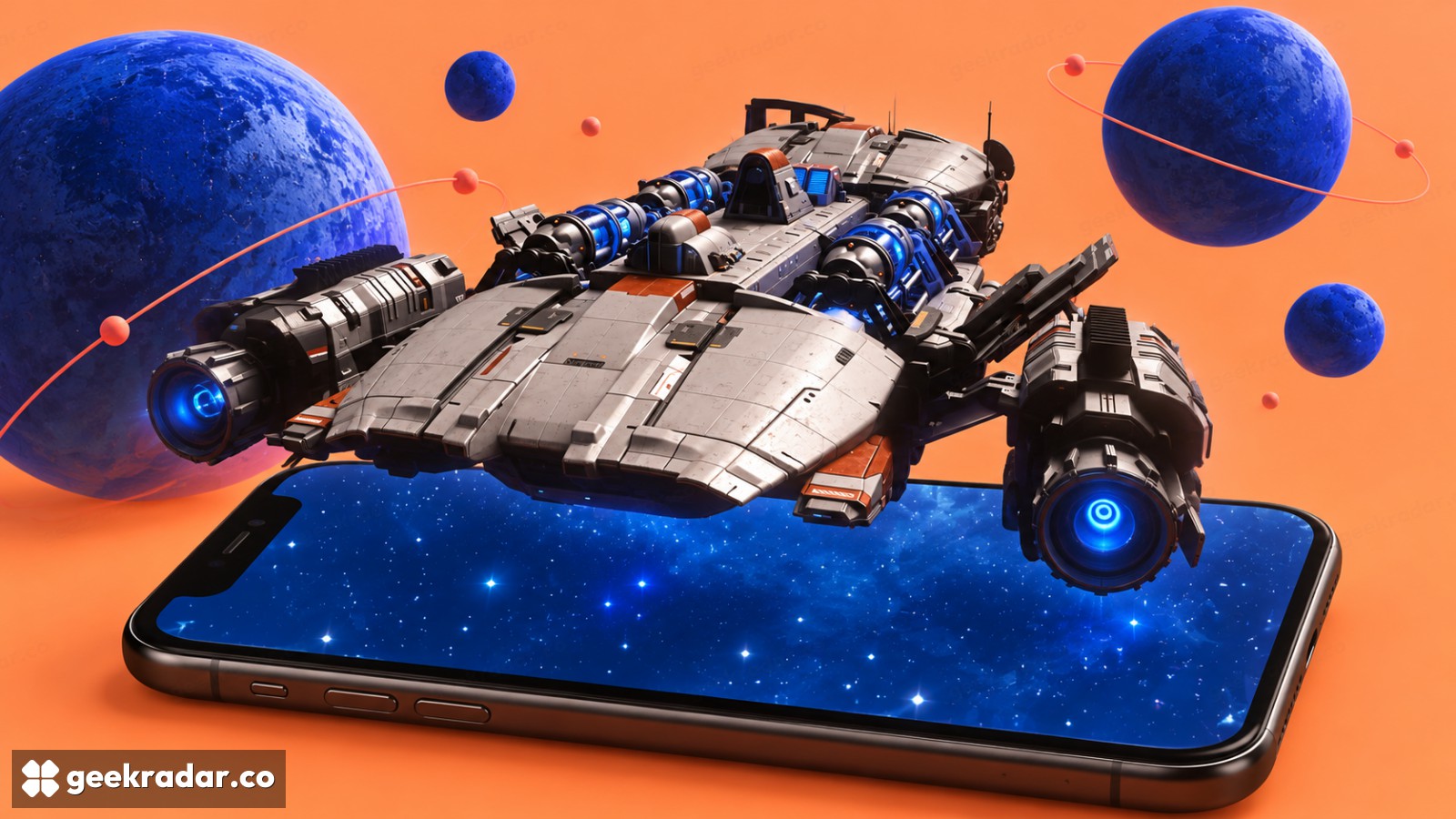
No Man’s Sky reaches iPhone on October 28—with important limits
Hello Games promises broad device support and a free trial, but multiplayer is absent and the compatibility sources do not perfectly agree.
No Man's Sky is coming to iPhone and iPad on 28 October, and its most interesting promise is how far down the hardware range it reaches. Hello Games says the mobile version will run on iPhone 11 and third-generation iPad Air or newer. It also sets out two important limits: multiplayer is absent, and Planetary Settlements require iPhone 15 Pro or above. Those conditions belong beside the launch announcement, not in a footnote after “the full game.” Hello Games announced the port on 12 October.
The developer is offering a free trial at launch. That is particularly useful for a game whose appeal depends on spending time inside a large, changing environment rather than watching a short combat sequence. It gives players a route to judge the port on the device they already own.
A universe does not have to arrive as a universe-sized download
Hello Games describes the mobile download as under 4GB; the US App Store listing currently gives a size of 3.8GB. The developer explains that the universe is generated on the device at runtime. Instead of shipping every possible landscape as a complete stored scene, the game creates environments as they are needed.
That shifts the engineering problem. A small installer says something useful about storage and download friction, but little by itself about how hard the game works the processor. Generating and drawing a landscape still consumes time and energy. Compact distribution and sustained performance are separate achievements.
For mobile games, that separation is especially important. A phone shares its battery and thermal budget with everything else a person needs it to do. The relevant success is a stable, comfortable play session, not simply getting an impressive world onto the screen once. Hello Games says it has worked on battery life and thermals; no independent measurements are claimed here.
Compatibility needs a second look
The sources are not perfectly aligned. Hello Games names iPhone 11 as its baseline, while the App Store's device list also includes iPhone XS and XR and specifies iOS 26 or later with an A12 Bionic chip or newer. Until that difference is resolved, the developer's narrower baseline is the more cautious reading for this article. Owners of older models should check the listing on their own device rather than treating a broad compatibility list as a performance guarantee.
The store's operating-system requirement is an additional condition. A compatible processor alone does not establish that an installed version of iOS is sufficient. App size may also change before release or with updates, so the current figure should be read as a listing value rather than a permanent storage ceiling.
Our earlier Switch 2 launch coverage looked at the audience for dedicated gaming hardware. This port addresses a different opportunity: people who might explore the same kind of expansive game on a general-purpose device they carry every day.
Touch controls carry the harder promise
No Man's Sky moves between walking, flight, vehicles, inventory management and construction. Translating those activities requires more than putting a virtual stick over the existing interface. The touch targets must remain usable when the player's fingers obscure the screen, and common actions need to stay accessible without an excessive number of mode changes.
Hello Games says it rebuilt the touch controls and will also support controllers, with mouse and keyboard available on iPad. Those options serve different sessions: a short check-in on a phone and an evening with a tablet on a stand need not use the same input method.
The absence of multiplayer is the clearest boundary on the launch version. Someone joining friends should not assume that portability includes that experience. For a solo explorer, the combination of broad stated device support and a trial makes the port unusually approachable. The test for our gaming desk is whether that accessibility survives an ordinary play session on ordinary hardware.