M1 Pro and M1 Max: the laptop mattered as much as the chip
Apple's October 2021 launch combined shared memory and specialized silicon with a more practical MacBook Pro design.
Apple's October 2021 MacBook Pro announcement made a familiar professional-computing question newly interesting: what should a powerful laptop spend its energy doing? The M1 Pro and M1 Max chips emphasized specialized processing and shared memory, while the computers around them restored connections that working users could recognize immediately.
More than a faster CPU
Announced on October 18, M1 Pro supported up to 32GB of unified memory and 200GB/s of memory bandwidth. M1 Max raised those ceilings to 64GB and 400GB/s. Apple also added dedicated acceleration for its ProRes video format. These were specifications and vendor claims, not independent test results. Apple's chip announcement described a design aimed at moving demanding creative work onto a notebook.
The interesting architectural choice was the combination. Faster arithmetic helps only part of a workflow; processors also need access to the information they are processing. Shared memory capacity, bandwidth and task-specific engines therefore belonged in the same conversation as CPU and GPU core counts.
For an editor working with compressed footage, a dedicated media engine could be more relevant than a broad synthetic score. For a developer, build tools and application compatibility could matter more than a graphics headline. The useful question was which constraint a particular configuration removed, not which number looked largest.
The laptop mattered too
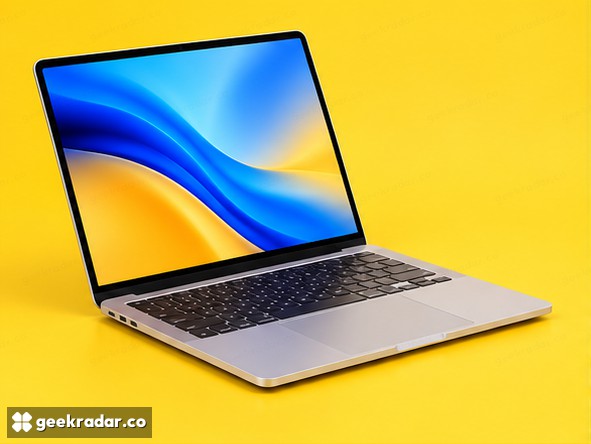
The accompanying MacBook Pro release introduced 14-inch and 16-inch designs with Liquid Retina XDR displays and adaptive refresh rates up to 120Hz. HDMI, an SDXC card slot and MagSafe 3 sat alongside Thunderbolt 4. A physical function-key row replaced the Touch Bar.
Those decisions addressed a different kind of performance: the time spent connecting a display, importing a memory card or reaching for a familiar key. None produces an impressive benchmark chart. All can affect how comfortably a computer fits into a working day.
What the launch established
The announcement did not prove that every professional needed the largest chip. Apple's own comparisons involved specific applications and configurations, and this archive article includes no hands-on testing. A sensible interpretation is narrower: the company was treating a professional notebook as an integrated work system rather than a processor upgrade wrapped in the same enclosure.
That distinction makes the 2021 launch worth revisiting. Its significance was not simply that the Mac gained more computing power. Apple paired that power with memory options, video hardware, display changes and practical ports, bringing the argument back to what a professional could actually do with the machine.