Europe’s SELYCE project will test whether a satellite can carry the call when a phone loses signal
ESA and SES will test messaging, vehicle links and emergency voice together on the ground. A conversation places a different demand on that link than a location report.
A text saying where a car has broken down can still be useful if it arrives a few seconds late. A conversation with the driver is less forgiving. The European Space Agency and satellite operator SES want to test both jobs through a direct link between a mobile device and a satellite. Their project, SELYCE, has reached the contract stage. The first commitment is to put the whole communications system to the test on the ground.
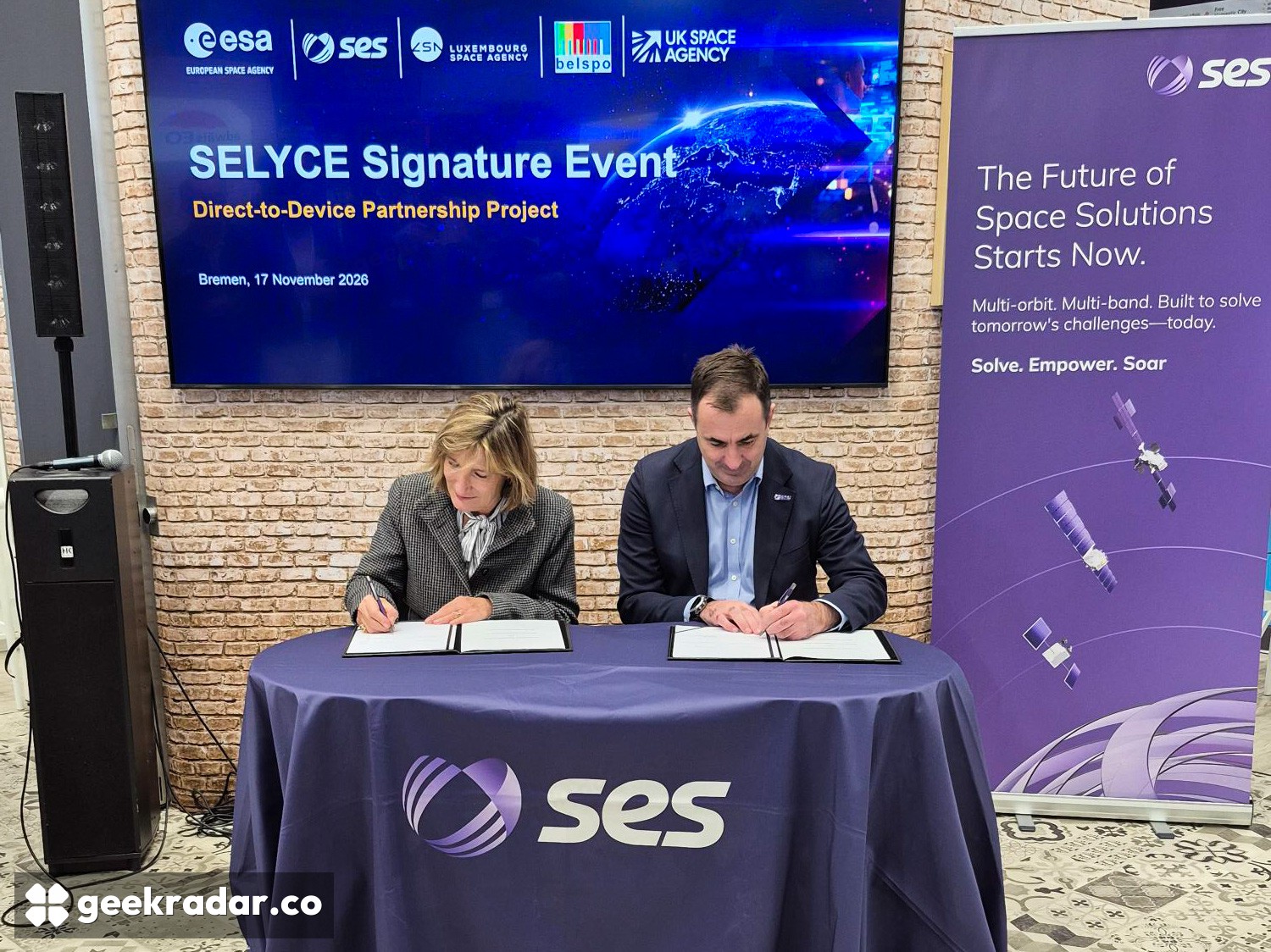
ESA and SES signed the partnership in Bremen on November 17. They see three initial uses for it: keeping vehicles connected, carrying messages and emergency calls beyond mobile coverage, and sustaining communications when a disaster disrupts the network. The agreement offers no coverage map, list of supported phones or date when customers can place a call.
What a satellite has to do for a phone
A satellite can already provide the onward connection for a remote cell tower. In that arrangement, the phone still needs to reach the tower. The direct-to-device link SELYCE is developing changes that first hop: the handset, sensor or vehicle would reach a satellite itself. That matters on a road where there’s no tower to connect to in the first place. It could also matter in a town that normally has good reception but has lost a local site.
SES describes a phased test program based on 5G standards for non-terrestrial networks. The partners plan to integrate the components in a test environment that reproduces the behavior of the complete system. Demonstrations in orbit would come later. The difference is practical. Showing that a terminal can send a short message is a valuable result. Carrying a conversation means getting the response back in time for the caller to use it, then doing that again and again in both directions.
ESA names emergency voice as a use the partners intend to investigate. It gives no measured call delay, success rate or supported emergency number. Those are questions an operator would need to answer before a driver could count on placing that call.

What a cattle collar can already tell us
There’s a useful point of comparison in Iridium’s recently activated narrowband satellite service. Nofence is integrating it into collars for cattle grazing beyond mobile coverage. The farmer might need a position report from the collar or want to send a revised grazing boundary back. A small exchange in either direction can accomplish something specific. It doesn’t have to keep two people talking.
That distinction is easy to miss when both developments are described as satellite connectivity for ordinary devices. Iridium can point to a network it has activated and a manufacturer integrating a named product. SELYCE can point to a signed agreement and a set of jobs its partners plan to test. For someone standing beside a stranded car, the result worth waiting for is simple to describe: they can say where they are, hear the first question back and stay connected long enough to answer it.