Indonesia asks YouTube to explain 19,372 channel closures. Where do the extra 17 come from?
Google lists a small multilingual group separately from the three monthly totals. Indonesia wants evidence of how the platform identified the networks and established who ran them.
Indonesia has asked Google to explain how it identified more than 19,000 YouTube channels as part of coordinated influence operations. After meeting Google Indonesia and YouTube’s Southeast Asian representatives on November 19, the country’s digital ministry requested written examples, an account of the human review involved and the rate at which the system makes mistakes. Google’s bulletin gives a precise count of the channels it closed. It leaves open who controlled them and how many people saw their videos. The ministry’s account of the meeting
Where the extra 17 channels come from
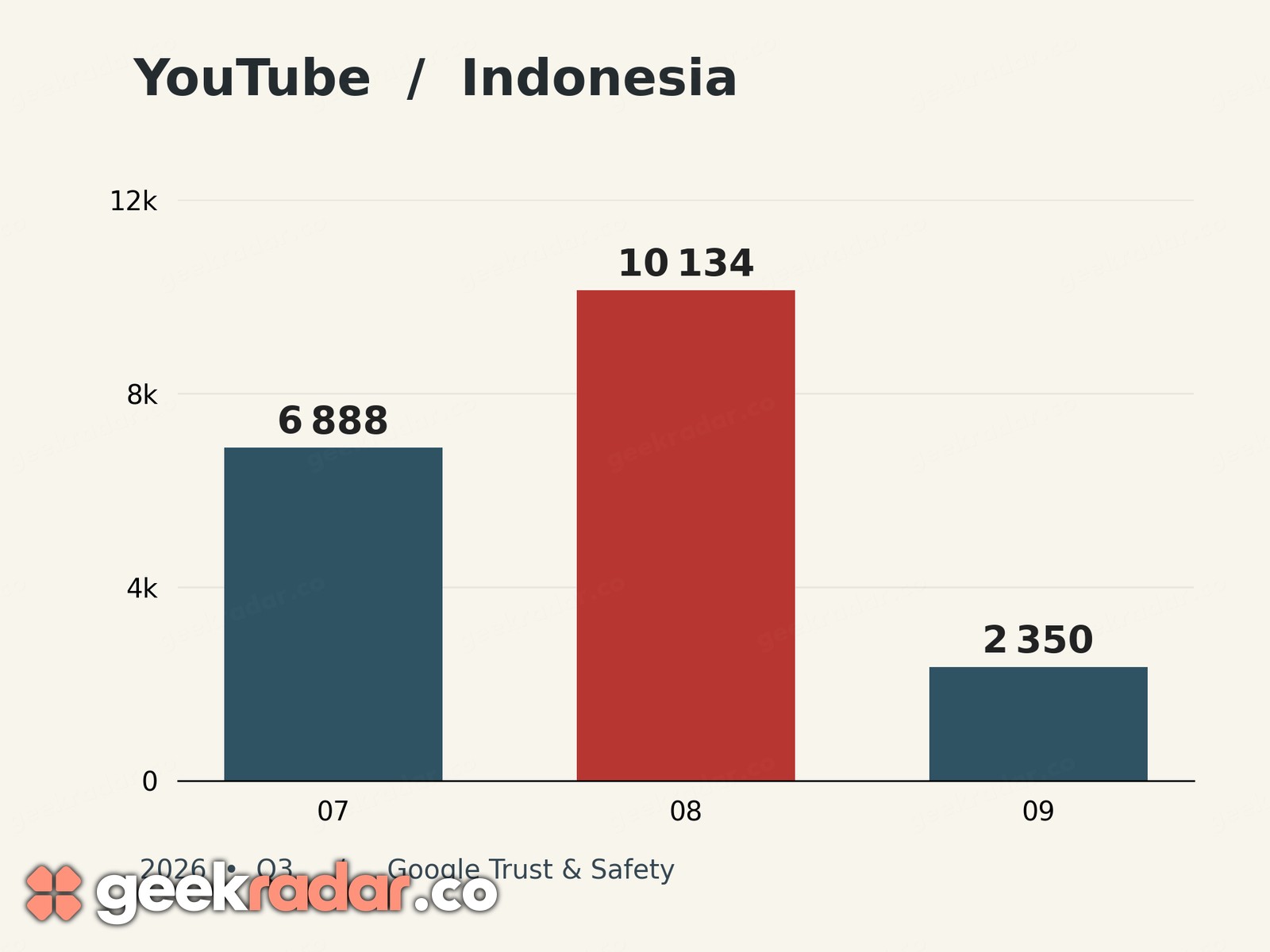
In its third-quarter influence operations bulletin, Google records three monthly groups linked to Indonesia. It closed 6,888 channels in July, 10,134 in August and 2,350 in September. The corresponding entries describe Indonesian-language content supportive of the government. In August, Google also describes material attacking its critics. Add the three entries and the total is 19,372 channels.
A fourth entry helps explain why another account of the meeting gives 19,389. In July, Google separately closed 17 channels whose videos supported the Indonesian government in five languages, including English, Indonesian and Portuguese. Google lists that group separately and omits the geographic attribution it gives the other three. Counting all four produces 19,389. Describing all 19,389 as Indonesian-language channels run from Indonesia goes further than the evidence allows.
The unit matters, too. A person can operate several channels, and two channels can reach very different audiences. The bulletin supplies neither the view counts for these videos nor a count of distinct operators. August accounts for more than half of the 19,372 closures. That establishes when Google took action. It gives no measure of when the videos reached the most people. GeekRadar’s report on how YouTube counts television viewers describes a different example of why the unit behind a platform statistic matters.
What would a written example establish?
According to the ministry, Google’s representatives pointed to YouTube’s spam policy. It applies to coordinated networks and covers practices such as artificially inflating engagement. The public bulletin describes the political position of the videos. That description alone gives an outside reader little basis to tell whether two creators shared a view independently or whether one operator directed both channels.
The ministry says Google’s local representatives need to consult the global team that prepared the bulletin. Its initial statement backs action against manipulation while calling for equal protection for people who support the government and those who criticize it. A worked example could make the distinction tangible: show why a reviewer grouped the channels, what evidence justified the closure, and which parts of the attribution remain uncertain. Another thousand entries in a tally would still leave those questions unanswered.