When can Ghost Downloader pick up where a download stopped?
A paused transfer can keep hundreds of megabytes on your drive. Getting the rest safely depends on how the server answers, especially if the publisher replaced the file overnight.
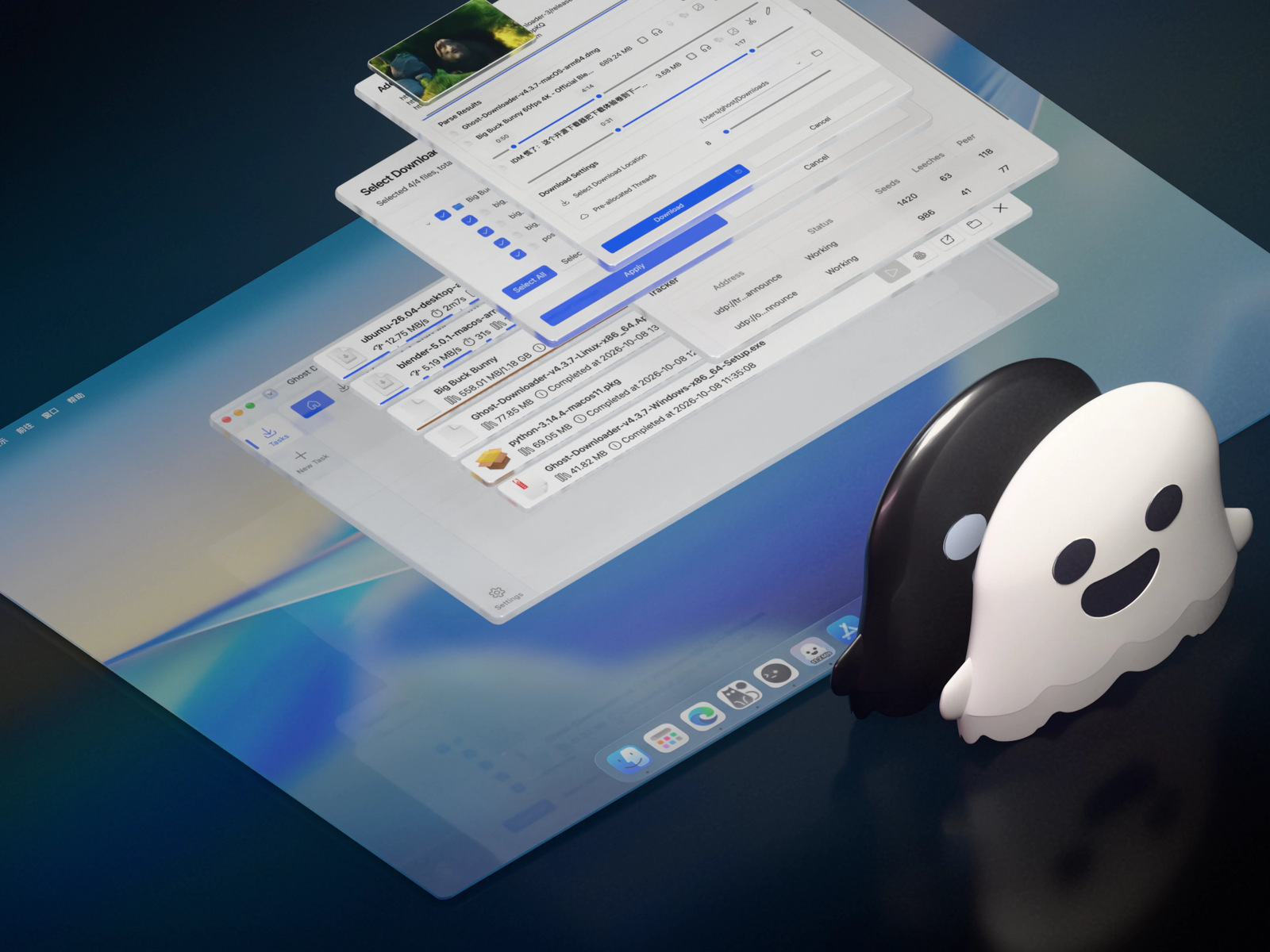
The most useful thing a download manager can save is the part of a file you already have. Ghost Downloader, an open-source app that appeared in Saturday’s snapshot of GitHub Trending, lets you pause a transfer and edit its source URL. That sounds ideal when a large download stalls near the finish. Whether the old progress is worth keeping depends on two things the progress bar cannot tell you: will the server send just the missing bytes, and are those bytes still part of the same file?
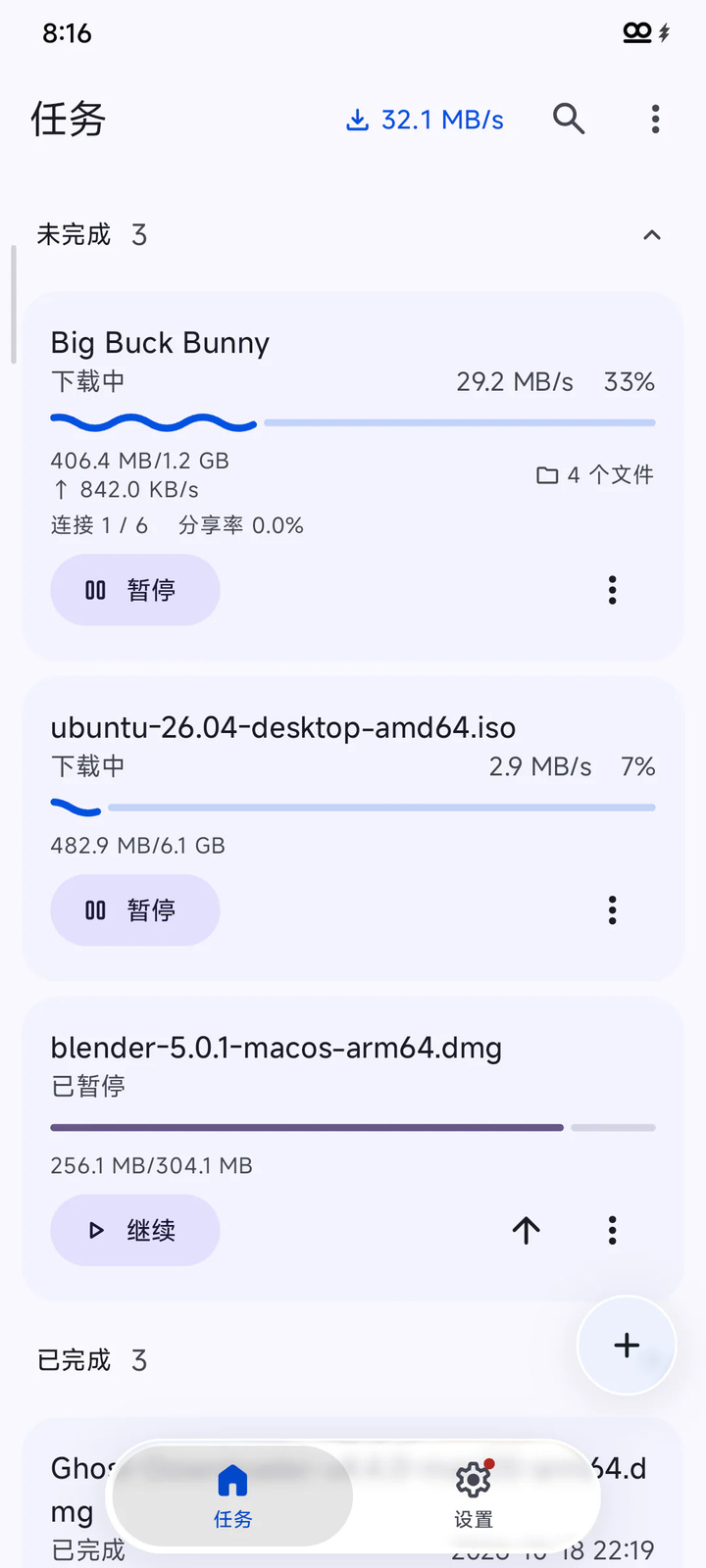
The project’s own Android screenshot shows why this matters. A Blender disk image is paused at 256.1 MB out of 304.1 MB. In another row, an Ubuntu image is still arriving. A download manager gives each job a memory independent of the browser tab that started it. For a sense of the stakes, even one audience recording in the Nine Inch Nails live archive comes as a 2.05 GB download. On a metered connection, getting the same bytes twice has a cost.
Picking up at byte 768
Shrink the problem to a file exactly 1,024 bytes long. Say the first 768 bytes reached your computer before the connection dropped. A plain HTTP request for the file could fetch the whole thing again. A client that knows where it stopped can instead ask for Range: bytes=768-. Numbering starts at zero, so 768 is the first byte it still needs.
If the server honours that request, it returns 206 Partial Content. In this example, its Content-Range says bytes 768-1023/1024. The response carries 256 bytes, and the client knows where they belong. A server can also ignore a range request and return 200 OK with the full file. Appending that full response to the 768 saved bytes would duplicate the beginning. The HTTP standard allows both replies. Software has to read the answer before deciding what to keep.
What the progress bar leaves out
Suppose the download address ends in latest.zip. Overnight the publisher puts a new build at the same address. The name hasn’t changed, and two releases could even be the same length. Neither fact makes the tail of the new build fit the beginning of the old one.
HTTP has a way to express exactly what the client needs. With a conditional range request, it can send the server a strong identifier, called an entity tag, from the original response. A match allows the server to send the missing part. A mismatch tells it to ignore the range and send the current representation in full. This is a property of HTTP. The Ghost Downloader project describes its transfer controls without promising to perform that particular check on every job.
The distinction matters when editing a stalled task. If a publisher supplies a fresh link to the same versioned installer, there’s a good reason to try to retain the partial download. If the publisher has replaced the build, there’s a good reason to start again. When a checksum is available, comparing it with the finished file gives you a check that a full progress bar cannot: did the bytes you assembled produce the file the publisher actually released?