Internet Archive workers ask for union recognition, from the scanning room to the Wayback Machine
US staff asked management to recognise their union and filed an election petition the same day. Microfiche technicians and web engineers want a voice in pay, benefits and career progression.
The people who preserve the web have asked for a say in how their own workplace is run. On November 20, US employees of the Internet Archive asked management to recognise their union, which would join Local 9415 of the Communications Workers of America. They also filed for an election. The two moves leave the staff a route to bargaining whether management accepts the signed cards or asks for a formal vote. The organisers’ announcement.
More than 80 of 124 eligible US employees backed the effort, according to WIRED’s interviews with organisers. The distinction is easy to miss in a headline about workers voting. That count expresses support for joining the union. It is not a result announced by a federal election official. WIRED reported that recognition was still pending and that founder Brewster Kahle had not responded to its request for comment.
A library with more than one kind of shift
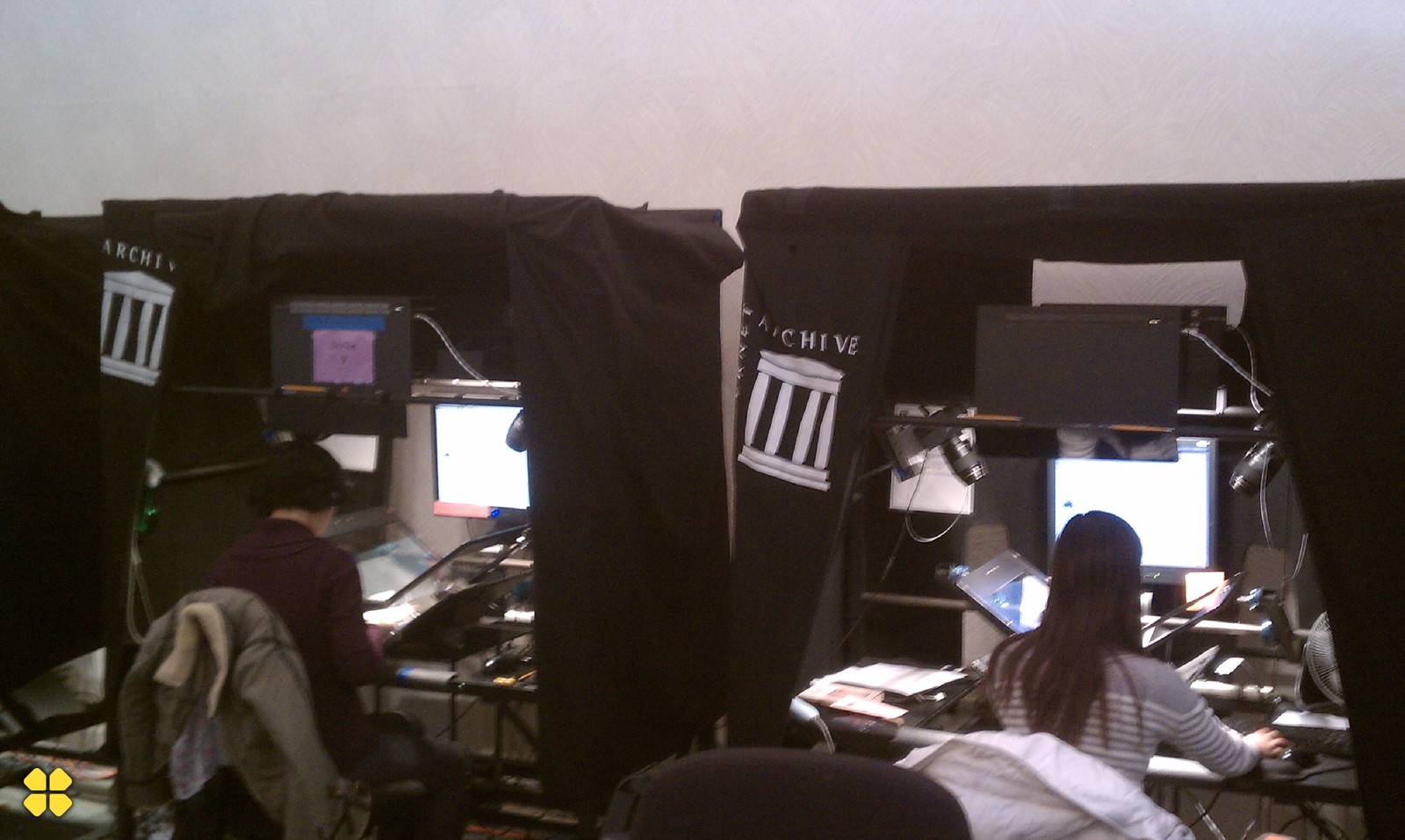
Go to the Wayback Machine and the job looks like a search: type in an address, pick a date, retrieve a page. Walk into a book-scanning room and preservation looks like two people seated at separate illuminated workstations. In Steven Walling’s photograph of the Archive’s scanning stations, each operator has a book, a screen and a workspace shielded from outside light. The photograph is available under CC BY-SA 3.0.
Those operators are part of a broader workforce that includes librarians, engineers, facilities staff and people who answer patrons’ questions. Two organisers WIRED spoke with illustrate the span: Danielle Leard digitises microfiche, while Will Howes works on the Wayback Machine. Leard identified consistent benefits and opportunities to learn skills and move into more senior jobs among the changes workers want.
There is a practical reason to care who gets to stay and learn those jobs. A working link to a collection tells a reader little about the work that went into preserving it. And when an institution changes a service, readers can discover just how little control they have over its records, as the closure of Apple’s Support Community illustrated. At the Archive, staff are asking for a formal way to shape the conditions under which that preservation work continues.
What happens to the election petition?
CWA says organisers will withdraw the petition if the Archive recognises the union voluntarily. Otherwise the federal election process gives eligible staff a way to choose their representative. Under the National Labor Relations Board’s explanation, a union in that election needs a majority of votes cast. A recognised or certified representative can then bargain with the employer over working conditions.
That final step is where the question of a career inside a digital library becomes concrete. A signed card records support for bargaining. A first agreement could spell out what a scanning technician earns, which benefits follow a change of role, or how a worker moves up after years of keeping other people’s records accessible. Those terms remain to be negotiated.