Quad9 is leaving France. Here’s which Mullvad Browser setting to check
From November 24, a French user’s browser could lose its DNS service while the internet connection still works. Mullvad’s recent resolver migration makes the provider field worth a look.
On November 24, a Mullvad Browser user in France could have a working internet connection and still struggle to open an ordinary website. The deciding factor is a browser setting. Quad9 plans to stop answering DNS requests from France, and some installations of Mullvad Browser now send their lookups to that service. Mullvad’s November 17 advisory tells users how to check before the change takes effect.
DNS translates a name such as example.org into an address a browser can use. A recursive resolver does the work of finding the answer on the user’s behalf. If the chosen resolver stops answering, a page can appear unreachable even while its server is running. The withdrawal concerns people using Quad9 from France. It has no announced effect on users elsewhere.
Why a sports-rights case reaches ordinary websites
The Swiss nonprofit announced its departure in October after a French court ruled in favour of sports broadcaster beIN in a dispute over domains associated with unauthorised streams. The court imposed a potential penalty of €1,000 per day in total for failing to implement the blocking order. TorrentFreak’s account of the decision distinguishes that figure from the much larger daily penalties the broadcaster had sought.
The court ordered the blocking of particular domain lookups. Withdrawing the entire service from the country was Quad9’s decision. The distinction explains why the change can affect someone trying to reach a library catalogue as readily as someone watching sport. Quad9 says its security service already filters domains associated with threats such as malware. It argues that extending that role to enforcing broadcast rights conflicts with the service it offers users. It says an appeal is pending.
Which setting decides where a lookup goes?
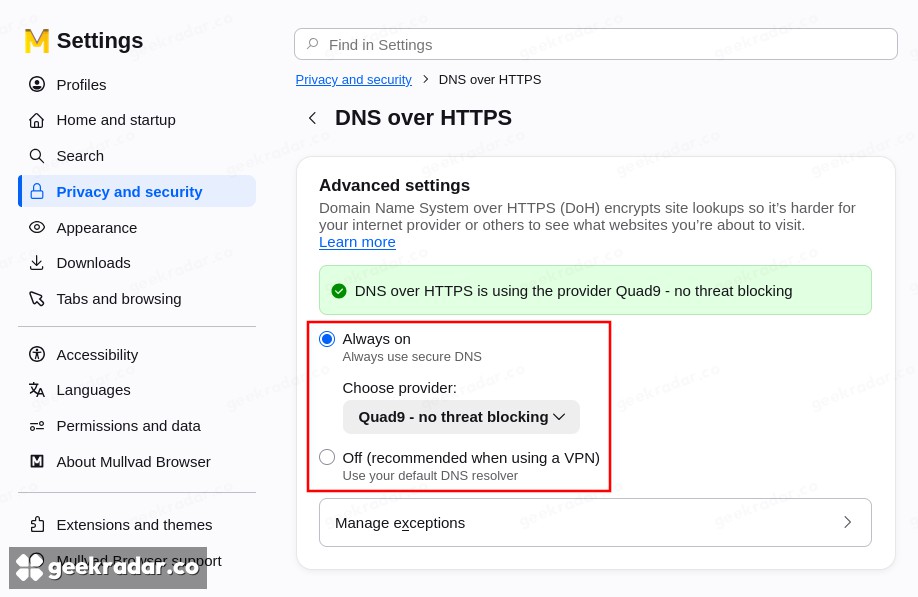
In Mullvad Browser, open Settings → Privacy and security → DNS over HTTPS → Advanced settings. The selected provider matters. When version 16 arrived, Mullvad migrated users of its discontinued encrypted DNS service to Quad9, while preserving customised provider settings. Someone who last chose Mullvad’s resolver months ago may therefore find Quad9 selected today.
Mullvad’s illustrated settings guide shows the provider field and the system-DNS option. Neither choice changes who hosts a website or which addresses its owner publishes. As our report on authoritative DNS updates explains, publishing an address is a different job from looking it up. On November 24, the useful first check for an affected browser will be which service it is asking.