How Toulouse’s KAIROS ranks first for efficiency and 472nd for speed
The runner-up in the Green500 does more than three times as much arithmetic per second. The difference comes into focus when you count the energy used for each calculation.
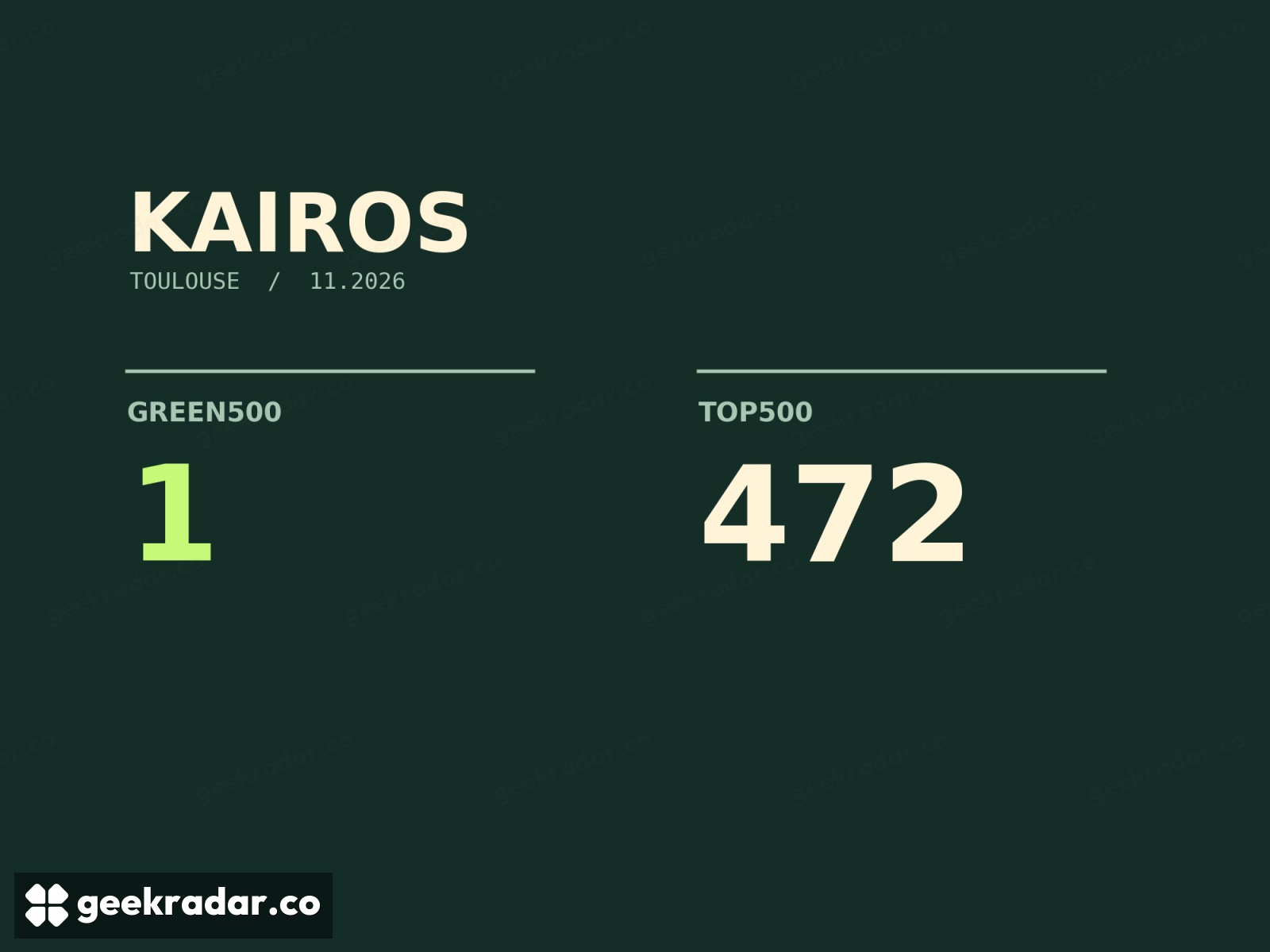
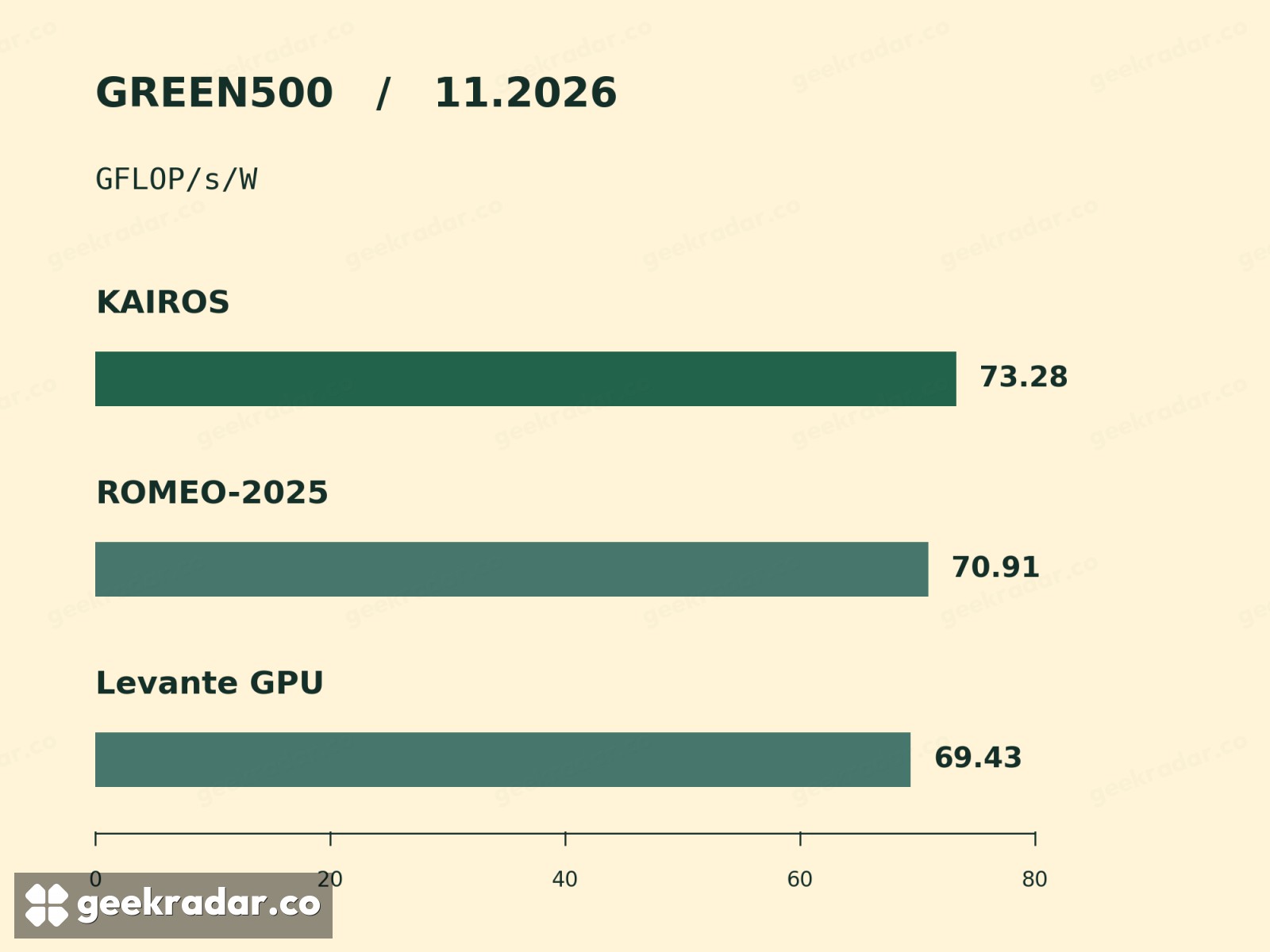
The supercomputer in Toulouse that tops November’s Green500 would be easy to miss on the list of the world’s fastest machines. KAIROS sits at number 472 there. Put a meter alongside the calculation, however, and it takes first place: its reported score is 73.28 billion floating-point operations per joule. Both rankings appear in the same November results.
KAIROS already held the efficiency title in June. What makes the new table worth reading is the machine immediately below it. France’s ROMEO-2025 finishes the benchmark arithmetic at more than three times the rate of KAIROS and still comes second for work per unit of energy. An engineer with a deadline and an engineer with a fixed energy budget could read those two rows and reasonably prefer different machines.
What a watt buys during the test
High Performance Linpack asks a computer to solve a dense system of linear equations using double-precision arithmetic. Picture a grid of coefficients so large that different parts of the computer have to work on it together. The benchmark checks the result. Its performance figure, Rmax, expresses the rate of arithmetic the machine actually achieved on that problem. A petaflop per second represents a million billion such operations each second.
The Green500 puts electrical power in the denominator. Watts are joules per second, so the seconds cancel when you divide an operation rate by watts. That gives a useful way to read the winning number. At its reported benchmark efficiency, a thousand joules corresponds to about 73 trillion operations on KAIROS. The calculation says nothing about how many seconds an entire building could run on that energy.
The difference between the two rates is much larger than the difference between the two efficiencies. ROMEO has more resources working on the calculation. Its larger output can coexist with a small penalty in work per joule. Nor does the podium turn on a contest between rival chips. The three leading entries all use the BullSequana XH3000 platform and Nvidia’s GH200 Grace Hopper. Germany’s Levante GPU extension places third. Buying a machine with that chip would still leave its size, interconnect and operating conditions to be decided.
Where the electricity meter sits
The Green500’s measurement methodology asks which parts of the system were metered, for how much of the run, and where the readings were taken. Those questions matter if you try to turn a benchmark into an electricity bill. The lab in Toulouse describes the accelerated partition and the wider installation separately. It also describes warm-water cooling. The ranking alone cannot tell you how much that cooling arrangement contributed to the score.
Facility capacity, instantaneous power and energy consumed over a year answer different questions. The same distinction matters when researchers estimate data-centre capacity from satellite images. And even a perfectly matched pair of meters cannot make a dense algebra problem behave like a simulation that spends much of its time waiting for data.
If a lab has a fixed electricity allowance, Toulouse shows why it should look well below the first page of the speed rankings. For a specific research job, the decisive pair of measurements is closer to home: how long the job takes to deliver a usable answer, and how many joules the meter records before it does.