Two reporters took Florida bird guides into GTA VI. They spotted 12 species
A St. Petersburg library loan turned two hours in Leonida into a birding trip. The bill of a roseate spoonbill explains what to look for before the game supplies a name.
Two Florida environment reporters borrowed bird guides from the St. Petersburg library and took them to an Xbox. In two hours on Grand Theft Auto VI’s launch day, they identified a dozen species, including a roseate spoonbill, a wood stork and both brown and American white pelicans. The Tampa Bay Times account of the outing makes a good case for trying one small change the next time you take out the binoculars in Leonida. Give yourself a moment to identify the bird before you ask the game for its name.
Start with the shape of the bill
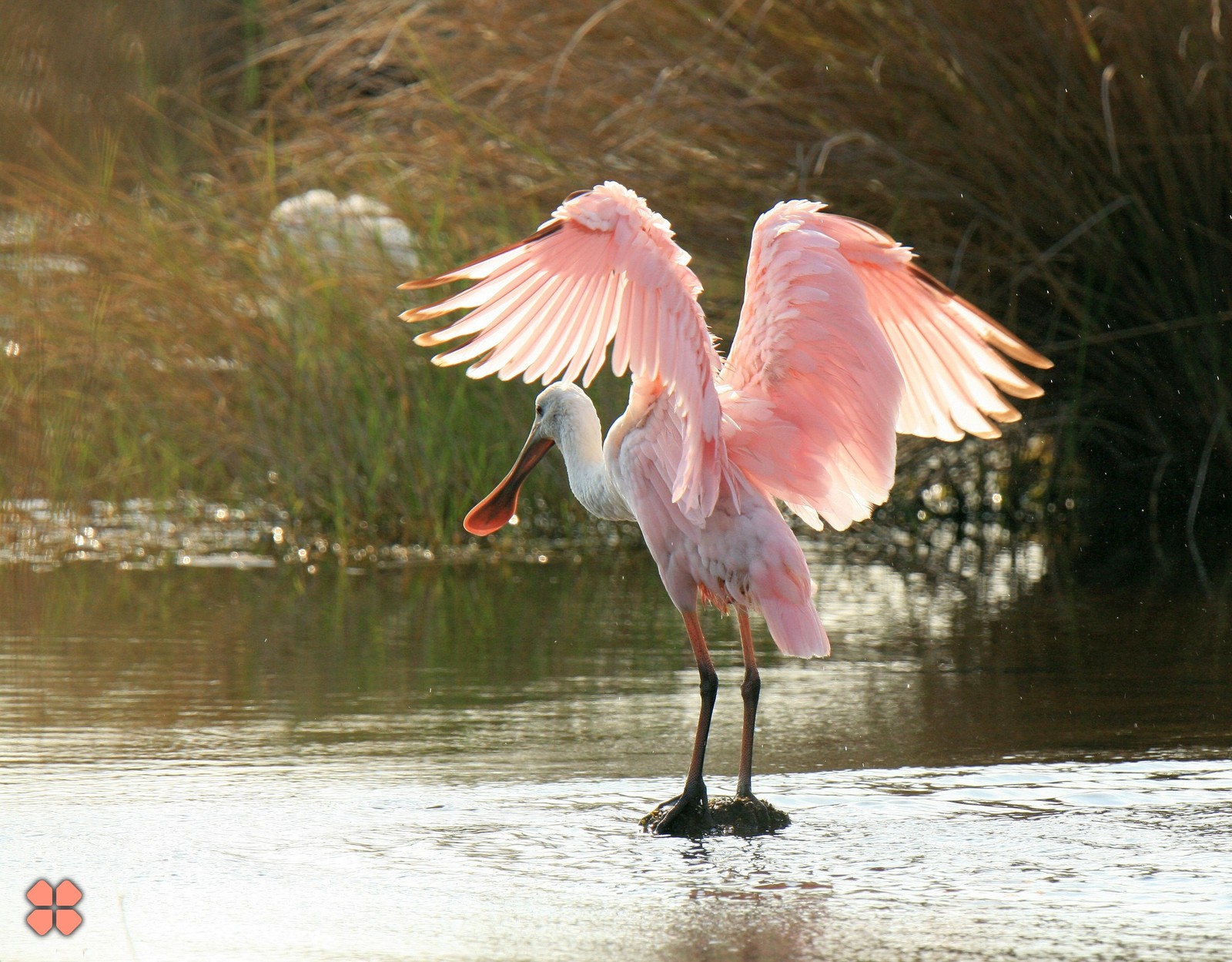
A flash of pink over a wetland might suggest a flamingo. The bird the reporters recorded was a roseate spoonbill. The photograph above shows a real one spreading its wings at St. Marks National Wildlife Refuge. Follow the bill from the face to the tip. It starts narrow, then flares out into a flat paddle. That outline is a better clue than the colour of a few feathers seen across the water. The pale neck is another detail worth looking for when the bird turns.
The shape makes sense once you know how a wild spoonbill eats. It sweeps its bill sideways through shallow water, feeling for small fish and crustaceans. Sensitive nerve endings help it detect prey it might have trouble seeing. Those are traits of the living bird, documented by the Florida Fish and Wildlife Conservation Commission. The reporters’ sighting establishes that the species appears in GTA VI. It leaves open how much of that feeding behaviour Rockstar animated.
A wood stork presents a different puzzle. Seen from a distance it can look like another large white bird by the water. An adult has a bare, rough-looking grey head, a heavy dark bill and black flight feathers that are much easier to pick out when it opens its wings. A real wood stork feeds by holding its bill partly open in the water and snapping it shut when prey touches it. Both birds can find a meal by touch, yet the tools they bring to the job look quite different. Florida’s wood stork profile gives a closer look at those markings.

What a two-hour bird list can tell you
The newspaper’s outing took in Lummox County and the Grassrivers wetlands. Its list belongs to that trip. It tells you that two people saw those species during ordinary play, without promising a spoonbill at a particular bend in the river or a dozen sightings in every two-hour session. When the paper shared the list with Audubon Florida, its executive director singled out the spoonbills and white pelicans as appropriate choices for the setting. That is a narrower and more interesting achievement than making a large number appear in a menu. Someone who knows the coast recognized its company of birds.
There are two good ways to use the game’s optics here. Our guide to binoculars and the animal journal explains how to register a sighting. If you want to test your eye, reverse the order of attention. Pick a mark you could describe to another person, then read the identification and see whether it fits. The next time a pink bird crosses the frame, you’ll know which end to look at first.