Euro 7 reaches the brakes. Why an electric car has the tighter dust limit
New EU passenger-car types face their first brake-particle limits on November 29. A battery-electric car gets a smaller allowance than a plug-in hybrid, even though both can recover energy as they slow.
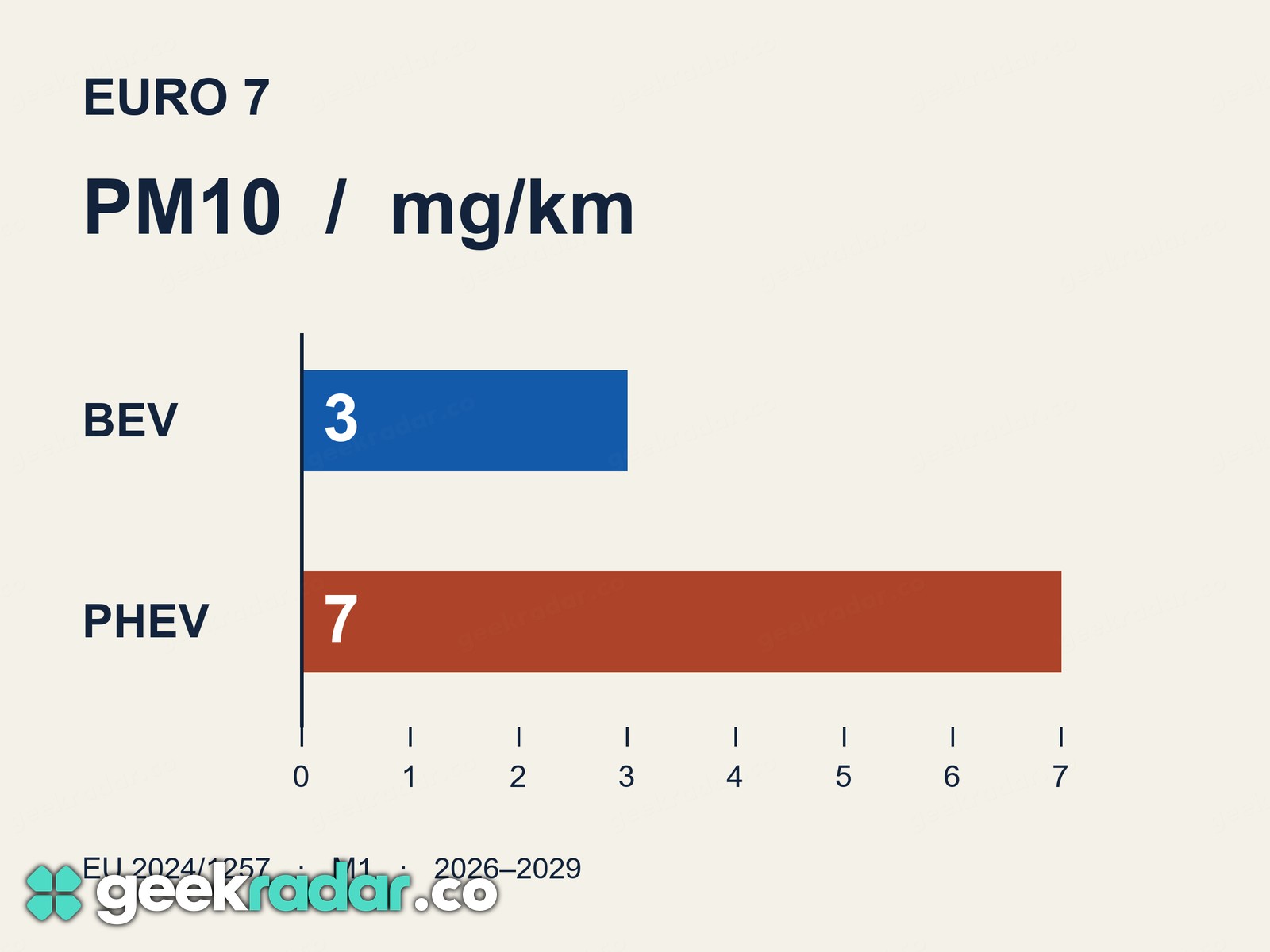
A battery-electric car undergoing EU type approval from November 29 faces a brake-dust limit of 3 milligrams per kilometre. For a plug-in hybrid passenger car, the figure is 7. Both can slow down by turning a motor into a generator. Both still carry friction brakes. Euro 7 makes the particles those brakes release part of the approval decision, even on a car with no exhaust pipe.
The distinction matters in a market where the word electrified can describe three quite different cars on the same forecourt. GeekRadar’s breakdown of EU registrations separates battery cars from plug-in and conventional hybrids. Look up those same three passenger cars in Annex I, Table 4 of the regulation and the two hybrids share a limit. The battery car has its own.
What the brake test measures
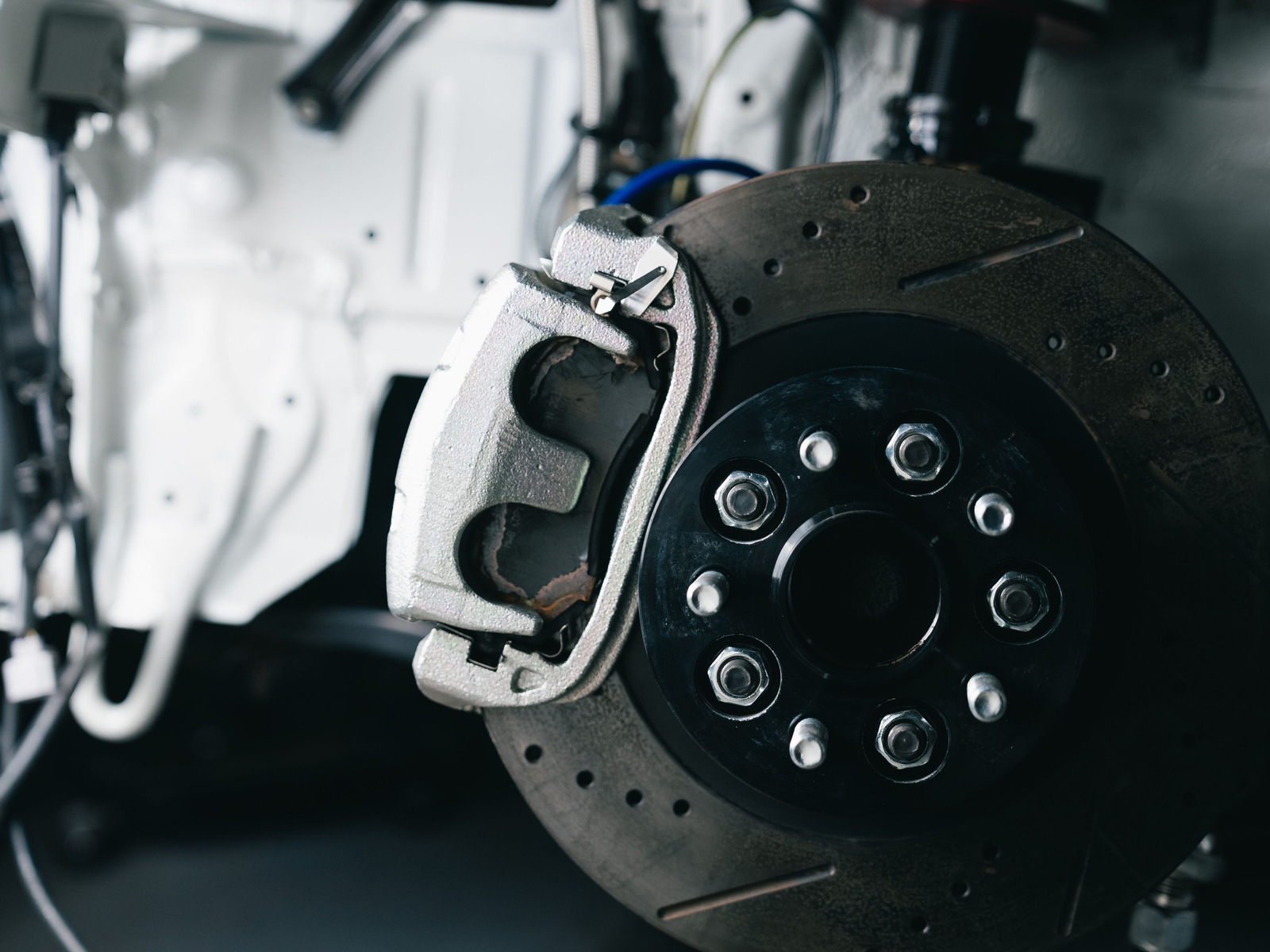
Look through the spokes of a wheel fitted with a disc brake. The metal ring turns with the wheel. The caliper straddles its edge, squeezing pads against the two faces when the car needs friction to slow it down. Some of the material worn away becomes airborne. Euro 7 puts a ceiling on the mass of the PM10 fraction, a measure of airborne particles classified by aerodynamic size. A dark coating on an alloy wheel tells you that material has settled there. It cannot tell you the mass that escaped into the air.
An electric motor gives the car another way to shed speed. When the wheels drive the motor as a generator, some of the car’s kinetic energy returns to the battery. The portion handled that way takes work off the pads. That makes the division of labour between motor and brakes an engineering choice with a measurable consequence. A manufacturer can work on how much friction braking the car asks for, as well as what the pads and discs release when they do touch.
The Commission’s brake-testing procedure specifies a common sequence of braking events and refers to a method for determining the vehicle-specific share of friction braking. The result is expressed per vehicle and per kilometre. The 3 and 7 are approval ceilings under the standard cycle through the end of 2029. Neither tells you what a particular car emitted on a particular descent. Heavier class III light vans also have a separate set of limits, so a passenger-car figure is a poor shortcut for assessing a delivery fleet.
Which date follows the car?
Type approval is a decision about a vehicle design. Registration puts an individual vehicle on the road. That gap of a year in Article 21 explains why a car of an existing approved type can still be sold new after the first deadline. Nor does the change reclassify a car that already has number plates.
For anyone comparing two electric cars, the Euro 7 designation can answer one narrow question with new precision. A newly approved battery car must meet a brake-particle ceiling, and a manufacturer has to account for a source of emissions that disappears from view the moment someone looks only at the tailpipe.