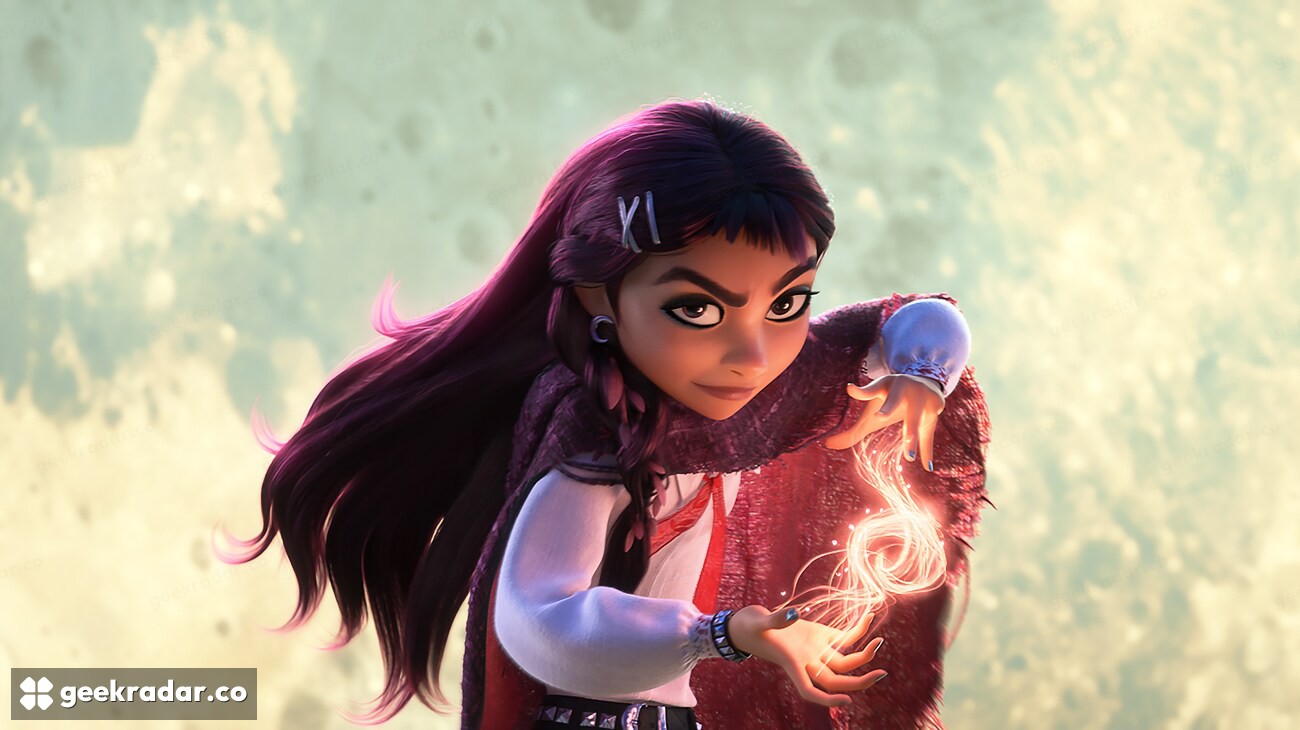
Disney drew the opening of Hexed by hand. The shadows came next
The directors describe building a shadow play out of drawings, light and paper textures. A veteran who animated Aladdin’s carpet brought the same eye for movement to the new film.
The first thing to look for in Disney’s Hexed is the edge of a shadow. Although the feature is primarily computer-animated, its opening began with hand-drawn movement. The artists then gave the drawings the textures of paper and puppets and used lighting to make the action look projected. The order matters. By the time there was a surface for the light to catch, the drawings already had comic timing of their own.
Directors Fawn Veerasunthorn and Jason Hand described the process in an interview with Cartoon Brew ahead of the film’s theatrical release. Their starting point was an idea for a fairy tale set in Ohio. Billie, a teenager at odds with her cautious mother, discovers she has magical abilities. Hailee Steinfeld voices Billie and Rashida Jones plays her mother, Alice, in the English version. Disney lists November 25 for US theaters, while its UK release is November 27.
What survives when a figure becomes a shadow?
In a close-up, a raised eyebrow can do almost all the work. Turn the same face into a silhouette and the eyebrow disappears. An animator has to find another way to convey the beat. A chin jutting forward or a hand pausing just short of an object reads clearly in outline. Paper texture can make that hand feel like something you could pick up, but the pause is what gives it a thought.
That offers a way into Hand’s account of the opening. He wanted light to project the story, with moonlight a recurring visual idea. He remembers the drawn movement already looking funny before the artists added the textures. It’s a useful distinction when so much of the public discussion of animation revolves around the finish on a frame. You can reproduce the grain of a puppet on paper and still miss the instant that makes an audience laugh.
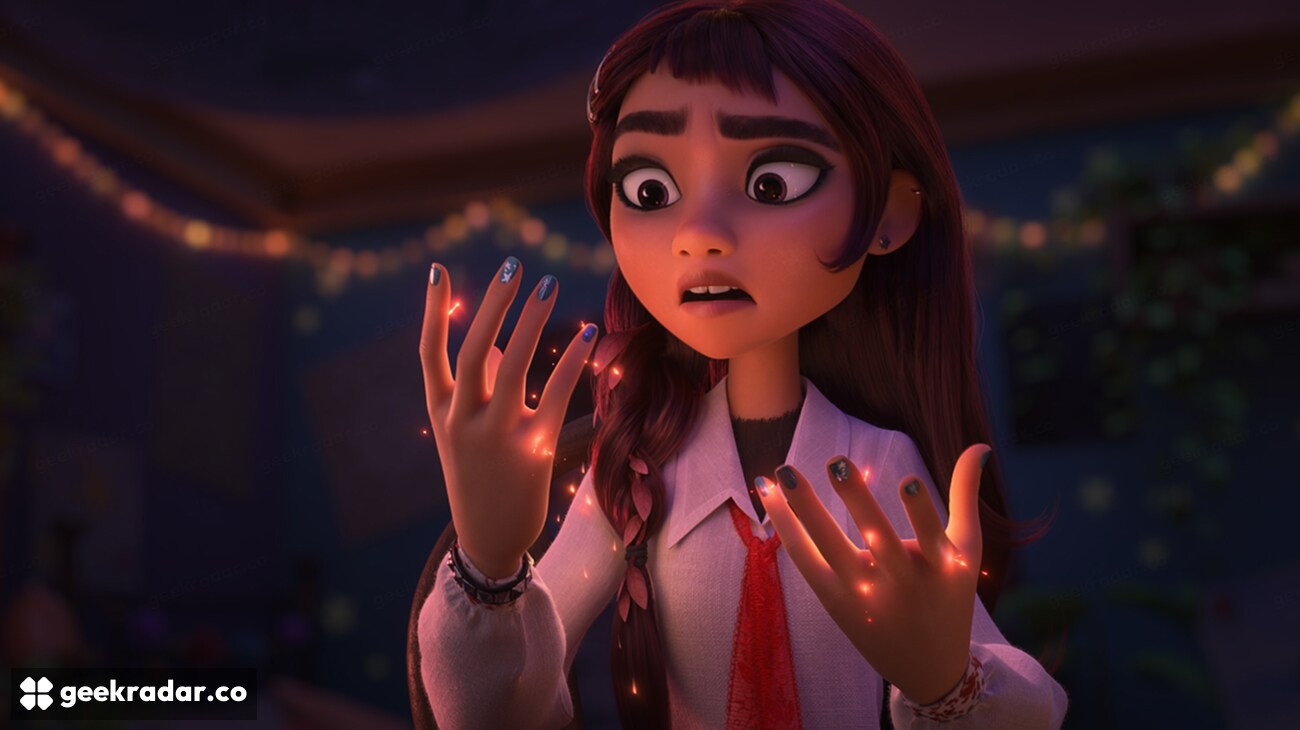
What a sleeve can tell you
Disney also put drawing to work where the audience might never spot a drawn line. Hand credits animator Alex Kupershmidt with helping the team work out how clothing moves. Randy Haycock, who animated the magic carpet in Aladdin, contributed animation and draw-overs. A draw-over lets an artist sketch a change directly over an existing pose. Consider a sleeve following a raised arm. A small change to its outline can make the arm seem to swing freely or stop short, even if the wrist ends up in exactly the same place.
Kris Bowers wrote the film’s original score. His other animated release this month, Netflix’s *Steps*, offers another example of artists finding a form for a fairy tale. For Hexed, the directors have given audiences a particularly simple detail to watch when the lights go down. Follow the outline for a moment. See how much a character can say before you can even see their face.