Debian 13.8 is out. What changes if you still have a 13.7 USB stick?
The new installer carries a rebuilt kernel, while a regularly updated trixie system may already have many of the security fixes. Chromium and Debian Edu show why the distinction matters.
A USB stick marked Debian 13.7 still earns its place in the drawer. Debian released 13.8 on November 21, and an installation made from older trixie media can reach the same package versions as a fresh one. If Debian 13 is already running on the machine, the route to 13.8 goes through its configured package repositories. There is no installer to run. Debian’s release announcement
Two clocks explain why a release with a long security bulletin can make for an uneventful Saturday update. One starts when Debian distributes a fixed package. The other marks the day the project gathers fixes into a new revision of its stable distribution. A computer receiving security updates throughout the autumn may have picked up much of the bulletin before the USB image had a new number.
Read the list as a history
Take Chromium. In the security table for 13.8, the browser appears repeatedly under different advisory numbers. Each row points to work the security team had already announced. Counting those rows tells you something about maintaining a browser over time. It tells you very little about how much your laptop will download today. You might already have the applicable update, or you might use another browser altogether.
On a trixie machine, APT can answer the question for the actual packages installed. With the usual stable and security repositories configured, apt update fetches fresh package information. Then apt list --upgradable lets you inspect what is available. The installation step is apt upgrade, which can add dependencies but leaves an upgrade pending if it would have to remove an installed package. The APT manual explains that distinction. Changing distribution names in the repository configuration is unnecessary for this point release.
What changes on the USB stick
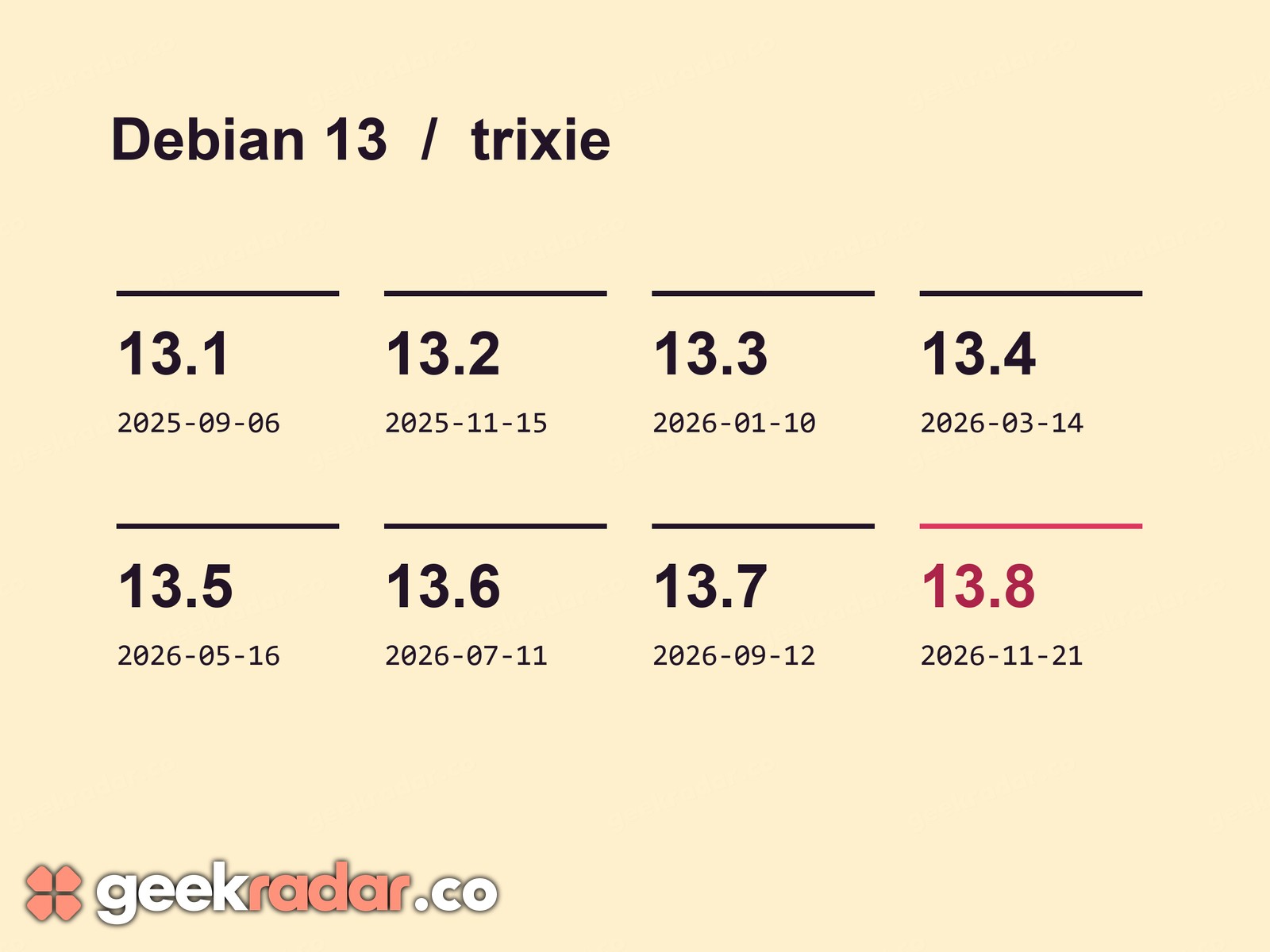
Installation media freeze part of the archive at a moment in time. Debian’s trixie release history dates 13.7 to September 12. An installer written that weekend predates more than two months of fixes. On a machine with a working network connection, a current mirror can supply newer packages. For someone preparing several installations, refreshing the stick also refreshes the installer itself. Debian rebuilt it for the kernel ABI identified as 6.12.117+deb13. That matters because the installer has to boot and recognise the hardware before it can fetch anything.
Some of the least dramatic lines in the release notes explain why a refreshed installer matters. The Debian Edu installer now counts network cards correctly and fixes a case where it always selected the LTSP server role. That is a change a school may encounter while setting up a machine, long before anyone opens a browser on it. Another package, tzdata, corrects historical timestamps for Ireland, Iran and Colombia. A current clock can look perfectly ordinary while a program converting an old timestamp produces a different local time.
The word release covers quite different decisions across Linux. Ubuntu 26.10 introduced local dictation and its own support window. Debian 13.8 keeps a machine on trixie. For a running computer, check the packages APT offers. For the stick that will start the next computer, the version on the label matters most in those first few minutes, before the new machine can reach a mirror.