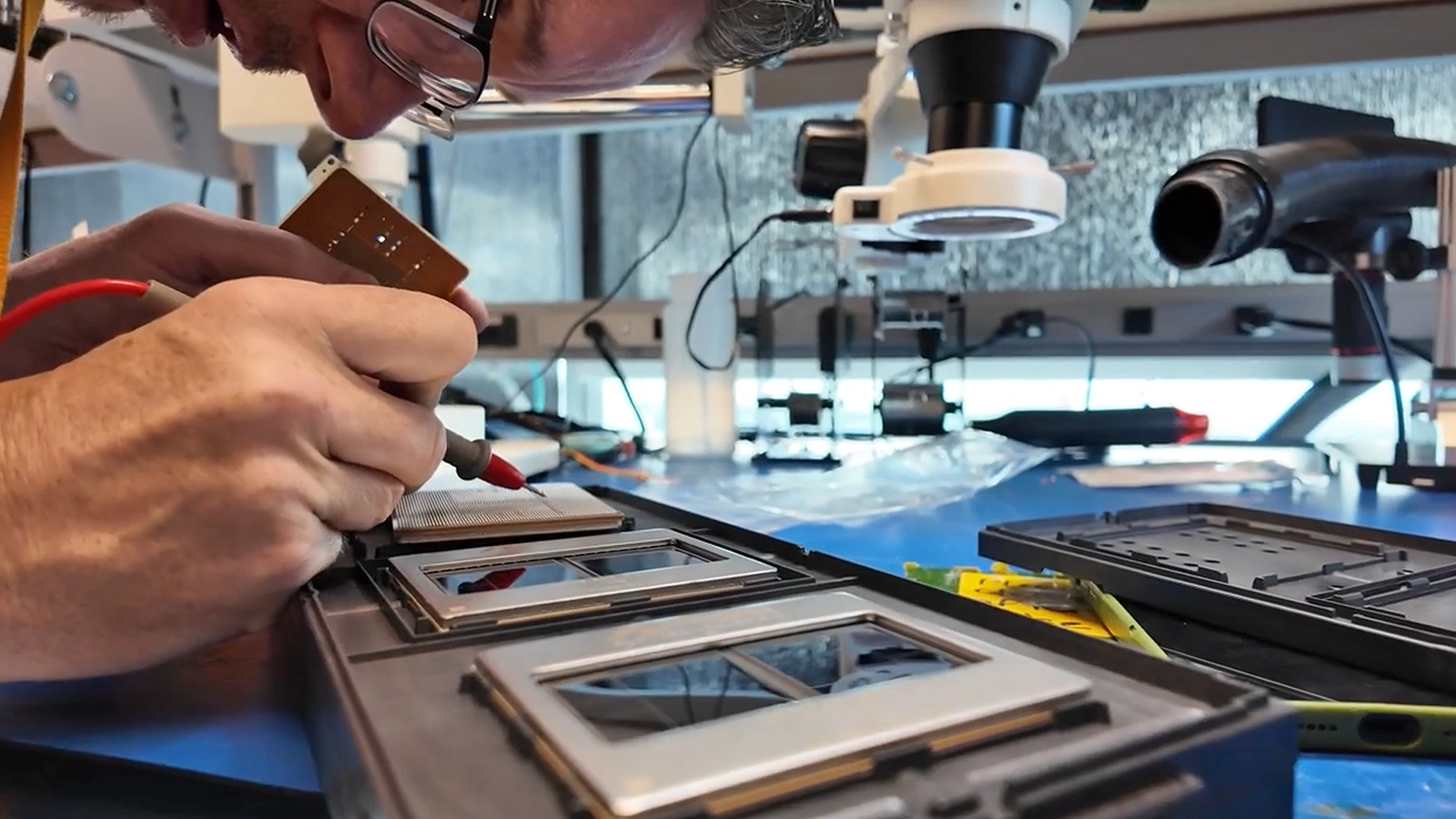
Why Amazon wants Decart’s software for Trainium, in milliseconds
A live-video test cut processing latency from 40 milliseconds to 10, according to Decart. It helps explain the software purchase Amazon has agreed to, and what AWS customers still need to measure.
A camera sending 30 frames a second gives a live video effect a new picture roughly every 33 milliseconds. In an early test of its video technology, Decart says it brought processing latency down from 40 milliseconds to 10 on Amazon’s Trainium hardware. That puts one stage of the job comfortably inside the interval between frames. It also gives a concrete reason for a chip designer to buy software from one of its customers.
On November 23, Amazon signed an agreement to buy the proprietary technology behind the Decart Optimization Stack, known as DOS. Decart’s three co-founders and a team of researchers and engineers would join Amazon. The deal still requires regulatory clearance and other customary closing conditions. Amazon confirmed to The Register that the purchase covers the optimization technology and personnel. An AWS customer looking at the announcement has no reason to expect access to Decart’s video models as part of the deal.
What fits between two frames
Consider a camera that replaces the background behind a moving person. The result for a given frame matters while that frame is still useful. If there are several frames in flight, the system can finish them at a steady rate even when each individual picture spends quite a long time in the pipeline. That works well for exporting a recorded clip. In a live conversation, viewers can still see the delay every time somebody turns their head.
That is why the most informative number in Decart’s account of its Trainium test is the time it reports for a frame. At 40 milliseconds, the processing step alone takes longer than the interval between pictures from a 30 fps camera. At 10 milliseconds, it leaves about 23 milliseconds within that interval for other work. This is a timing illustration. A camera has to expose the next image, an encoder may have to compress it, and the display has to show it. The published result gives no measurement of the full delay between a person moving and a viewer seeing the movement.
Decart also reports up to four times the frame throughput in early testing against GPUs. It does not identify the comparison GPU or give enough information about resolution, batching and output quality to reproduce the comparison from that statement. A developer can use those numbers to decide what to test. They are a poor basis for pricing an unrelated inference job.
What the software adds to the chip
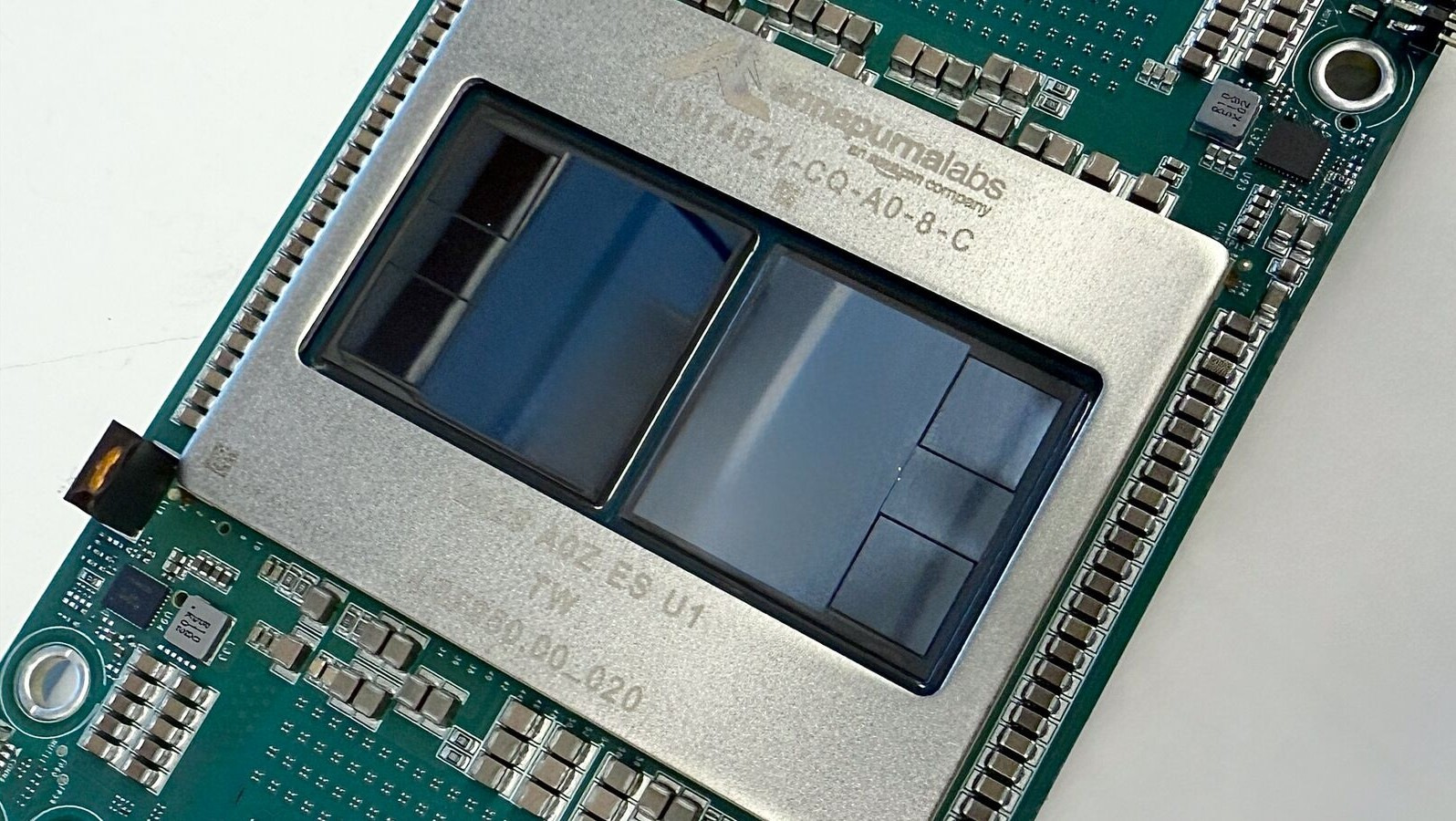
An AWS Trainium3 accelerator has 144 GB of high-bandwidth memory and a rated 4.9 TB/s of memory bandwidth. Those specifications describe resources a program can draw on. They cannot tell you whether the piece of the model that needs data next will get it in time. If a compute engine spends part of a frame waiting for an intermediate result, adding more arithmetic capacity does little for that frame.
Amazon and Decart began collaborating in 2025. Buying the optimization technology would bring the engineers who worked through those constraints closer to the people designing the next chip. It is a different problem from making a model easy to move in the first place. As GeekRadar explained in its look at PyTorch on Trainium, compatibility determines whether familiar code can run. Optimization determines what happens once it does.
For a team building a live effect, the revealing test would use its own camera resolution and keep the output quality fixed. Count the frames that arrive too late during a busy scene, then measure what it cost to deliver the ones that made it on time. A lower cloud bill per frame is worth considerably more when the person on screen is still making the same gesture.