Google Tabletop turns a proposed plan into something the group can change
The Labs experiment generates shared itineraries, polls and brackets, starting with an adult US waitlist.
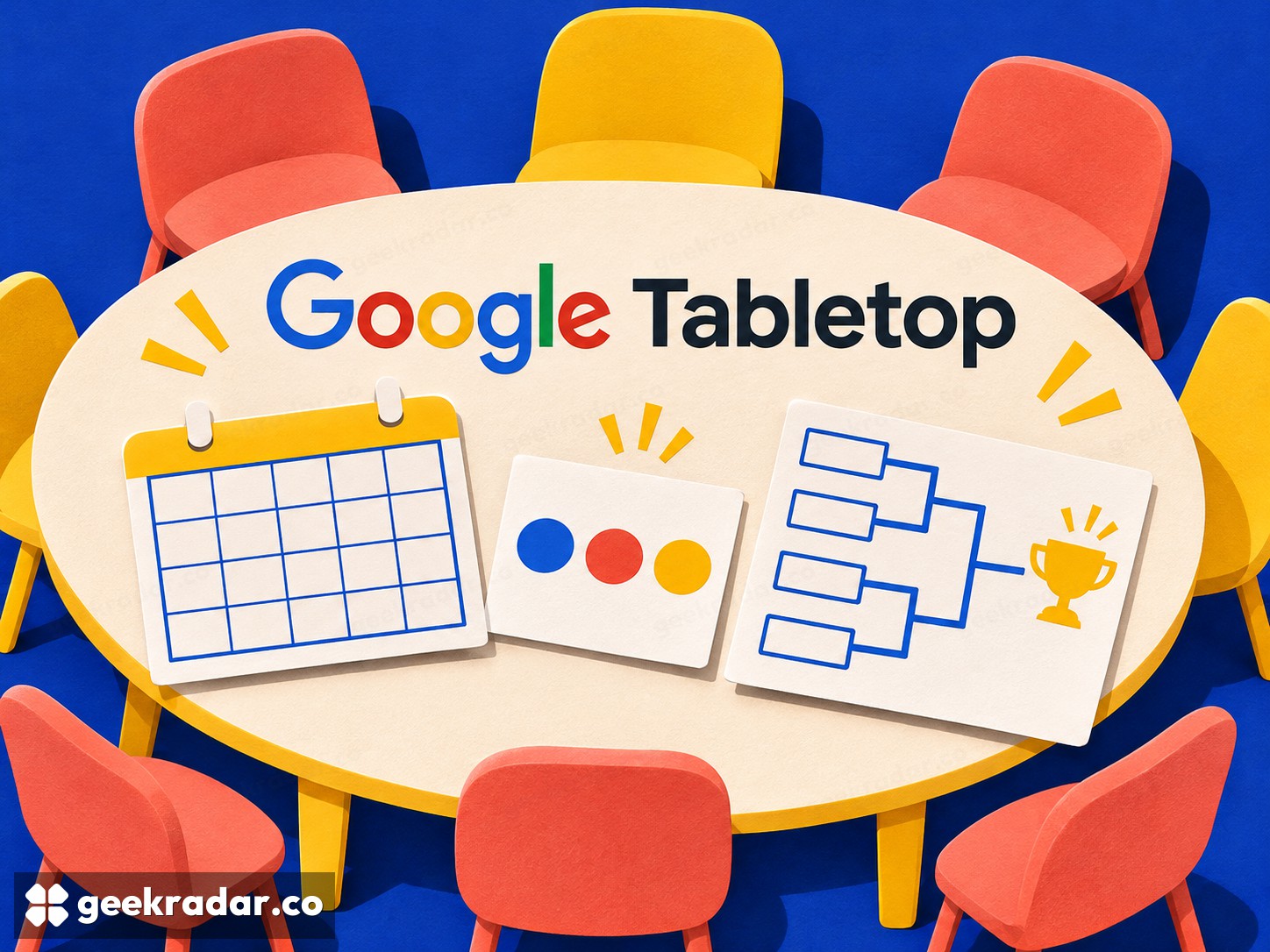
Google Labs' new Tabletop experiment tries to solve the part of group planning that a polished chatbot answer usually leaves behind: letting everyone change and use the plan together. It generates interactive shared spaces from links, files, ideas and prompts, with examples ranging from trip itineraries to dinner polls and tournament brackets.
The November 11 announcement opens a US waitlist for adults aged 18 and over. This is an experiment with restricted initial access, not a worldwide launch of a finished replacement for every planning or project-management application.
The output is something the group can use
Google describes two starting points: ask @tabletop to generate the space, or choose a template. The organizer can then share an invitation link so people work in the same space concurrently. The central change is that the answer does not have to remain a message in the organizer's private conversation.
A dinner poll illustrates the difference. A chatbot can propose three restaurants, but the group still needs somewhere to express preferences and see the result. An interactive poll can hold that next step in the same object. Similarly, a tournament bracket is useful because participants can follow its structure, not merely because an assistant can describe how brackets work.
Those examples come from the announced product's intended uses. They do not establish additional features such as restaurant booking, automatic payments or integration with every calendar. An expense splitter can help represent a division of costs without becoming a payment service.
Collaboration is also a check on the plan
The value of shared editing is not limited to convenience. One person may know that a proposed departure time is impossible, another may have a dietary constraint, and a third may notice an incorrect cost. Putting the working plan in front of those people creates a place for corrections that a private answer cannot supply by itself.
That does not make the plan automatically accurate. A generated itinerary can still contain a wrong opening time, and a neat cost split can still begin with an incorrect amount. The assistant can provide structure; the group remains responsible for the facts and commitments entered into it.
This connects with the broader move toward editable shared artifacts in AI tools. Tabletop's examples emphasize informal coordination rather than a full business spreadsheet. The common idea is that useful work continues after the first response, and the result should remain accessible to the people who must act on it.
A waitlist is not availability for every group
The initial US-only, adult access rule matters especially for a collaborative product. A useful planning surface depends on the participants being able to reach it, not simply on one enthusiastic organizer obtaining access. Google's short launch announcement does not settle every permission, retention, pricing or export question, so those details should not be assumed from the comparison with a shared document.
For now, Tabletop is a concrete experiment in moving from an AI suggestion to a jointly usable plan. Readers following Google's product launches can judge the idea by a familiar bottleneck: the trip often stops being difficult when someone proposes an itinerary, and starts being difficult when everyone else has to agree to it.