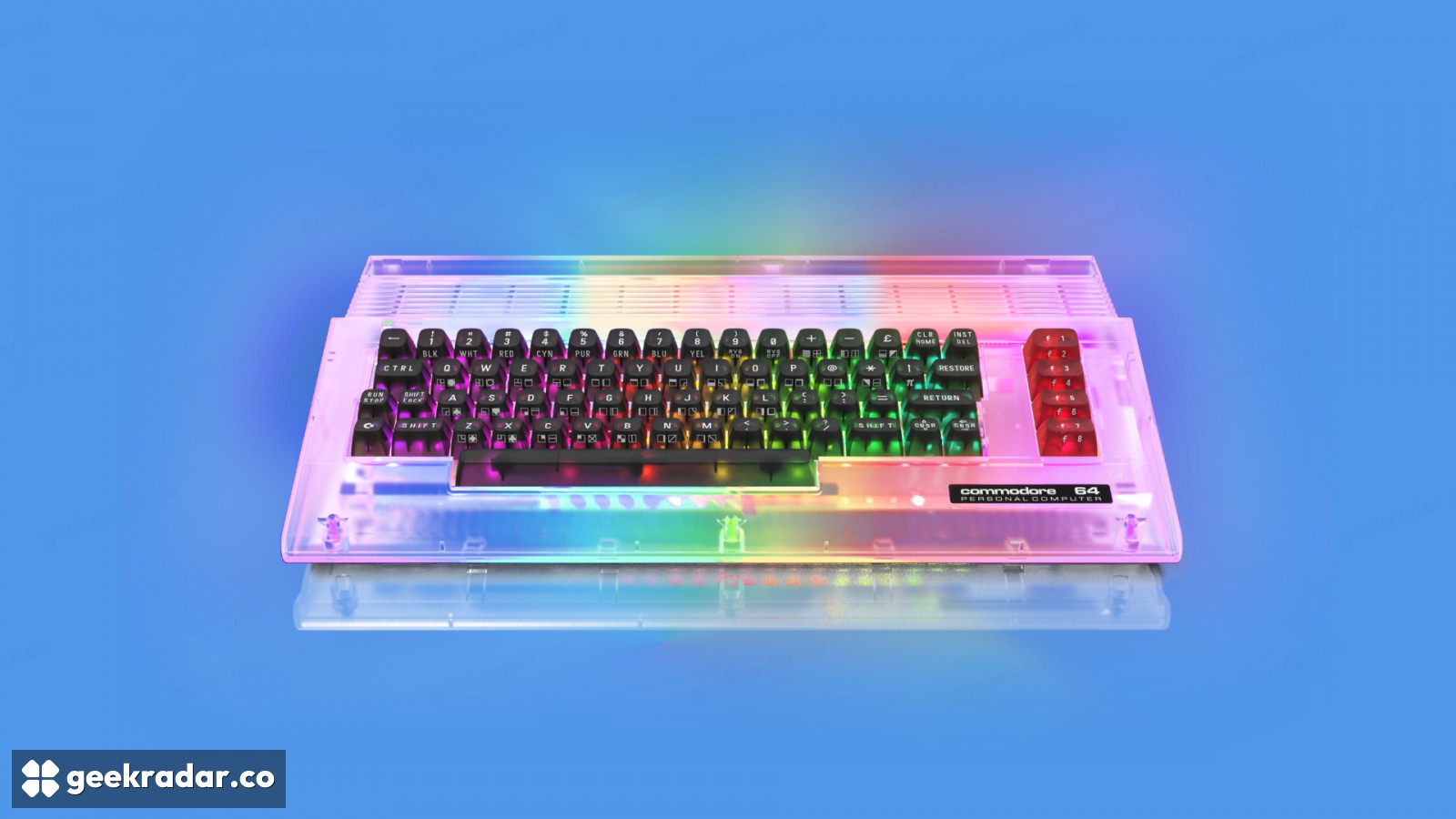
The new Commodore 64C keeps the old mold’s imperfections
Historic injection tooling and modern FPGA electronics preserve different parts of the machine’s identity.
The most convincing detail on the Commodore 64C Ultimate may be an imperfection. Its case is being made with the original 1986 injection-molding tools, including the faint flow marks that those tools left on the earlier computer. The revival preserves a manufacturing fingerprint as well as a familiar silhouette.
The C64C edition was announced in April, rather than unveiled this week. Its return to current coverage is a useful moment to examine what is actually original. The plastic housing comes from historic tooling; the machine inside uses modern FPGA hardware. Those are two different forms of continuity, and neither requires pretending that a newly manufactured computer is an untouched survivor of the 1980s.
The mold leaves its own signature
Commodore’s factory demonstration and transcript follow the process from plastic granules to a finished case. The material is checked for moisture, melted and injected into the gap between the tool’s halves. After the part forms, ejector pins release it. The demonstration also interrupts the flow of plastic to show where the two streams meet, explaining the marks visible on the finished shell.
That is a more specific claim than saying the case looks authentic. A newly designed mold could reproduce the broad outline while changing its small surface characteristics. Reusing the tooling carries some of those characteristics forward automatically. It also explains why a subtle mark should not necessarily be mistaken for damage or a new production defect.
There is a limit to what this proves. The provenance of the case does not establish the behavior of the electronics, keyboard or software. A faithful exterior and accurate execution of an old program are separate questions. The former is unusually tangible here; the latter depends on the implementation inside.
A different shape, not a faster model
Commodore says the slimline C64C Ultimate offers the same performance as its breadbin-shaped Ultimate. Choosing between them is consequently about the physical machine and the version of computing history a buyer wants on the desk, rather than purchasing a higher performance tier.
This distinction matters for preservation as much as nostalgia. Original computers are finite objects that can require repair. A modern recreation can make old software and its working environment easier to approach, while an original machine remains valuable as a historical artifact. The two do not have to compete for exactly the same purpose.
The current store also deserves a more careful reading than a single launch-price headline. It presents multiple shapes, editions, batches and delivery estimates, and displays starting prices before tax. A date attached to one configuration or accessory is not a delivery promise for every C64C. The selected configuration and destination determine the useful buying information.
The interesting achievement is not that modern manufacturing can make a beige computer. It is that a tool from forty years ago can still participate in making a new one, leaving the same small traces in the plastic. Here, the case has a history that the electronics do not need to imitate.