Samsung’s sleep-apnea upgrade adds detail, but the rollout starts in Korea
Three frequency bands replace a simpler result on selected devices. Existing support in 84 countries does not establish worldwide availability of the upgrade.
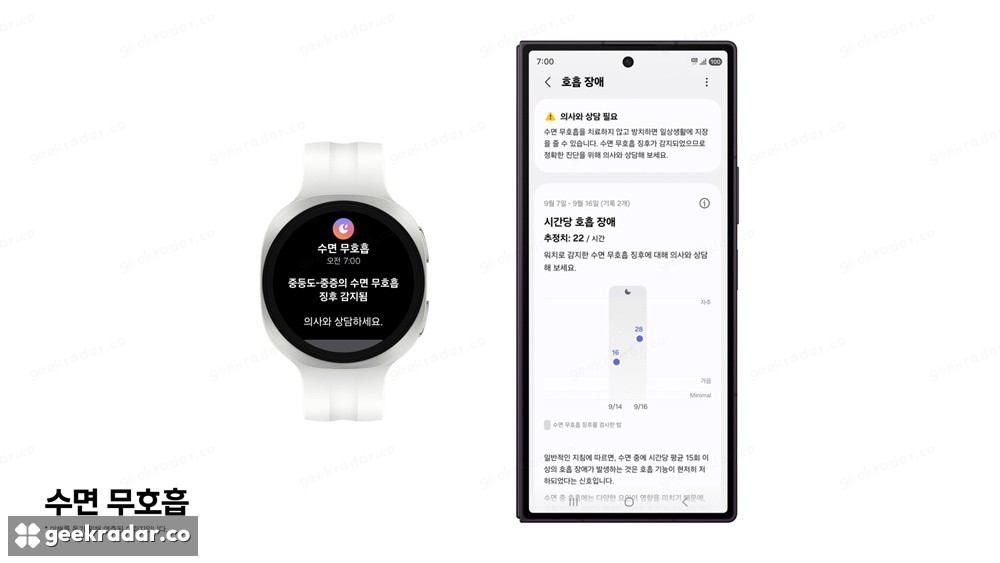
Samsung’s next sleep-apnea feature will describe breathing disturbances in three frequency bands instead of only reporting whether signs were detected. The change could make the result more informative, but access depends on the device, software and country. Samsung’s confirmed rollout starts in South Korea in November; the announcement is not a worldwide activation notice.
The October 28 Korean newsroom announcement says the upgraded feature has received clearance from Korea’s Ministry of Food and Drug Safety, following US FDA authorization in July. Regulatory clearance and the date an app enables a feature are separate steps. One should not be used as a substitute for the other.
More detail within a defined screening task
The new analysis estimates how frequently breathing disturbances occur during sleep and presents three categories. Samsung requires at least five hours of recorded sleep on two occasions within ten days, processed through Samsung Health Monitor on a Galaxy device.
That requirement helps explain why the feature is not an instant reading available from a few minutes on the wrist. The result depends on collecting enough usable overnight information. It also differs from a general sleep score: the stated purpose is identifying signs associated with sleep apnea, rather than rating every aspect of a night’s rest.
The distinction is particularly important for a more detailed result. Three labels can feel more definitive than a yes-or-no warning, but additional presentation detail does not turn a consumer screening result into a complete clinical assessment. Samsung describes the information as something that can support a discussion with a specialist.
Older support does not guarantee the new version
The initial Korean rollout names Galaxy Watch Ultra2, Watch9 and Galaxy Ring. Samsung says the feature will subsequently expand through software updates to earlier models including Watch7 and Watch8 running Wear OS 7.0 or later. It does not give a precise date for every model.
The existing detection feature remains available on Watch4 and later devices running Wear OS 5.0 or newer. That is a separate compatibility baseline. Similarly, Samsung’s statement that its sleep-apnea feature is available in 84 countries describes the established feature’s reach, not a confirmed November rollout of the new three-band analysis in all of them.
For buyers following wearable hardware, checking a specification sheet for the words “sleep apnea” is no longer enough to identify the experience on offer. The meaningful combination is the exact watch or ring, supported software, local feature availability and the version of the analysis. A more informative result is useful only when the owner understands which result their device can actually provide.