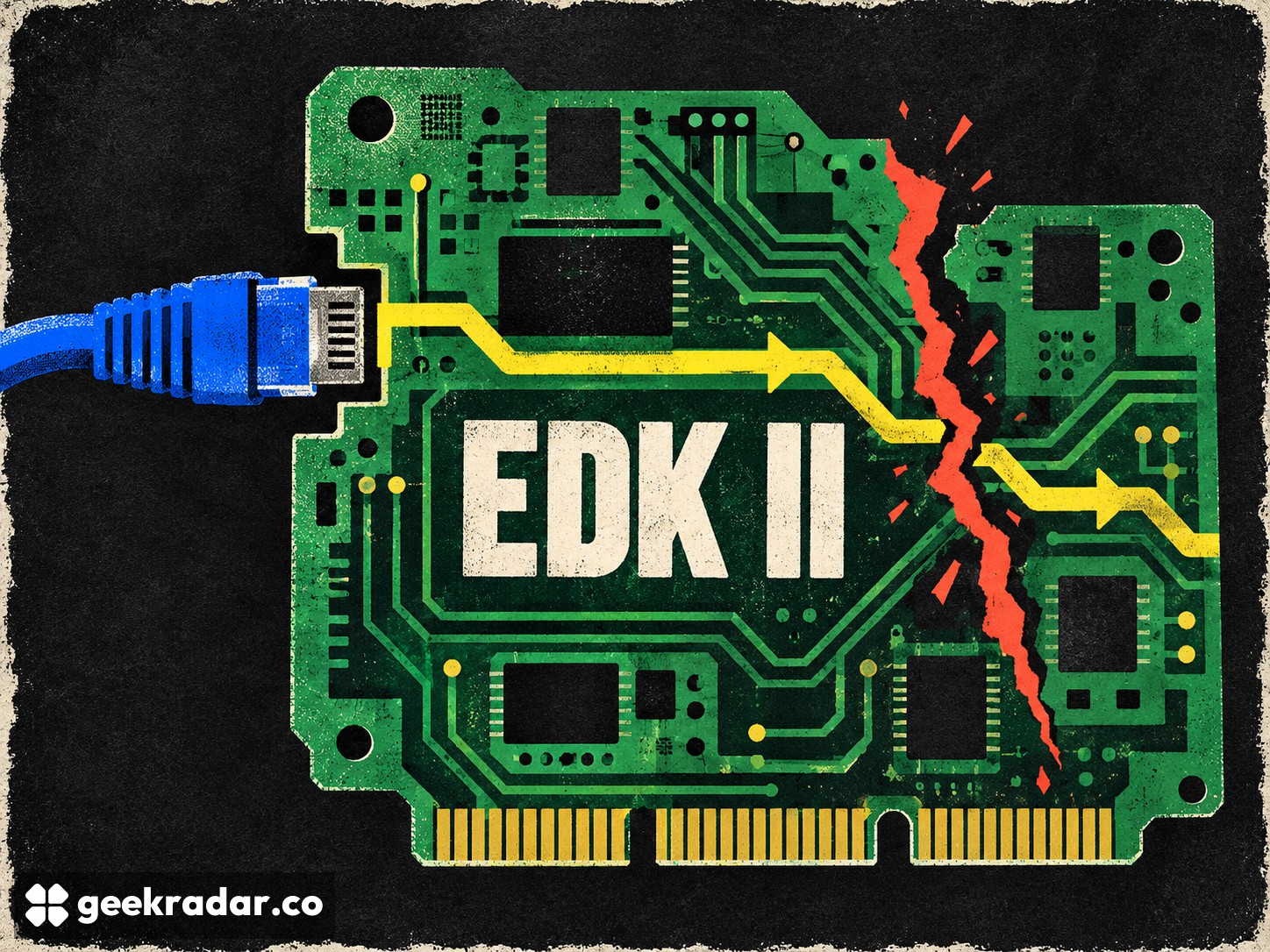
The EDK II flaw makes network boot a firmware security priority
CVE-2026-97631 targets a specific pre-boot network path. Identifying exposed machines and obtaining vendor firmware matter more than a blanket claim about every server.
A critical flaw in EDK II can let an attacker run code during network boot, before the operating system starts. The first question for an administrator is therefore unusually specific: does this machine actually use the affected PXE boot path? A server containing UEFI firmware is not enough, on its own, to establish exposure.
The TianoCore advisory for CVE-2026-97631, published on October 22 and drawing wider attention this week, describes memory corruption in the PXE Base Code driver. The attack requires network messages to reach a machine while it is booting through that driver. It is a firmware problem with a network-facing window, rather than an ordinary application service that remains exposed throughout a server's working day.
Why the boot path changes the risk
PXE lets a computer obtain boot resources through a network. That is useful when installing, recovering or managing fleets of machines without visiting each one with installation media. It also means network-handling code must operate before the familiar protections inside the installed operating system can take responsibility.
The advisory describes an error in handling incoming ICMP error messages. An attacker able to reach the booting client could cause a hang; execution of attacker-chosen code also depends on knowledge of the target firmware build. These conditions matter when prioritizing systems. They do not make the flaw harmless, but they prevent a severity score from becoming a claim that every server can be compromised identically from anywhere.
The linked correction and the installed firmware are therefore different checkpoints. Finding a patch in a source repository is useful evidence of engineering progress. It does not prove that a motherboard vendor has integrated it, tested its platform or released an update for a specific model.
Inventory beats a universal instruction
A useful response starts with identifying hardware models, firmware suppliers and the way machines are provisioned. A fleet that normally boots from local storage may still use network boot during recovery. That occasional path deserves attention even if it is absent from the normal operating routine.
Administrators should seek model-specific guidance from the system or firmware vendor and assess whether network boot is required. Disabling an unused feature can reduce exposure; disabling a required provisioning path without a replacement can interrupt recovery or deployment. The right decision depends on the actual operating environment, not a blanket instruction aimed at every computer with a UEFI setup screen.
This also explains why an operating-system update is not a substitute for checking firmware. Updating software after boot does not replace the vulnerable code that handled packets before it. Keeping normal security controls enabled remains worthwhile, while recognizing the boundary described in the advisory.
A short exposure window can have a long maintenance tail
The difficult part is distribution. A shared component can appear in many product lines, each with its own testing and support lifecycle. Unsupported equipment may never receive the same remedy as a current server. That makes a reliable inventory and an explicit mitigation decision particularly important for older machines.
The practical result should be a list of systems with an answer: unaffected boot path, vendor-confirmed update, or a documented temporary control. A critical headline attracts attention; that list is what turns attention into a smaller attack surface.