Discord’s web search rollout has two controls worth checking now
Server summaries start in November, individual messages later. Member settings, channel choices and deletion have different effects.
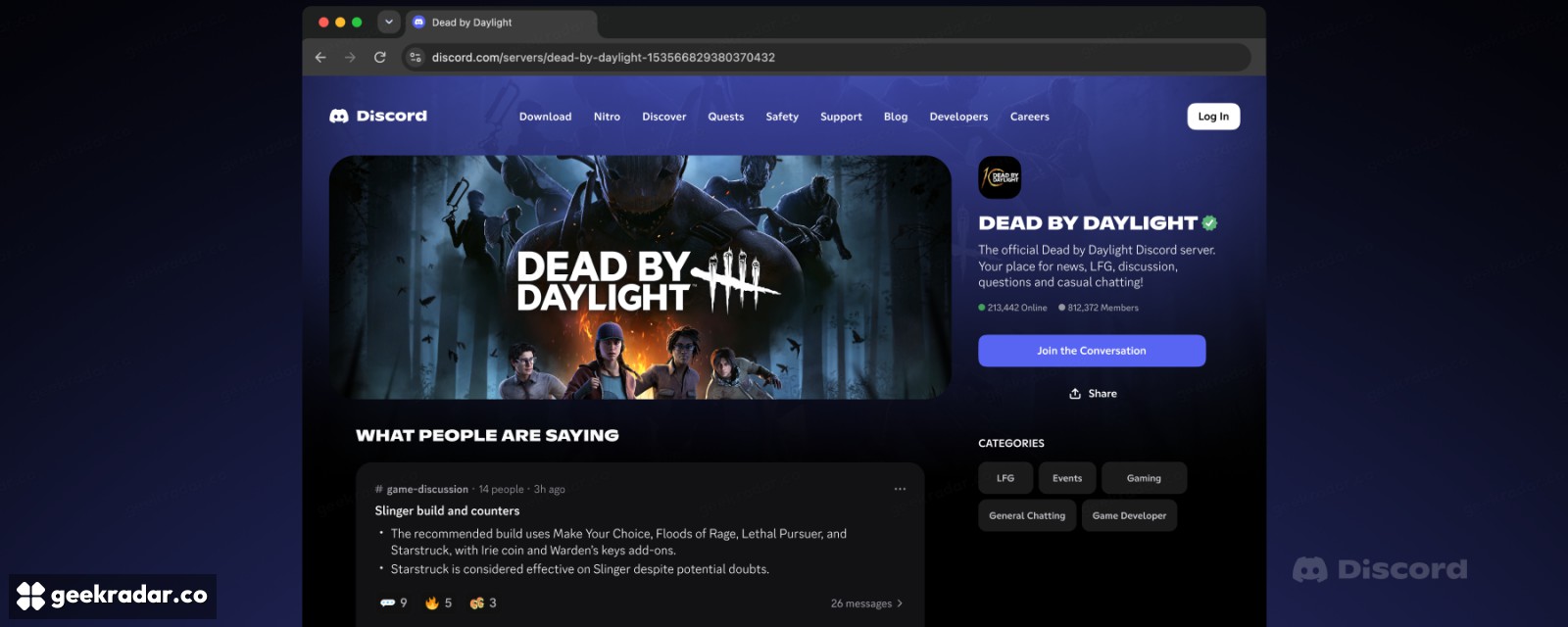
Discord plans to make selected conversations from Discoverable Servers visible on the open web, including in search results. The change could make a useful answer easier to find without joining a community first. It also changes the audience for messages written in a place that can feel more like a room than a public webpage.
The rollout has two stages. Discord’s announcement puts server pages and conversation summaries on November 16, 2026, followed by individual messages gradually from mid-December. The controls began rolling out on October 27, giving administrators and members time to make choices before those features start.
Which conversations are in scope
The change concerns public channels inside Discoverable Servers, the communities that people can find and join without an invitation. It does not bring private servers, direct messages or group direct messages into web search. A large community is not automatically equivalent to a Discoverable Server; Discord attaches specific eligibility and configuration requirements to that status.
That boundary is essential, but public access and public discoverability are still different experiences. Joining a server, finding the right channel and searching its history requires deliberate effort. A search engine can surface a sentence to someone who has never encountered that community, without the conversational context that surrounded it.
Usernames and avatars will not accompany the displayed messages. That reduces one obvious form of identification, but text can contain its own clues: a personal anecdote, a workplace reference or a link can identify a speaker independently of the name attached to a post. Removing the label is not a guarantee of anonymity.
Members and administrators control different things
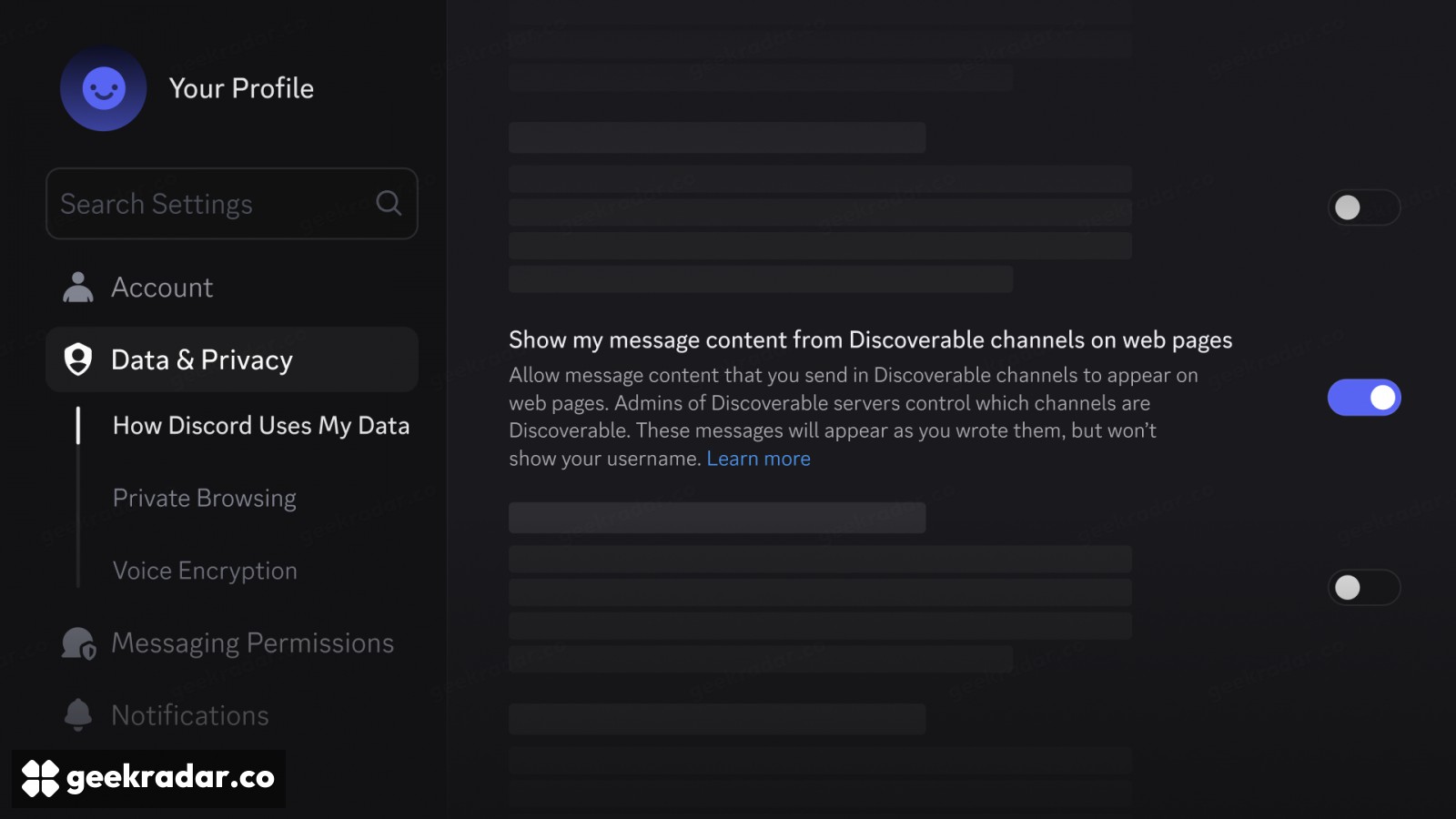
The member settings guide describes an account-wide switch under Data & Privacy for displaying message content from eligible channels. It is off by default for accounts in the EU/EEA, UK, Canada, Brazil, Australia and South Korea, and on by default elsewhere. Teen accounts cannot enable it.
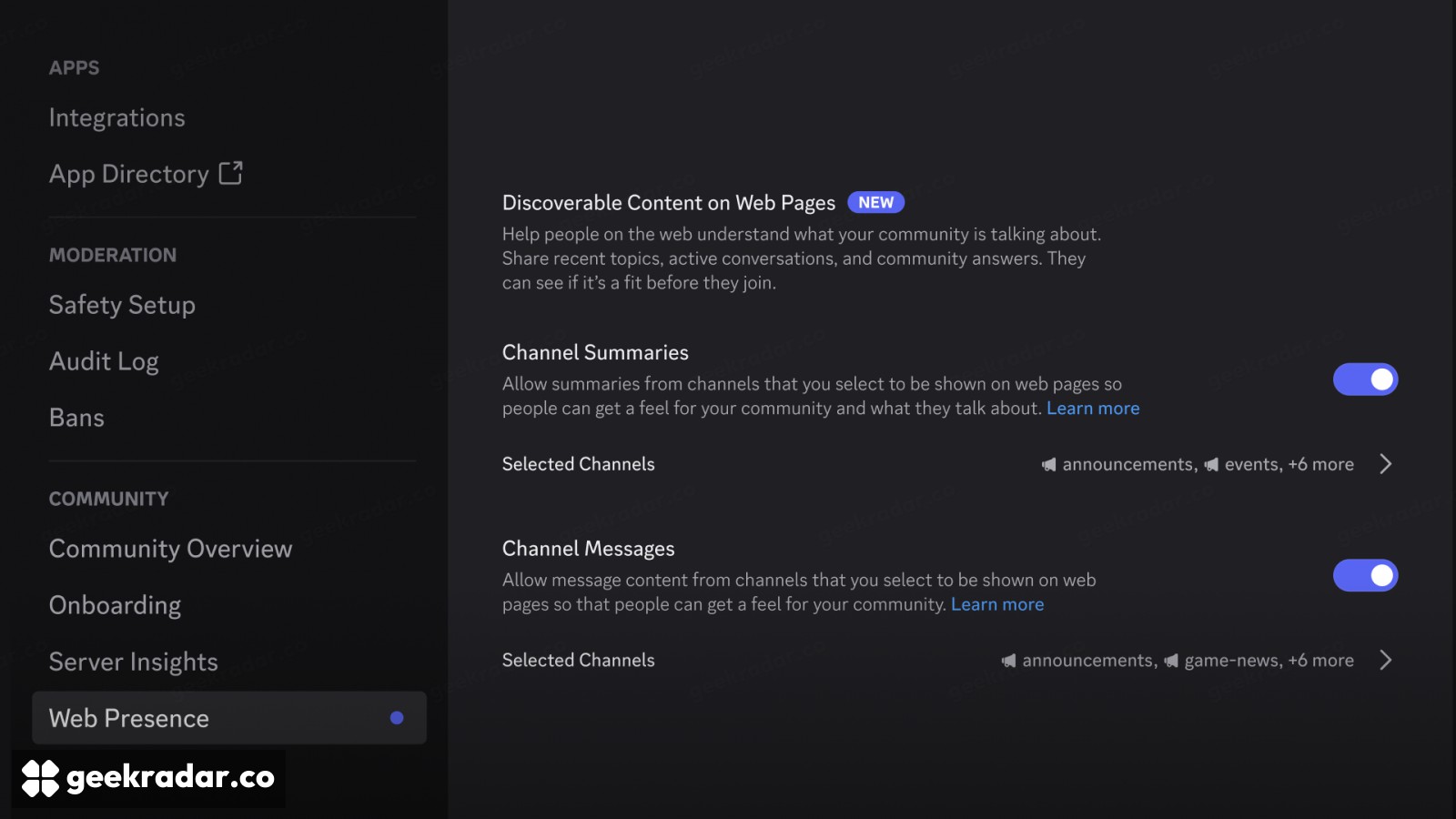
Administrators separately choose which channels contribute summaries and which supply individual messages. Those selections are independent in Server Settings under Community and Web Presence. Turning off a member’s individual-message setting does not turn off the server’s channel summaries.
For a community, a useful configuration might distinguish durable help channels from conversational spaces. An answer about a reproducible game bug has a different public value from a fleeting discussion among regulars. The controls allow that distinction; an unchanged default cannot make it thoughtfully on a moderator’s behalf.
Turning it off is not a history eraser
The most consequential detail is what happens after a member changes their mind. Eligibility depends on the setting when a message is sent. Turning the switch off stops future messages from qualifying, but messages sent while it was on can still appear, even if they had not yet reached a webpage. Removing those messages requires deleting them individually.
Deletion removes visibility on Discord’s own pages. Search engines operate their own caches and removal processes, so copies in search results may take longer to disappear. This is a reason to choose deliberately before posting, rather than assume a later toggle can retrieve everything.
There is a worthwhile idea behind the change: years of useful answers should not be invisible to people asking the same questions elsewhere. The test is whether communities can expose that knowledge without treating every conversation as a ready-made public document. The new settings give them choices; the rollout dates make now the time to use them.