Two crows made fast visual decisions. Their brains reveal more than a speed contest
A controlled experiment links neural activity to the accumulation of visual evidence. It does not rank the intelligence of entire species.
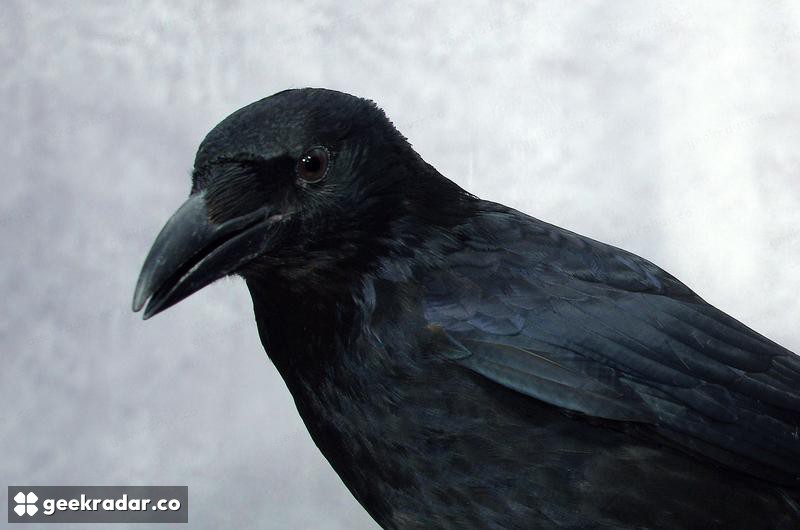
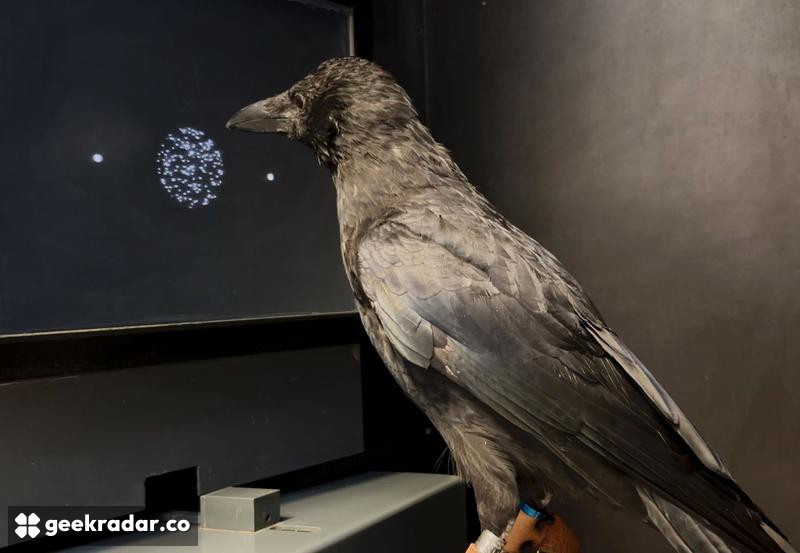
Two carrion crows made rapid visual decisions in a University of Tübingen experiment, recognizing the predominant direction of moving dots and indicating their choice in an average of about 235 milliseconds. The result is striking, but it is not a general intelligence contest in which birds have defeated humans. It is a specific task that lets researchers compare the timing of a choice with the neural activity preceding it.
The university's account of the Science study describes work by Philipp Schmidbauer and Andreas Nieder. The birds responded by pecking to the left or right of the moving pattern. Performance remained above chance when the motion was difficult to discern and approached complete accuracy with clear signals. The paper's record identifies the underlying research, rather than turning a press-release headline into a broad claim about all crows.
A decision is built before it becomes an action
The researchers recorded activity in the nidopallium caudolaterale, an association region in the avian brain. Signals distinguished motion directions about 70 milliseconds after the visual stimulus began, before the birds completed the behavioral response. The distinction between those times matters: the early signal is not the time required to finish the whole task.
The reported activity increased during decision formation and reflected both the available visual evidence and the chosen direction. That makes the experiment useful for studying how sensory information becomes a commitment to act. It goes beyond timing a peck with a stopwatch.
Different anatomy can support similar principles
Bird brains do not have the same layered cerebral cortex as mammalian brains. The researchers interpret the observed dynamics as compatible with established computational accounts of decision-making in primates. That is interesting precisely because similar functional principles can appear in differently organized nervous systems.
It does not mean the structures are interchangeable or that every aspect of cognition works in the same way. A shared description of evidence accumulation is a narrower and more useful claim than saying a crow has a miniature human brain.
The proposed connection with rapid visual and motor demands in birds is an evolutionary explanation to investigate. Flight and precise foraging offer plausible reasons why speed could matter, but the present experiment does not by itself identify which evolutionary pressure produced the advantage.
The result is stronger when its limits remain visible
Training, stimulus design and the way an animal reports a choice all affect reaction-time comparisons. A small number of animals can still provide rich neural data, but it cannot describe the full range of a species' abilities. The value lies in a controlled question and a measurable response.
The most revealing detail is therefore not the tempting “twice as fast” headline. It is that the researchers could watch evidence become distinguishable in neural activity before it became a visible choice. The crow's quick peck is the end of that process, not its whole explanation.