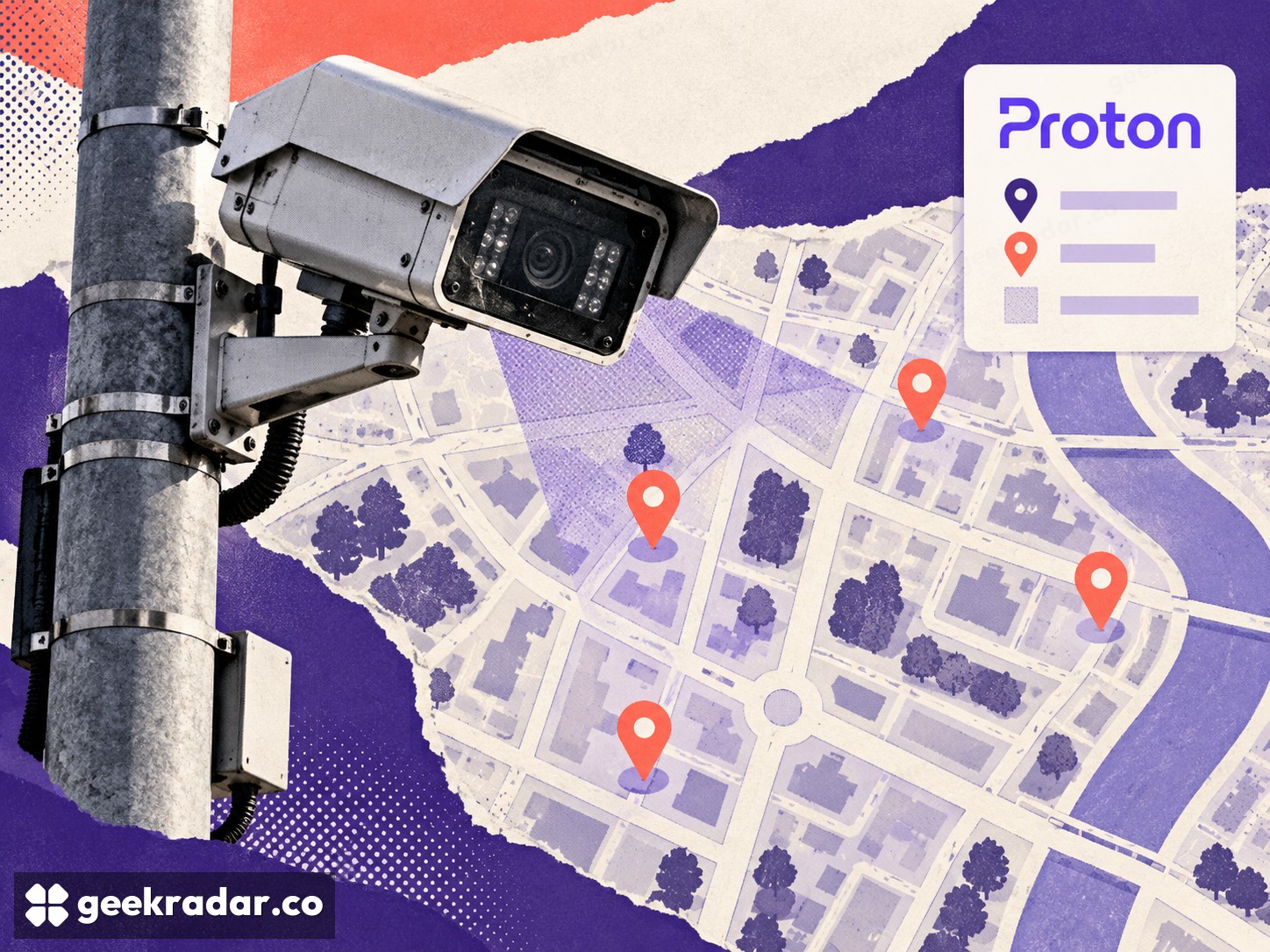
Proton’s Flock map makes surveillance infrastructure visible. It is not a live camera feed
A US camera-location dataset can reveal concentration and gaps. Ownership, retention and access policies still require separate evidence.
Proton is hosting a searchable map of Flock surveillance devices in the United States. Its most important qualification sits below the map: the records are a December 2025 snapshot. They can help reveal the extent of a recorded network, but they cannot tell a reader that every listed device is active today or that an unmarked road has no cameras.
The Proton map and explanation attribute the inventory to security researcher Joshua Michael. Proton says it is hosting the map rather than distributing the underlying dataset. The project has gained renewed attention through Tom's Hardware's October 24 report about the hosting arrangement and pressure on the original researcher.
A device count is not a camera count
Proton describes more than 170,000 cameras and over 130,000 other Flock devices in the inventory. Combining those categories into a headline about 300,000 active licence-plate cameras would change the meaning of the data. Device type, recorded status and the date of the snapshot all affect what a total can support.
The map's geographic scope is the United States. It is not an inventory of surveillance across the world, and it does not cover every operator or every kind of camera. Its usefulness comes from making one documented set of locations easier to inspect.
Automated licence-plate readers can record a vehicle's plate, location and time. Proton also describes additional vehicle characteristics used by Flock's systems. The privacy question extends beyond whether a camera is visible at the roadside: searchable records can connect individual sightings into a pattern of movement.
Visibility helps people ask specific questions
A location on a map can give residents a starting point for asking who operates a device, how long data is retained and who can search it. Those questions require answers from the relevant operator; the existence of a point does not establish every policy governing the records it creates.
Likewise, hosting the map in Switzerland does not by itself settle a legal dispute or make the information immune to challenge. The useful reporting distinction is that Proton has made the inventory accessible through its own service, while the arguments over publication remain separate.
The map is strongest as a transparency tool with an explicit date attached. It turns an otherwise abstract conversation about vehicle tracking into something a resident can locate and question. Its limits do not erase that value, but they should travel with every screenshot: an old inventory can reveal a network without being a live view of it.