At 25, the iPod’s wheel still explains what made the whole product work
Apple Music’s web tribute revives the silhouette. The original design’s deeper achievement joined navigation, storage and synchronization.
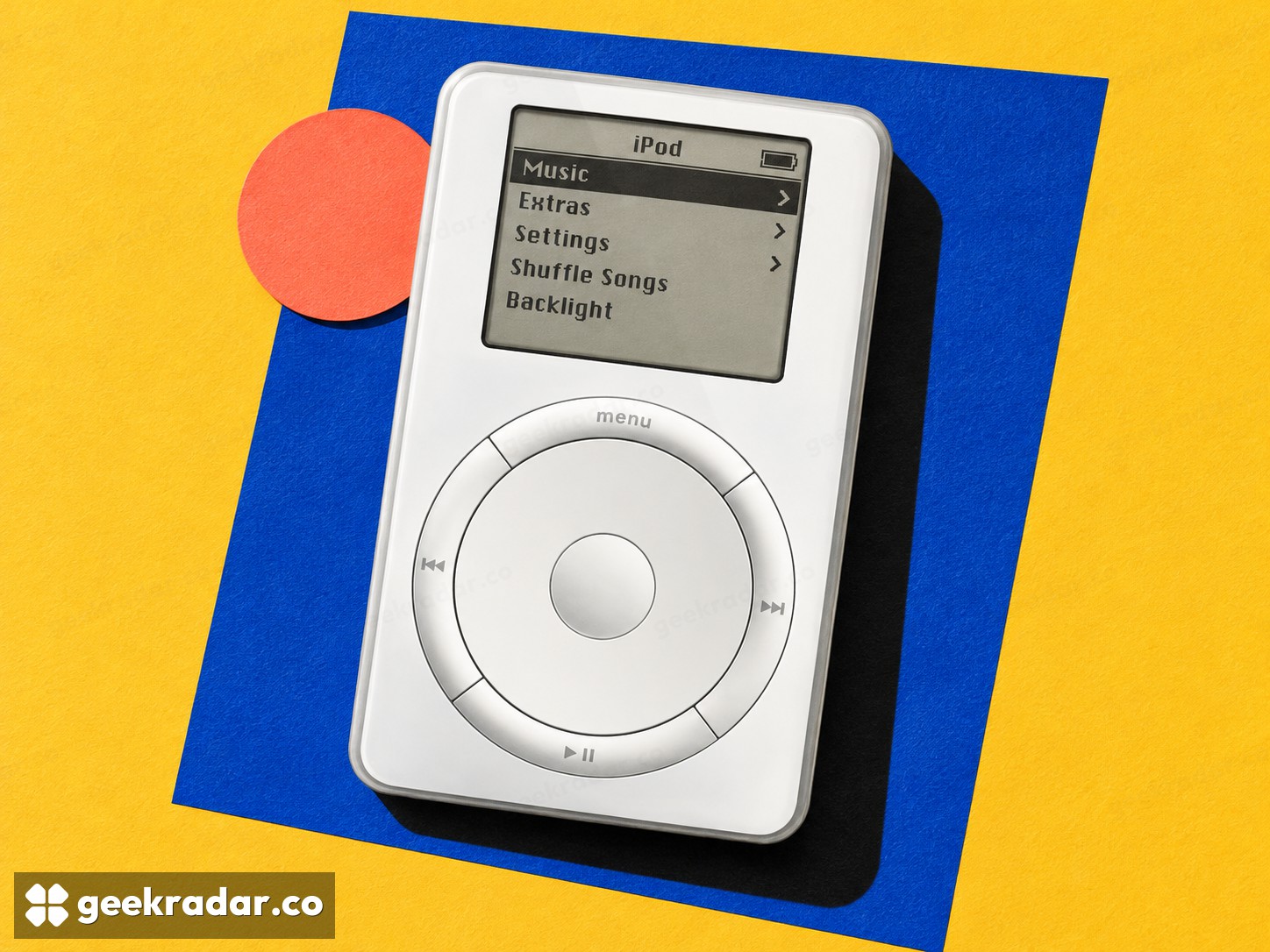
Apple's iPod turned 25 on October 23, and the original wheel-shaped interface has returned as a small web diversion inside Apple Music. The anniversary page borrows the familiar white body and monochrome screen. Its appeal is immediate, but the more revealing anniversary story is what the physical player originally removed from the process of carrying music.
The 2001 announcement introduced a 5GB device at $399 in the United States, with availability planned for November 10. Apple's pitch joined capacity to automatic synchronization with a Mac and to a control that could move quickly through long lists. The hardware and the workflow were parts of the same argument.
The wheel made a growing library manageable
A small collection can survive a clumsy selection interface. A large one exposes it. Once a portable player holds enough songs to make browsing consequential, the number of button presses becomes part of the product's practical capacity: music that takes too long to find is less conveniently available than a storage specification suggests.
Apple's original scroll wheel supported one-handed navigation with acceleration through long lists. Its significance was the relationship between a continuous physical action and a discrete sequence of artists or songs. Turning farther did not require the user to aim at dozens of small targets on a screen.
The anniversary image is therefore more than a silhouette. It recalls an interface in which the hand's movement had a close relationship to one main job. That does not make a wheel inherently superior to touch, voice or search. It explains why it was well suited to the library-navigation problem the original device presented.
The cable carried more than songs
The launch model used FireWire for transfer and charging, while Auto-Sync kept music and playlists aligned with iTunes on a Mac. That arrangement had a clear dependency: the computer remained the place where the portable collection was prepared and maintained. The player was not an independent streaming service in a smaller shell.
The dependency also made the experience easier to describe. Connect the device, update the library, take it away. There was a physical boundary between preparing a collection and listening to it. A cable could be inconvenient, but its role in that routine was legible.
That contrast is useful without romanticizing the limitations. A modern service can make a vastly larger catalogue accessible without synchronizing each album from a desktop library. The older model offered a more bounded object: a particular collection, on a particular device, organized before the journey. They solve different versions of the same desire to have the right music close at hand.
The anniversary is not a hardware return
Apple's May 2022 announcement said the remaining iPod touch would be sold while supplies lasted and placed the music experience across its other devices. The new web tribute should not be read as a revived product line or as a replacement for the original player's storage and synchronization behavior.
It is a reminder presented inside the service that now carries much of that listening relationship. A familiar casing can survive as an interface reference long after the workflow around it has changed. For more current devices, our audio coverage follows a different set of connections and compromises.
The lasting lesson of the first iPod is less about bringing back a particular connector than about removing friction across a complete task. A large library, a simple transfer routine and a useful control reinforced each other. Twenty-five years later, the wheel remains recognizable because it was attached to a problem people could feel with their thumb.