CMF Speaker S makes a better case with its knob and USB-C than its shape alone
Physical controls, wired audio and two distinct sharing modes give the compact speaker practical angles beyond its colors.
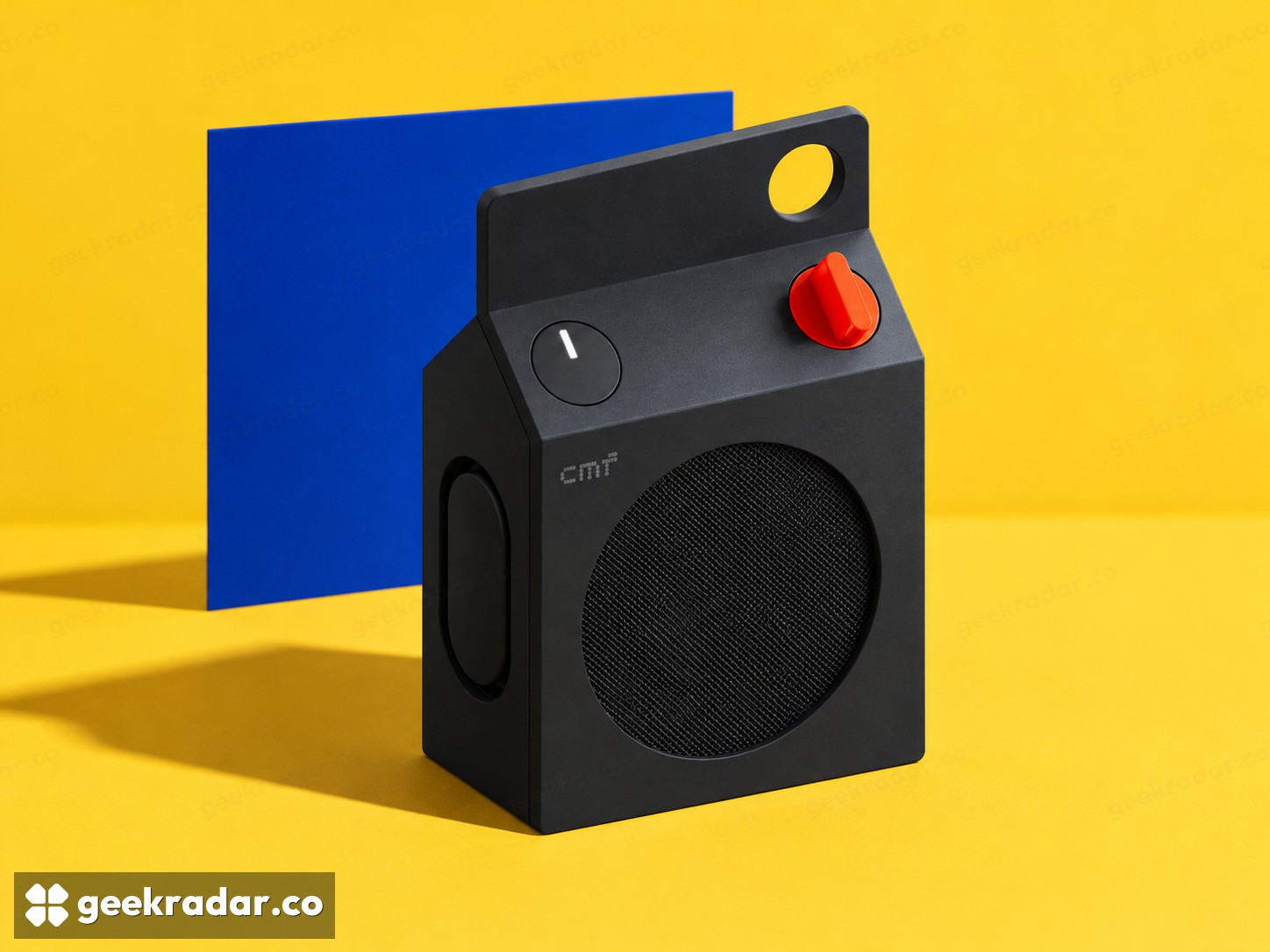
The most interesting control on CMF's Speaker S is also the easiest to understand: a large rotary knob on its sloping top. Turning it changes volume, while presses handle playback. In a product category that often hides basic actions behind small identical buttons, that physical hierarchy gives the speaker an identity beyond its bright colors.
Fresh attention around the compact speaker is a useful reason to examine the official specification and control guide. Its controls and connections can be judged against a particular job; a pleasing shape cannot establish sound quality by itself.
A knob with a memory burden
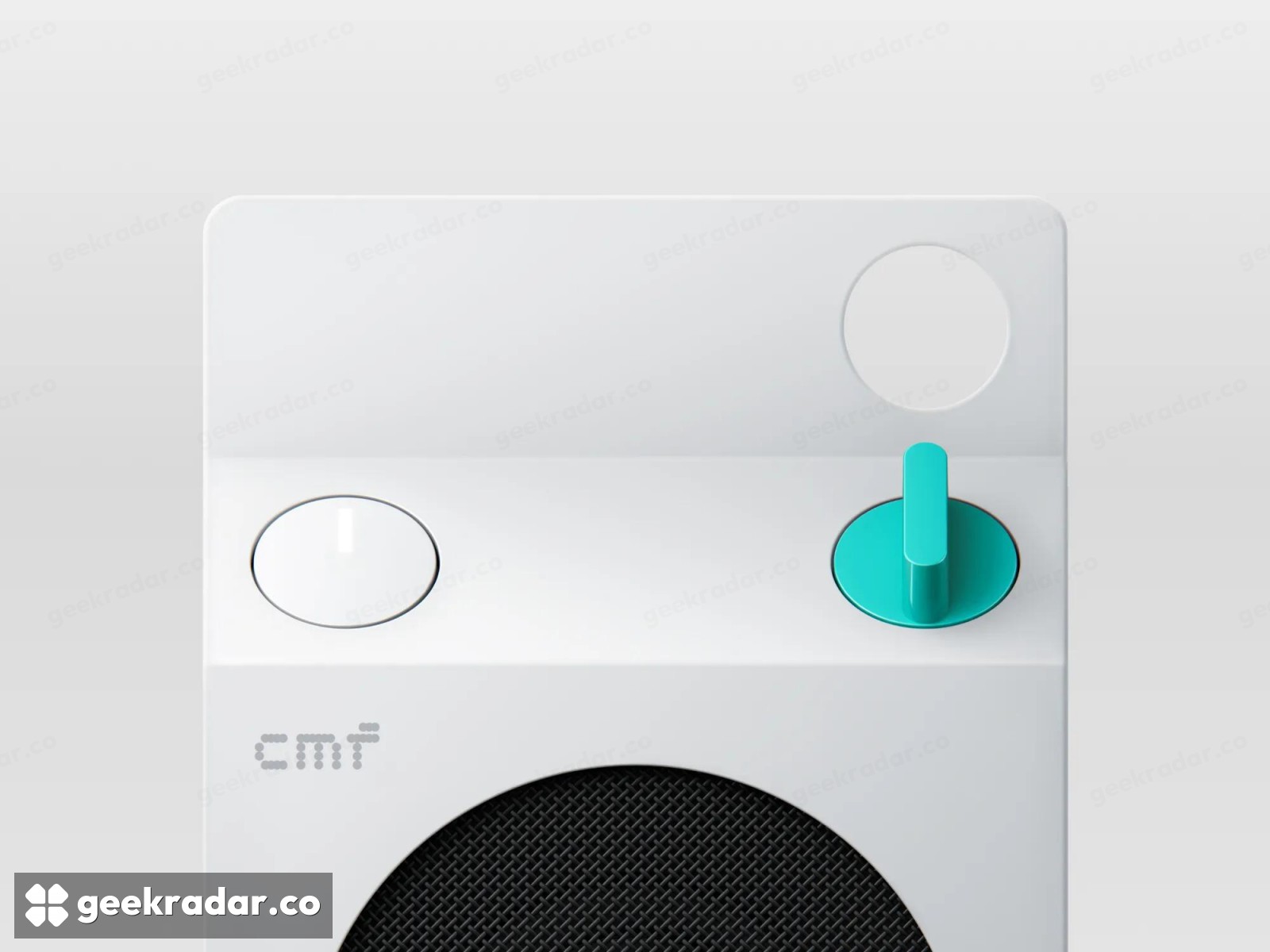
The default mapping is straightforward at first: press to play or pause, rotate for volume. Double and triple presses skip forward and back, while holding for two seconds toggles Ultra Bass. Separate controls handle power, Bluetooth and Auracast. The front panel and knob can be changed, making the physical interface part of the product's customization.
There is a worthwhile tradeoff here. A volume knob can be found and adjusted without reading a tiny label, but several press patterns still need to be remembered. The device does not eliminate interface complexity; it puts the most frequent adjustment on the most obvious object. That is a more defensible design benefit than claiming every action becomes intuitive.
The speaker's small enclosure contains a 45mm driver and two passive radiators, with output rated at 10W RMS. Those are construction details, not a substitute for a measured frequency response or an independent listening comparison. In particular, a named bass mode does not establish how convincingly a small enclosure reproduces low notes at high volume.
USB-C changes the desktop use case
Speaker S accepts audio over USB-C as well as Bluetooth. Nothing advertises latency below 60ms for the wired connection. That is a manufacturer claim about the audio path, not a measurement of total controller-to-screen delay in a game. A computer, application and display can add their own delays.
The same specification page's test notes describe much higher Bluetooth figures, including low-latency-mode measurements around 180ms with SBC and 230ms with AAC under Nothing's conditions. That makes the cable a meaningful option for timing-sensitive desktop audio, even without pretending the company has supplied a universal guarantee.
Stereo pairing and Auracast Party Mode also solve different problems. Two Speaker S units can form left and right channels. Party Mode is about spreading playback across compatible speakers. Buying two units for stereo and joining a wider shared broadcast should not be treated as interchangeable features.
Read the battery headline with its volume setting
The advertised maximum of 18 hours comes from Nothing's laboratory test at 50% volume with AAC, Balanced EQ and Ultra Bass enabled at 25°C. Outdoor listening, louder playback and a different source can change the result. The useful comparison is between speakers tested under comparable conditions, not between isolated maximum-hour labels.
The US storefront currently lists $59. Regional prices and stock need their own storefront check; a converted dollar figure is not a local offer. The low entry price makes the connection choices interesting, but it does not remove the need to decide whether the speaker is mainly for a desk, a bag or a shared room.
Among the features, the knob and USB-C input provide the clearest practical case. One makes the most common adjustment tangible; the other gives a compact wireless speaker a second role when a cable is preferable. The best reason to choose it would be that those two conveniences solve daily irritations, rather than that its carton-shaped body happens to photograph well.