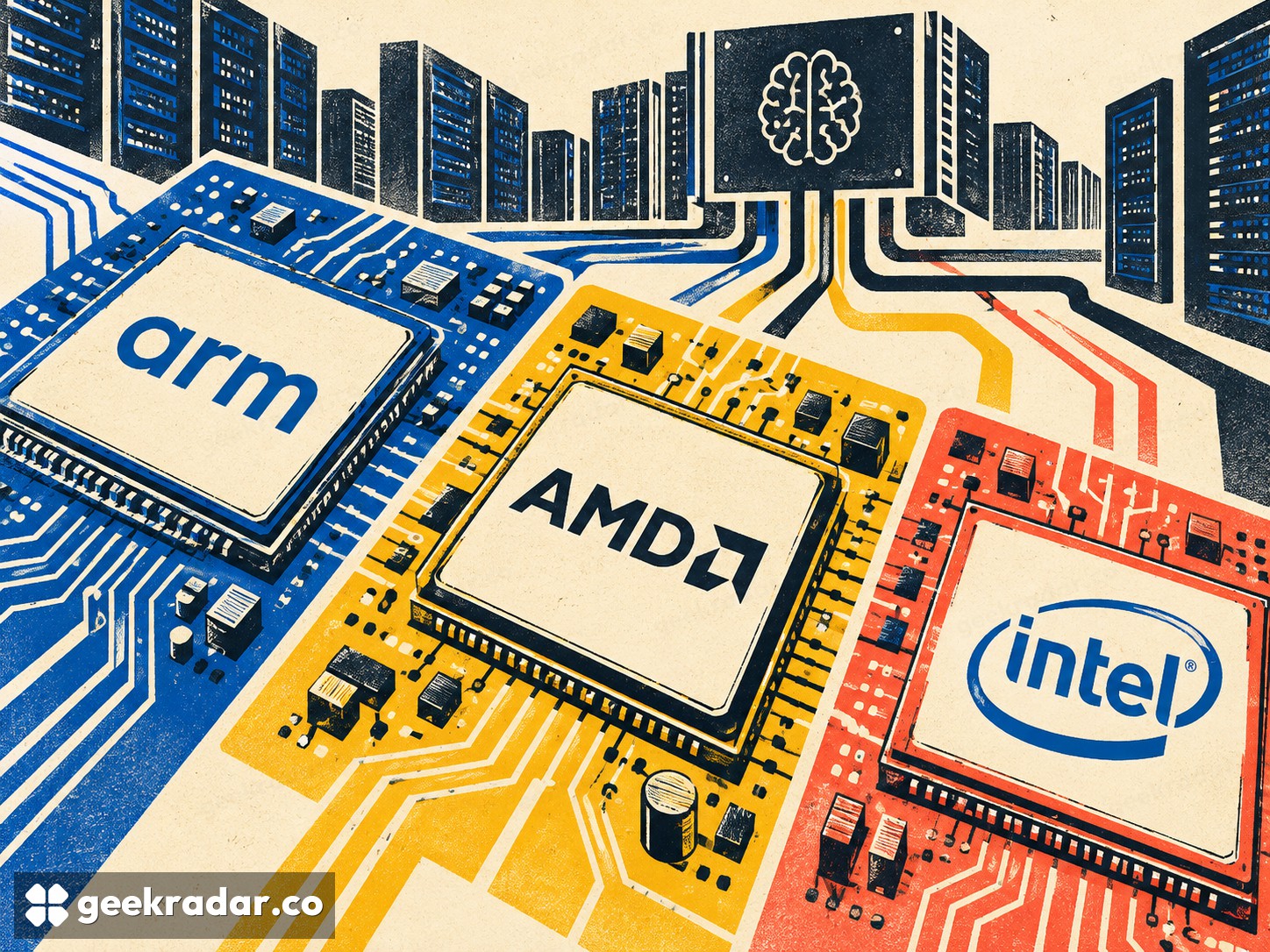
The AI server boom needs CPUs to do the work around the model
TrendForce forecasts rising processor shipments and a larger Arm share. Neither estimate tells you how fast a particular application will run.
The next constraint on AI infrastructure may sit beside the accelerator. In its October 22 server forecast, TrendForce projects server CPU shipments rising 31% in 2026 and more than 40% in 2027. Its explanation is that increasingly elaborate inference services need more general-purpose processing to keep the rest of the system moving.
These are forecasts of processor shipments, not measured improvements in AI performance. They nevertheless highlight an important distinction: generating an answer is only one part of running a service that retrieves information, calls tools and coordinates several operations before returning that answer.
The work around the model still has to run somewhere
A GPU or another dedicated accelerator can perform the model’s numerical work. The application must also receive requests, prepare data, consult databases, enforce access rules and pass results between services. A request that becomes a sequence of tool calls creates a different workload from a single uninterrupted model response.
TrendForce describes planned CPU-to-GPU or ASIC configurations moving from roughly 1:8 toward 1:2 or even 1:1 in some agent-oriented deployments. That is an account of changing infrastructure requirements, not a rule that every AI server now needs one CPU for every accelerator. Processor capabilities, software design and the tasks assigned to each component affect the appropriate balance.
This is why adding accelerators alone cannot guarantee that a service becomes proportionately faster. If a job waits for a database response or a serial preparation step, the expensive compute device may spend part of its time waiting too. The useful question is where the whole request spends its time.
More CPU demand does not mean one architecture wins every job
TrendForce also forecasts a larger role for Arm processors: more than 20% of server CPU units in 2026 and approximately 30% in 2027, compared with just over 10% in 2025. Those estimates describe market direction and remain subject to the deployments actually taking place.
Arm servers already have a substantial practical context. AWS lists application servers, microservices, databases and high-performance computing among the uses for its Graviton family, alongside managed services. That establishes a broad software ecosystem; it does not establish that moving any particular application will produce the same saving or performance gain.
For a team choosing infrastructure, compatibility and cost per completed job matter more than a market-share forecast. Dependencies, compiled binaries and operational tooling need to work on the target architecture. Comparing an instance’s hourly price without checking how much useful work it completes can turn a cheaper resource into a more expensive service.
The forecast therefore has a consequence beyond the contest between chip suppliers. AI infrastructure budgets need to account for the machinery surrounding the model. A faster accelerator has limited value if the application cannot keep it supplied with useful work, or cannot turn its output into a reliable result.